



Share This Article
Article Summary
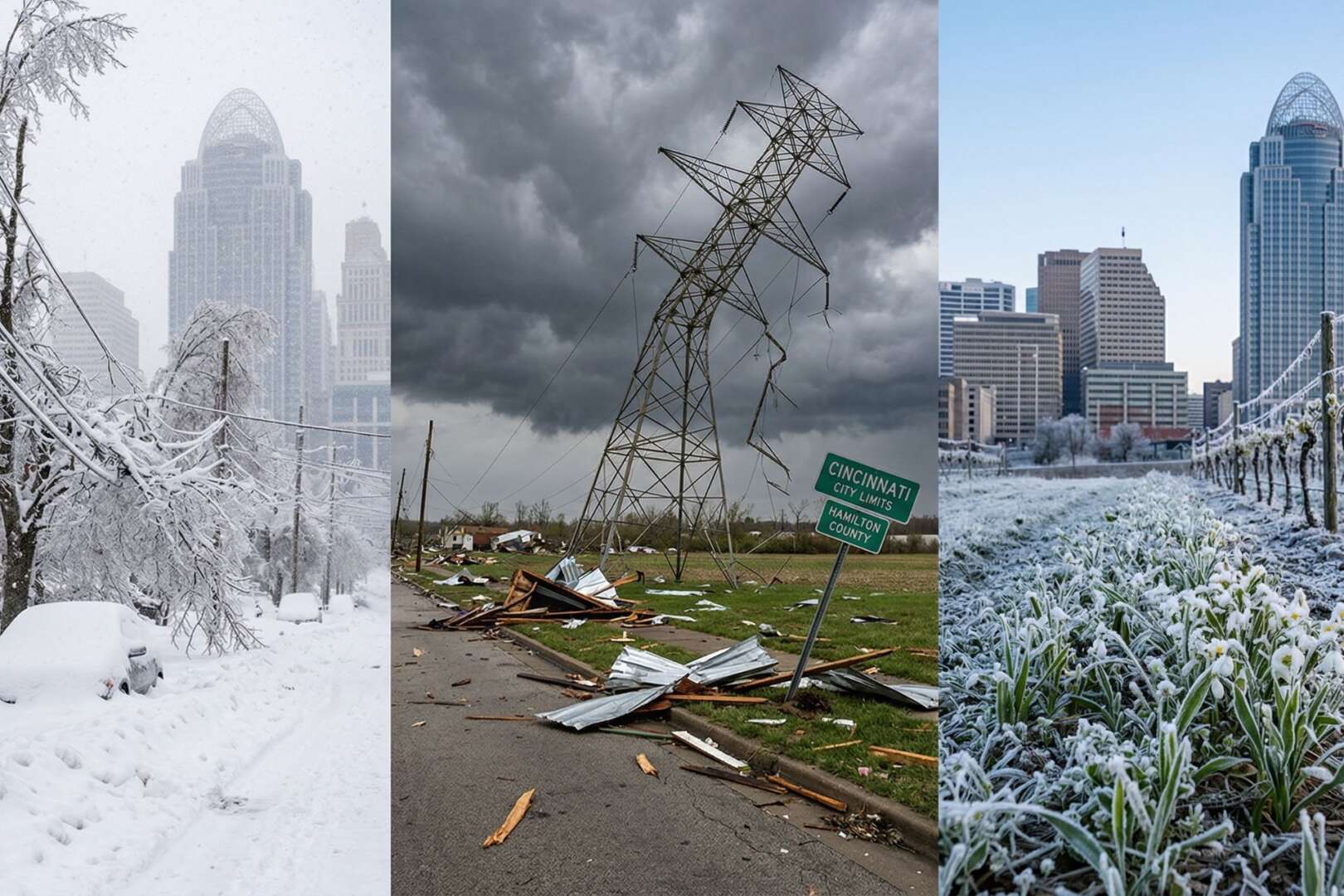
Between January and April 2026, the Cincinnati region recorded a historic winter storm, ten confirmed tornadoes, and a late-season freeze. Winter Storm Fern delivered significant snow and ice in late January, while a March 11 outbreak produced three EF0 tornadoes in the Miami Valley. On April 7, the National Weather Service issued a Freeze Warning for Hamilton County as temperatures fell into the low 30s.
The chaotic shifts in Cincinnati weather have left residents reeling. We have endured everything from historic snowfalls to sudden spring tornadoes.
Examining the Cincinnati weather in 2026 reveals a deeply unsettling trend of extremes.
Just four months into the year, the region has faced endless anomalies. State-of-emergency winter storms paralyzed our highways. Unexpected severe thunderstorms tore off local roofs. Sudden spring freezes threatened our agricultural staples. Many are now wondering what Cincinnati weather in 2026 will bring.
These rapid fluctuations highlight a broader shift in local climate patterns. Families and local businesses must prepare for a new normal. Unpredictable severe weather in Ohio is no longer a rarity. The days of mild, predictable transition seasons seem completely gone. Instead, we are witnessing rapid, violent swings in temperature. Our community must adapt to survive these changing environmental conditions.
The fierce winter start to Cincinnati weather 2026
In late January, the Ohio Valley experienced a historic winter blast. Unofficially dubbed Winter Storm Fern, this system affected the region. It raged from January 24 to January 26. The storm dropped heavy snow across southern Indiana, northern Kentucky, and Ohio. Some areas in northern Ohio recorded staggering totals of 15 inches. According to the National Weather Service, this major event prompted federal disaster declarations.
Power outages skyrocketed across the entire region. Thousands of residents remained in the dark and cold. High winds and heavy ice accumulation snapped power lines and crushed trees. The National Oceanic and Atmospheric Administration reported that extreme cold warnings persisted for days.
Subzero wind chills plunged the central United States into a deep freeze. Emergency shelters opened their doors rapidly. Local authorities scrambled to protect vulnerable populations. This brutal winter storm set a dangerous tone for Cincinnati’s weather.
Overnight tornado threats
The March 11 Miami Valley tornadoes
Just weeks after the ice thawed, severe thunderstorms ripped through the state. March brought a terrifying wave of atmospheric instability to the Midwest. On March 11, a vicious line of thunderstorms swept through the Miami Valley. Meteorologists confirmed three EF0 tornadoes touched down near Botkins, Anna, and St. Johns. These storms unleashed damaging straight-line winds. The gales toppled trees and heavily damaged local infrastructure.
This sudden outbreak caught many residents completely off guard. It served as a stark reminder of escalating severe weather threats. Local emergency management agencies urged citizens to update their safety plans. The rapid shift from blizzards to tornadoes illustrates a highly unstable atmosphere.
Dangerous overnight storms strike Cincinnati
The severe threat did not end with the early March storms. By mid-March, another powerful storm system threatened the Cincinnati metro area. A strong line of severe thunderstorms moved eastward into Ohio late on March 17. Forecasters warned of wind gusts exceeding 60 mph. They also monitored the potential for isolated tornadoes.
The timing of this system was particularly dangerous for local families. Storms arrived between 1 a.m. and 5 a.m. They struck while most residents slept peacefully. Local news outlet National Today reported meteorologists urged residents to keep weather radios active. Thankfully, the city avoided mass casualties. The sheer volume of severe warnings broke seasonal norms for Cincinnati’s weather.
Rising tornado frequencies and infrastructure adaptations
By early April, local station WHIO reported Ohio had recorded its 10th confirmed tornado. This elevated frequency of cyclonic activity requires a fundamental community shift.
Understanding the shifting climate trends in Ohio
The April freeze and agricultural whiplash
As April arrived, the erratic local climate continued to shock experts. Residents eagerly expected mild spring temperatures to finally settle into the region. Instead, the National Weather Service issued a harsh frost advisory on April 7. Temperatures plummeted into the low 30s overnight across Hamilton County. This sudden freeze threatened vulnerable crops and early-blooming vegetation. Farmers scrambled to protect their tender plants from the cold snap.
Frost and freeze conditions can easily kill sensitive crops. These agricultural disruptions lead to significant local economic losses. This late-season frost perfectly encapsulates the whiplash effect defining Cincinnati weather 2026. One week brings violent thunderstorms, and the next brings a bitter freeze.
Drivers of Ohio’s volatile weather patterns
What is driving these intense atmospheric fluctuations across the Midwest? Climate scientists point to shifting jet streams and warming global temperatures. These global changes create highly volatile local weather patterns. These patterns frequently stall over the Ohio Valley. Warmer air holds significantly more moisture. This extra moisture fuels heavier snowfalls during winter. It also generates more severe thunderstorms during spring.
Urban planning and climate resilience
The clash between Arctic air and tropical moisture creates a volatile breeding ground. City officials must now prioritize climate resilience in all urban planning. Upgrading the electrical grid is absolutely essential. Stronger grids withstand heavy ice accumulation and severe wind gusts. Improving storm water management mitigates flash flooding from intense downpours. The events of this year represent a clear warning for our city.
Proactive community preparedness
Navigating these relentless weather extremes requires proactive community preparation. After all, waiting until a warning is issued is often too late. Therefore, families must build robust emergency kits immediately. Specifically, these kits must account for winter power outages and spring evacuations. To get started, consider implementing the following safety measures today:
-
First, purchase a battery-powered NOAA weather radio with tone-alert capabilities.
-
Next, stockpile at least three days’ worth of non-perishable food.
-
Additionally, reinforce your home’s exterior to withstand high winds.
-
Furthermore, designate a safe room in your basement for tornado warnings.
-
Finally, keep emergency cold-weather gear readily accessible in your vehicle.
Ultimately, the unpredictability of Cincinnati weather demands constant vigilance. However, by staying informed, we can weather whatever the atmosphere brings.
FAQs
What were the primary impacts of Winter Storm Fern?
Winter Storm Fern brought heavy snowfall, ice accumulation, and subzero wind chills to the Ohio Valley from January 24 to 26. The system resulted in widespread power outages, hazardous travel conditions, and federal disaster declarations across the region.
How many tornadoes were confirmed in Ohio during the first quarter of 2026?
Ohio recorded ten confirmed tornadoes by early April 2026. Notable events included three EF0 touchdowns in the Miami Valley on March 11 and an EF-1 tornado in Defiance on April 4.
What occurred during the severe weather event on March 17, 2026?
A line of severe thunderstorms moved through the Cincinnati metro area between 1 a.m. and 5 a.m., producing wind gusts over 60 mph. These storms were part of a larger system that moved eastward, prompting overnight tornado watches for local residents.
Why was a Freeze Warning issued in April 2026?
On April 7, the National Weather Service issued a Freeze Warning as temperatures dropped into the low 30s and upper 20s across Hamilton County. This sudden cold snap occurred after several weeks of warmer weather, threatening early-season agricultural crops and blooming vegetation.