



Share This Article
Article Summary
Cincinnati’s Metropolitan Sewer District has received more than 1,800 sewer backup reports following the historic flash flooding that struck the region on July 17. More than 900 cases qualified for cleanup assistance, and crews have completed investigations for most reported incidents. Officials said the flooding resulted from rainfall that exceeded the sewer system’s design capacity rather than a system failure. Recovery efforts continue as local leaders review flood mitigation projects and assess damage across affected communities.
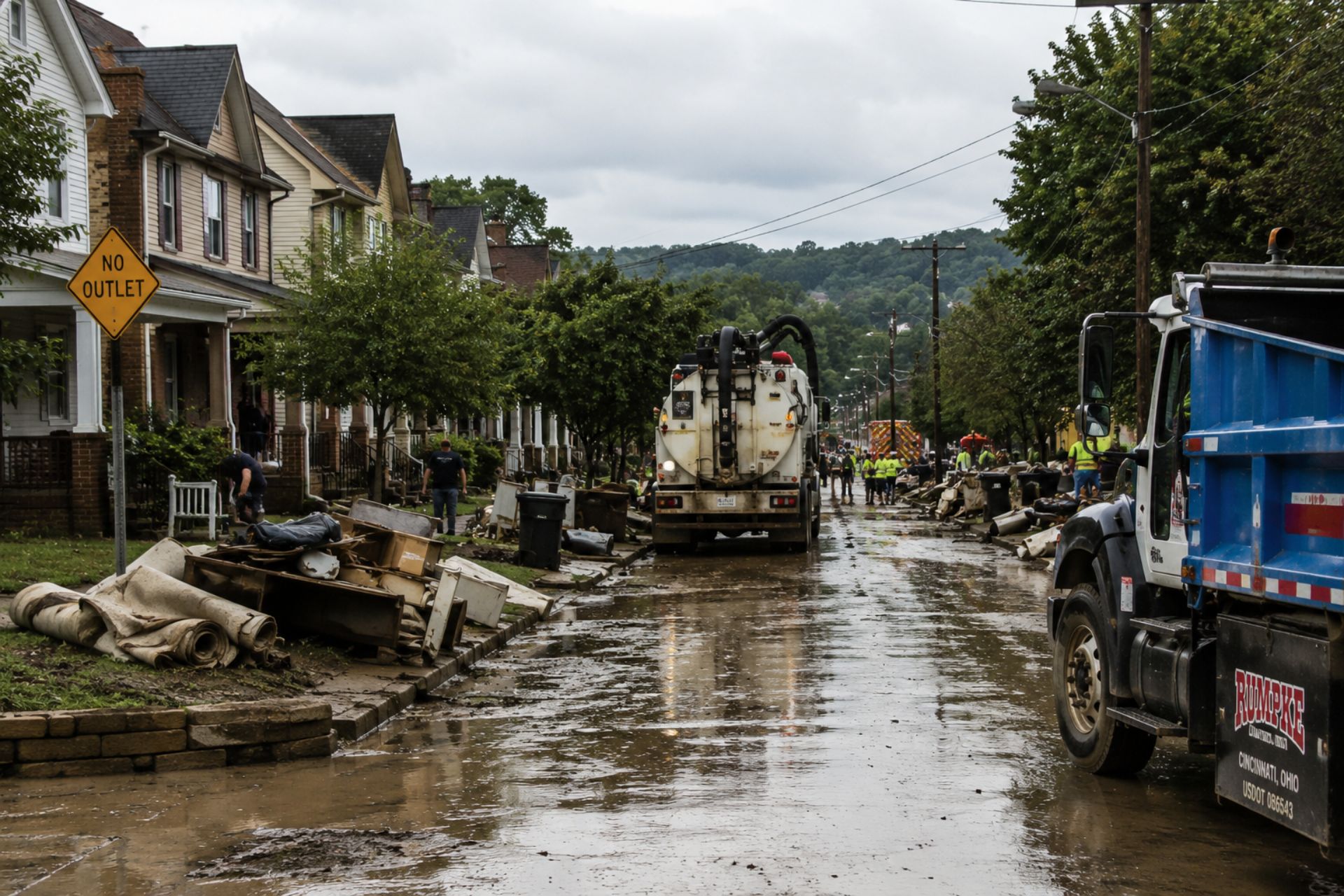
Two weeks after historic flash flooding struck Cincinnati and surrounding communities, recovery efforts remain underway.
The Metropolitan Sewer District (MSD) responds to hundreds of sewer backup cases and evaluates long-term infrastructure needs.
The July 17 storm dumped extraordinary amounts of rain across parts of Hamilton County, causing widespread flooding, property damage, and disruptions to transportation and public services.
According to reporting by WCPO, MSD has received more than 1,800 sewer backup reports since the flooding event. Officials said more than 900 cases qualified for cleaning assistance through the district’s Sewer Backup Program. Crews have spent the past several weeks inspecting properties, documenting damage, and helping residents navigate the recovery process.
The flooding affected neighborhoods across Cincinnati, Norwood, Fairfax, Madeira, St. Bernard, and Silverton. Emergency responders conducted water rescues as roads, homes, and businesses flooded during the storm.
Sewer backups overwhelm recovery efforts
MSD officials say the volume of reports created one of the largest recovery responses in recent memory. According to WCPO, investigators have completed reviews of nearly all reported sewer backup cases while continuing cleanup operations at eligible properties.
MSD Director Diana Christy said the flooding resulted from rainfall levels that exceeded the sewer system’s design capacity rather than a system failure. Officials described portions of the storm as a 1,000-year rainfall event.
The National Weather Service defines a 1,000-year rainfall event as an extremely rare occurrence based on historical precipitation records. During the July storm, some areas received approximately six inches of rain in about one hour.
Residents impacted by sewer backups may qualify for assistance through MSD programs. Information about eligibility and claims remains available through the Metropolitan Sewer District.
Officials continue encouraging residents to document damage and maintain records related to cleanup costs and repairs.
Historic flooding causes widespread damage
The flash flooding caused extensive damage across Cincinnati’s east side and neighboring communities. Roads became impassable, vehicles were stranded, and several neighborhoods experienced significant water intrusion.
According to WVXU, local emergency management officials continue assessing damage to determine whether additional state or federal assistance may become available. Recovery teams have gathered information from affected property owners to support those assessments.
The storm also reignited concerns about increasingly severe weather events affecting the region. Local officials noted that heavy rainfall events have become more frequent in recent years, placing additional pressure on aging infrastructure.
Several city leaders have called for accelerated investments in flood mitigation projects. Cincinnati officials continue reviewing infrastructure vulnerabilities exposed during the July flooding.
Key impacts from the storm included:
- More than 1,800 sewer backup reports
- Hundreds of flooded homes and businesses
- Multiple water rescues
- Road closures across Hamilton County
- Significant damage to public infrastructure
- Ongoing cleanup and recovery operations
The Hamilton County Emergency Management and Homeland Security Agency continues coordinating damage assessments with local jurisdictions. Additional information about disaster preparedness and flood recovery resources is available through the Ohio Emergency Management Agency.
Sewer backups renew infrastructure debate
The scale of the sewer backups has intensified discussions about infrastructure investment across Greater Cincinnati. City and county leaders are evaluating whether existing systems can handle increasingly intense rainfall events.
According to WCPO, MSD is moving forward with approximately 10 flood mitigation projects intended to reduce future flooding risks. Those projects include improvements to drainage systems, stormwater management infrastructure, and flood control measures.
Several Cincinnati City Council members have also proposed reviewing infrastructure planning following the July flooding. Discussions are expected to continue as officials return from summer recess and examine potential funding options.
The flooding has also drawn attention to the failure of the Oakley floodgate system during the storm. Local leaders have requested additional analysis to determine what improvements may be necessary to better protect vulnerable neighborhoods.
Regional planning agencies continue studying stormwater management strategies as weather patterns evolve. Experts say infrastructure originally designed decades ago may face greater challenges during increasingly intense rainfall events.
Recovery efforts continue across Cincinnati
Cleanup operations remain active in many affected neighborhoods. Residents continue removing damaged materials, repairing homes, and working with insurance providers.
MSD crews have focused on addressing sewer backup complaints while also evaluating system performance during the historic rainfall event. Officials say lessons learned from the July flooding will help guide future infrastructure planning.
Recovery timelines vary depending on the extent of damage. Some homeowners have already completed repairs, while others continue waiting for inspections, contractor availability, and insurance determinations.
Local officials emphasize that flood recovery remains a long-term process. Damage assessments, infrastructure reviews, and mitigation planning could continue for months.
The July 17 flooding ranks among the most significant weather events to affect Cincinnati in recent years. As recovery efforts move forward, city leaders, emergency managers, and infrastructure officials face growing pressure to improve resilience against future storms.
FAQs
Why did so many sewer backups occur after the July flooding?
The July 17 storm produced extremely heavy rainfall in a short period, overwhelming drainage and sewer systems in several communities. MSD officials said the volume of rain exceeded the system’s design capacity, contributing to widespread sewer backups.
How many sewer backup reports has MSD received?
According to MSD, more than 1,800 sewer backup reports were filed following the flooding event. More than 900 of those cases qualified for assistance through the district’s cleanup program.
Are residents eligible for cleanup assistance?
Some property owners may qualify for assistance through MSD’s Sewer Backup Program. Eligibility depends on the circumstances of each case and the results of MSD’s investigation.
What is Cincinnati doing to reduce future flooding risks?
MSD is advancing several flood mitigation projects designed to improve stormwater management and reduce flooding impacts. City and county officials are also reviewing infrastructure needs following the historic rainfall event.