
Share This Article
Article Summary
In 2026, Cincinnati’s retail landscape is undergoing a significant shift as consumers increasingly favor local, mixed-use storefronts over traditional enclosed shopping centers. Major suburban complexes like Forest Fair Mall and Tri-County Mall are facing demolition or extensive redevelopment into residential and community hubs. Meanwhile, urban areas like Over-the-Rhine and Findlay Market are experiencing thriving retail growth driven by personalized service, experiential shopping, and sustainable business practices.
Consumer habits drive the latest Cincinnati retail trends across our neighborhoods.
These Cincinnati retail trends reflect a growing preference for independent storefronts over enclosed shopping centers.
Cincinnati retail trends reveal a changing market
The commercial landscape looks completely different this year. Shoppers now prefer vibrant neighborhood streets over massive indoor complexes. This shift defines the latest Cincinnati retail trends. Consumers want unique experiences rather than generic big-box stores. E-commerce certainly played a major role in this retail transformation. However, local buyers still crave physical shopping environments. They simply want these spaces to feel authentic and community-focused.
Many traditional shopping centers struggle to survive today. The era of the sprawling indoor mega-mall has effectively ended. We see this reality clearly across the regional market. Massive parking lots now sit empty in several suburbs. Property owners face difficult decisions regarding these aging structures. They must either reinvent the spaces or tear them down. This harsh reality pushes developers toward innovative mixed-use concepts.
The final days of Forest Fair Mall
The iconic Forest Fair Mall officially met its end recently. Crews completed the full demolition of the site in March 2026. This sprawling complex once stood as Ohio’s second-largest shopping destination. It featured millions of square feet of retail space. Yet, it slowly lost commercial tenants over several decades. The empty corridors previously became a popular urban exploration site. Now, the cleared land awaits a completely new purpose.
City leaders view this demolition as a necessary step forward. According to historical reports, the mall struggled from its inception. It faced intense competition from nearby local shopping centers. Changing consumer habits eventually sealed its commercial fate. The closure marks a definitive turning point for suburban retail. Developers plan to utilize the site for light industrial use. This change highlights the Cincinnati retail trends currently unfolding.
Reimagining the Tri-County Mall space
Other suburban complexes take a completely different architectural approach. The former Tri-County Mall is undergoing a massive transformation. MarketSpace Capital leads this ambitious $1 billion redevelopment project. They plan to convert the vacant mall into a community hub. The new Springdale Town Center will feature modern apartments. It will also include a culinary center and green space.
This project represents a crucial strategy for struggling mall properties. Developers integrate residential living directly with new retail spaces. They also include educational facilities like a dedicated STEAM institute. According to Springdale city officials, this project will ignite regional growth. The design creates a walkable neighborhood rather than isolated stores. People can live, work, and shop in one convenient location. This model perfectly aligns with current shopping trends Ohio prefers.
Downtown and Over-the-Rhine lead Cincinnati retail trends
While suburban malls pivot, the urban core currently thrives. Downtown Cincinnati and Over-the-Rhine boast booming retail sectors today. Small business owners quickly fill available storefronts along historic streets. Organizations like the Cincinnati Center City Development Corporation study Cincinnati retail trends. They invest heavily in creating vibrant, walkable local civic spaces. These efforts successfully attract discerning professionals back to the city.
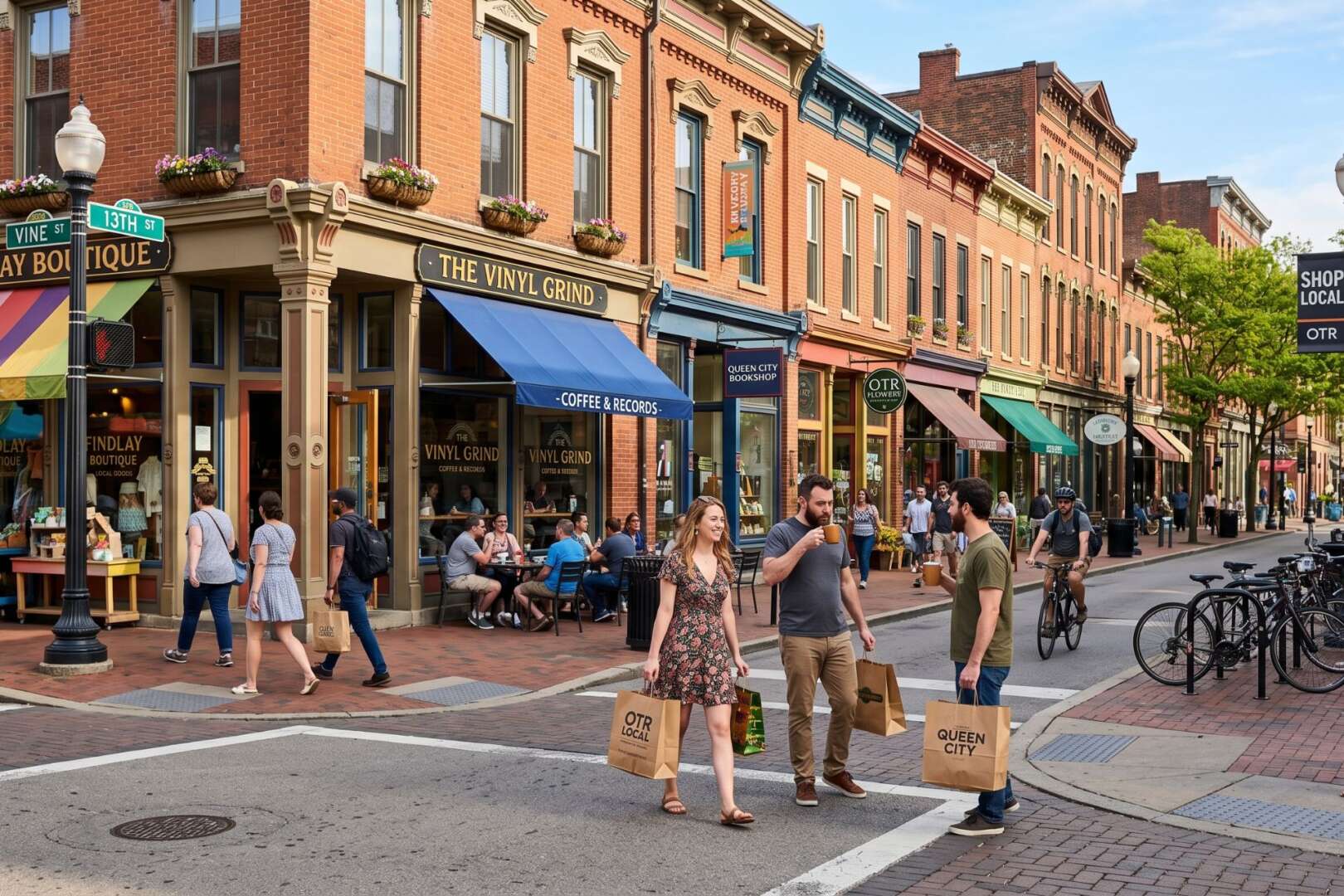
Shoppers flock to OTR for its unique charm and luxury. They discover independent boutiques instead of national chain stores. Local entrepreneurs offer curated products that online retailers cannot match. Shoppers easily find bespoke clothing, artisan goods, and specialty foods. Findlay Market continues to anchor this thriving local business retail scene. The historic market draws huge crowds every single weekend. These bustling streets show the true power of community-focused commerce.
[Image Placeholder]
Alt text: Shoppers browse local boutiques and storefronts at Findlay Market in Cincinnati.
Image description: A wide shot of Findlay Market on a sunny day showing pedestrians walking along the vibrant storefronts, representing the shift toward local business retail in Cincinnati.
Why local business retail wins over modern consumers
Shoppers intentionally choose independent stores for several specific reasons. Small businesses consistently provide highly personalized customer service experiences. Store owners build real relationships with their regular local patrons. This personal touch creates fierce brand loyalty among city residents. Furthermore, buying locally keeps money circulating within the neighborhood economy. Consumers recognize the positive impact of supporting their own neighbors.
Independent shops also adapt much faster than large retail chains. They quickly adjust their inventory based on direct customer feedback. Many local retailers now successfully blend physical and digital sales. They offer convenient in-store pickup options for fast online orders. Some owners even host pop-up events to test product lines. This flexibility gives them a major competitive advantage right now. They easily navigate the changing Cincinnati retail trends.
The expanding role of experiential shopping
Modern Cincinnati retail trends require much more than selling products. Store owners must create memorable experiences for their daily visitors. People want reliable entertainment and socialization alongside their shopping trips. You can see this in our coverage of OTR retail pop-ups. Stores often partner with local cafes to offer tasty refreshments. They host live music, engaging workshops, or community gatherings.
- Shoppers enjoy interactive and educational product demonstrations.
- Stores host exclusive launch parties for exciting new items.
- Retailers partner with local artists for special creative events.
- Customers appreciate comfortable seating areas within independent shops.
These engaging environments encourage visitors to linger much longer. They spend more time exploring merchandise and interacting with staff. This experiential approach directly combats the convenience of online giants. You cannot replicate a vibrant street festival on a screen. Retailers who understand this important concept see consistent business growth. They transform a simple transaction into an enjoyable weekend activity.
Sustainability shapes modern retail choices
Environmental concerns also influence Cincinnati retail trends across the region. Modern consumers prioritize sustainable practices when choosing where to shop. They prefer stores that source materials locally and reduce waste. Many OTR boutiques focus specifically on ethical fashion and upcycling. This eco-friendly approach resonates deeply with younger demographic shopping groups. Local shops naturally have a smaller carbon footprint than mega-malls.
Reduced transportation costs make local supply chains much greener. Shoppers feel better supporting businesses that protect the local environment. We see zero-waste stores gaining massive popularity across the city. These innovative retailers encourage buyers to bring their own containers. This trend aligns perfectly with the overall push toward sustainability. It proves that conscious consumerism drives real economic change locally.
FAQs
What is happening to older malls in Cincinnati?
Many aging enclosed shopping centers are being demolished or repurposed due to declining foot traffic and changing consumer habits. For example, Forest Fair Mall was completely demolished, while Tri-County Mall is currently being converted into a mixed-use community hub.
Why are local retail shops seeing growth in 2026?
Consumers are driving this growth by prioritizing personalized customer service, unique experiential shopping, and eco-friendly practices. Independent businesses can adapt their inventory and store experiences to meet these local preferences much faster than large national chains.
Which Cincinnati neighborhoods are leading the local retail trend?
Urban areas like Downtown Cincinnati and Over-the-Rhine (OTR) are experiencing the highest concentration of localized retail growth. Historic districts surrounding Findlay Market have also become prime, highly walkable locations for thriving independent storefronts.
How is mixed-use development impacting the local retail market?
Developers are combining retail spaces with residential apartments, green spaces, and educational facilities to create walkable, all-in-one neighborhoods. This approach brings built-in consumer bases directly to storefronts while effectively repurposing large, vacant plots of commercial real estate.