
Share This Article
Cincinnati rental housing search expands with the launch of a new city-backed website.
The Cincinnati rental housing platform aims to improve access to affordable and available units across the city.
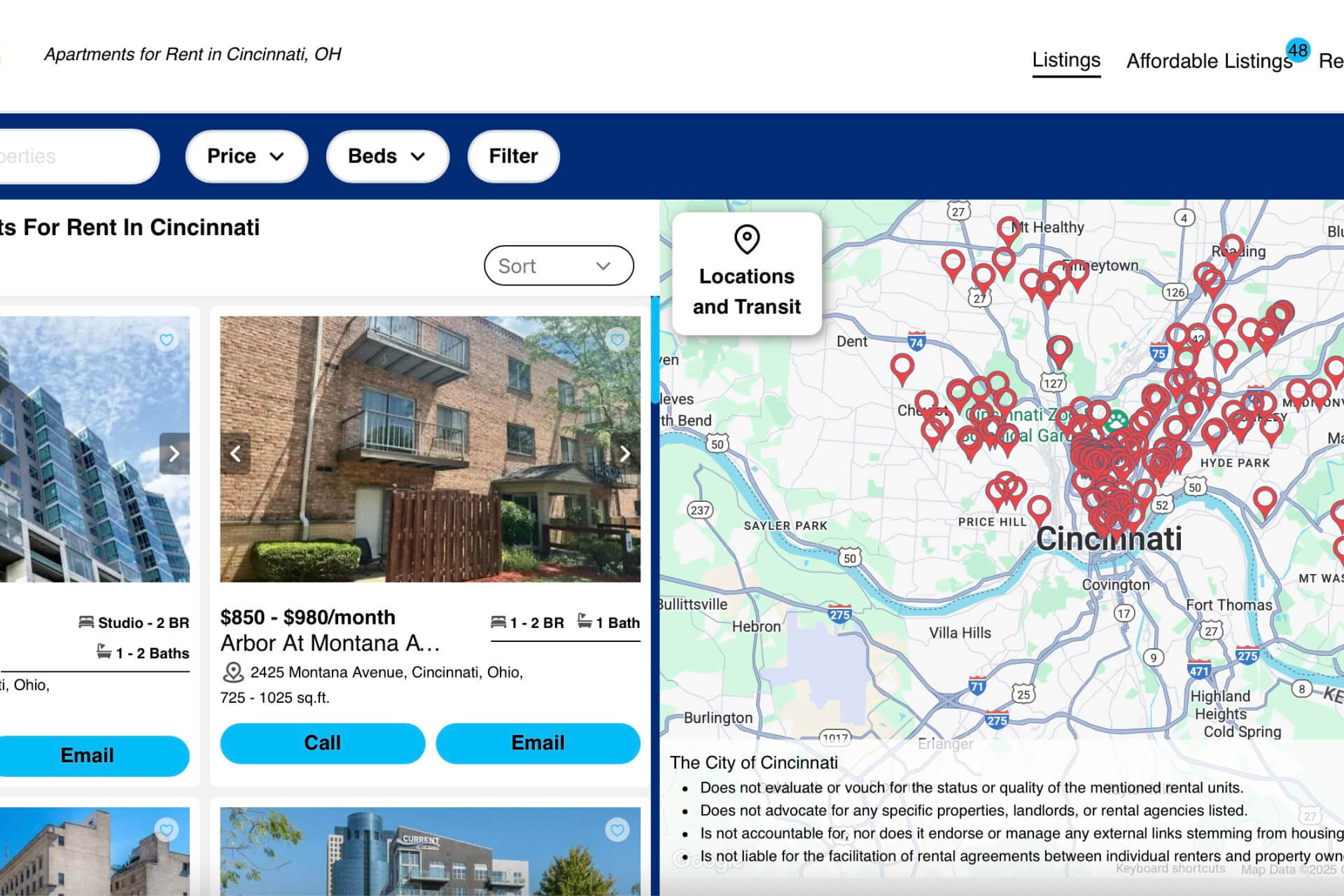
The City of Cincinnati has launched a new website designed to make it easier for residents to find available apartments, subsidized units, and affordable housing options.
City officials announced the rollout this week and emphasized the need for a centralized, transparent tool after years of fragmented rental listings across multiple private platforms.
Reporting from WVXU and WLWT confirms that the platform, apartments.cincinnati-oh.gov, is the city’s first comprehensive rental-listing hub. Officials said the tool will help renters see a clearer picture of the housing market while supporting small landlords who typically lack access to primary listing services.
Why does it come into vision?
The tool arrived during a period of continued housing pressure in Cincinnati. Rising rents, higher demand, and limited visibility into subsidized units have made apartment hunting more difficult for residents in multiple neighborhoods.
City leaders believe the new platform will help bridge those information gaps. They also noted that small landlords and affordable-housing providers often face high advertising costs that restrict their ability to list units, contributing to market transparency.
City officials said the platform is free for landlords with fewer than 20 units, which they expect will increase participation from “mom-and-pop” housing providers.
They also said the site includes mobile-friendly navigation, property details, and future integration with city housing programs. The investment in the platform marks another step in the city’s broader housing strategy, which includes affordability mandates, zoning reforms, and stronger data reporting.
City highlights benefits of the Cincinnati rental housing tool
City leaders stressed that the Cincinnati rental housing tool will support both residents and property owners.
Mayor Aftab Pureval, Council member Mark Jeffreys, and officials from the Department of Community and Economic Development highlighted the tool’s role in modernizing the city’s housing information system.
According to WLWT’s coverage, the platform aims to give renters “full visibility” into available units across all neighborhoods, including those that typically do not appear on private rental sites.
The tool focuses heavily on accessibility. Renters can search by rent price, building type, availability, and neighborhood. CityWise Software, the platform partner, provides onboarding support for landlords so that listings stay up to date and accurate. Leaders said this support ensures the platform remains reliable, especially because many small landlords lack the staff or resources to manage online listings.
The city created the platform after hearing repeated concerns from housing advocates, renters, and social-service agencies who said the fragmented listing landscape left too many residents without a clear path to housing. Advocates said residents often spend weeks navigating multiple sites, calling dozens of landlords, or searching social-media groups to find openings. City staff said the new tool addresses this issue by centralizing everything in one location.
Key early features of the website include:
- Search filters for price, size, and unit type
- Dedicated listings for subsidized and income-restricted units
- Mobile-friendly design for users without computers
- Free listing support for landlords with fewer than 20 units
- A growing catalog of properties updated directly by providers
Officials said more features will be added over time, including tools that help residents verify eligibility for affordable housing programs.
Affordable housing advocates welcome the Cincinnati rental housing platform
Affordable housing organizations said the Cincinnati rental housing platform fills long-standing gaps in citywide housing information.
Groups working with low-income residents reported that many clients struggle to find subsidized units because they are scattered across various sources or listed informally.
RELATED: Affordable Housing Crisis in Cincinnati and the Skilled Trades Gap: A Path Forward
Leaders at local nonprofits told WVXU that a centralized website can help case managers guide residents more efficiently and reduce the time required to secure a stable home.
Advocates also highlighted the tool’s value in a rental market where affordable units turn over quickly. They said clear, real-time information helps residents apply for units before they disappear, especially in neighborhoods where demand remains high.
The platform’s ability to list both subsidized and market-rate rentals gives residents a broader view of their options, which can open doors for households that may not qualify for certain programs.
Platform not a solution to housing shortage, officials say
City officials acknowledged that the tool will not solve the housing shortage on its own. However, they said that easier access to information helps prevent gaps where units remain vacant simply because renterscan not find them.
Leaders also said the platform is part of the city’s broader affordability efforts, which include reforms to zoning density, new housing incentives, and redevelopment initiatives. Residents can learn more about these ongoing strategies through sources such as the city’s Department of Community and Economic Development.
Advocates and city leaders agreed that increasing transparency helps everyone in the housing market. Renters gain clarity, landlords reach more applicants, and policymakers receive better data about current demand and availability.
How the Cincinnati rental housing tool fits into the city’s long-term housing strategy
The city launched the Cincinnati rental housing tool as part of ongoing commitments to expand housing access across the region. The administration has pushed for more clarity around subsidized housing inventory, rental demand, and vacancy rates. City officials also said the platform will help them evaluate trends in neighborhood-level rental availability, which has historically been difficult due to the lack of unified data.
The city recently announced new affordability initiatives that align with the platform. These include zoning reforms aimed at expanding density, ongoing redevelopment incentives for affordable housing providers, and transparency goals for housing data. Officials expect the new searchable database to support these efforts by giving the city real-time insight into rental activity.
For additional context on Cincinnati’s housing challenges, readers can explore previous Cincinnati Exchange coverage, including local housing policy updates and affordable development initiatives.
Read more:
Cincinnati’s Affordable Housing Crisis: A Community Struggling to Stay Afloat
Affordable Housing Crisis in Cincinnati and the Skilled Trades Gap: A Path Forward