
Share This Article
Article Summary
Cincinnati has expanded its use of public safety technology, including camera networks, automated license plate readers, and a Real Time Crime Center operated by the Cincinnati Police Department. These tools are designed to improve response times, support investigations, and enhance coordination during emergencies. The city’s approach reflects broader national trends identified by the Urban Institute and the National Institute of Justice. Ongoing debates focus on privacy, oversight, and the long-term impact of surveillance systems.
Cincinnati officials are continuing to expand the city’s use of surveillance systems and data-driven policing tools as part of a broader effort to improve response times and investigative outcomes.
City leaders have increased investment in camera networks, automated license plate readers (ALPRs), and real-time data systems in recent years.
According to reporting by WCPO 9, local agencies are prioritizing technology that enhances situational awareness while managing staffing constraints. Officials say these tools are intended to support faster response, strengthen evidence collection, and improve officer safety.
The approach reflects a national shift toward data-driven policing strategies, with research from the Urban Instituteshowing that cities across the United States are adopting integrated surveillance and analytics systems to support law enforcement operations.
Real-time crime center anchors response strategy
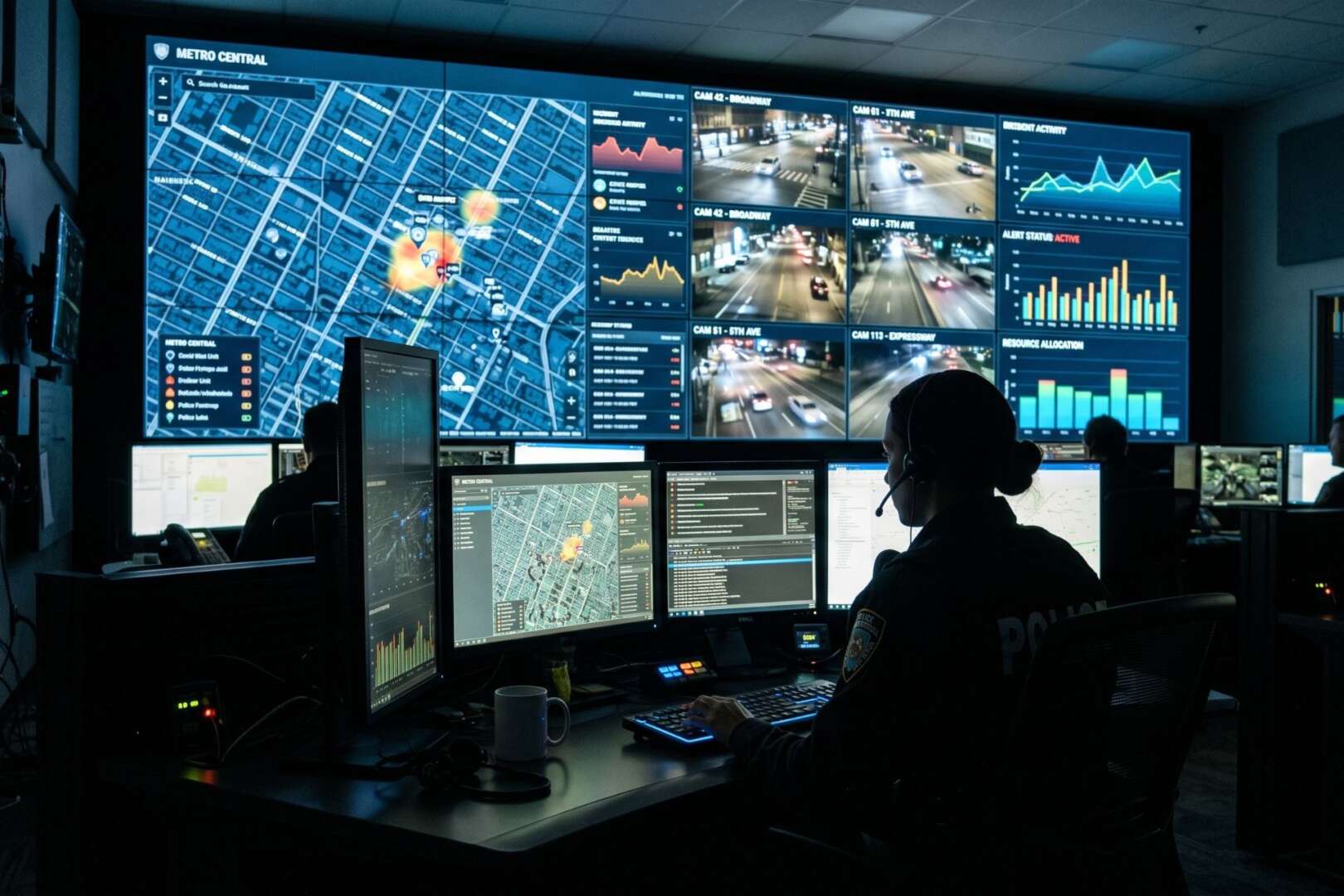
At the center of Cincinnati’s system is a Real Time Crime Center (RTCC) operated by the Cincinnati Police Department. The RTCC integrates live video feeds, data analysis tools, and officer communications to provide real-time intelligence during active incidents.
Police officials say the system allows analysts to monitor unfolding situations and relay critical information directly to officers in the field. The center connects to a network of public infrastructure cameras and voluntarily integrated private systems, including businesses and schools, according to city policy documents and local reporting.
Authorities say these tools have improved coordination during emergencies and supported investigations by helping reconstruct incidents more efficiently. However, the department has not consistently published standardized public metrics quantifying improvements in clearance rates or response times.
Expansion mirrors statewide and national trends
Cincinnati’s investments align with broader trends across Ohio, where cities such as Columbus, Cleveland, and Dayton have expanded surveillance capabilities and data-sharing systems.
The Ohio Office of Criminal Justice Services has supported technology upgrades through grants aimed at modernizing public safety infrastructure and improving cross-jurisdiction coordination. Law enforcement agencies increasingly share data—including license plate information and investigative leads—to address crimes that extend beyond city boundaries.
Nationally, the National Institute of Justice reports that technology-assisted policing can improve efficiency and resource allocation, though outcomes depend heavily on implementation and oversight.
AI and predictive tools raise both promise and risk
Cincinnati police have also incorporated analytical tools that identify crime patterns and support deployment decisions. These systems use historical data to highlight potential hotspots and assist command staff in allocating resources.
The National Institute of Justice notes that predictive policing technologies can enhance efficiency but warns that biased or incomplete data may produce unequal outcomes if not carefully managed. Local officials have stated that policy development and officer training are key components of responsible implementation.
Some technologies—such as facial recognition—remain limited in use nationwide and are subject to varying legal and policy restrictions. Public documentation of their use in Cincinnati is limited, and city officials have emphasized that any deployment must comply with established guidelines.
Effectiveness and limitations of crime prevention technology
Police officials report that tools such as ALPRs have aided in recovering stolen vehicles and identifying suspects more quickly. Gunshot detection systems, which alert officers when potential gunfire is detected, are also part of the city’s broader technology framework.
However, such systems have faced scrutiny in multiple U.S. cities over accuracy and false alerts. Independent evaluations in other jurisdictions have produced mixed findings, underscoring the importance of ongoing assessment.
Experts note that maintaining these systems requires sustained funding, technical support, and regular evaluation to ensure effectiveness.
Privacy, oversight, and public accountability
The expansion of surveillance technology has prompted continued debate over privacy and civil liberties. Organizations such as the American Civil Liberties Union have raised concerns that widespread monitoring and data sharing could disproportionately affect certain communities without sufficient safeguards.
In response, Cincinnati has implemented policies governing data access, retention, and usage. City officials have also discussed additional oversight measures, including independent reviews and regular audits of surveillance programs.
Local reporting by WCPO 9 indicates that the city has taken steps to increase transparency, including publishing policy guidelines and holding public meetings on surveillance practices. Still, questions remain about the appropriate balance between public safety and individual privacy.
Future direction of public safety technology
City leaders say Cincinnati will continue investing in public safety technology while refining policies to address community concerns. Planned efforts include expanding camera coverage, upgrading analytics platforms, and strengthening regional data-sharing partnerships.
Officials emphasize that technology is intended to support—not replace—officer judgment. As adoption grows, Cincinnati’s experience reflects the broader national challenge of integrating advanced policing tools while maintaining public trust and accountability.
FAQs
What is the Real Time Crime Center in Cincinnati?
The Real Time Crime Center is a centralized hub that integrates live camera feeds, data analysis tools, and police communications. It allows analysts to monitor incidents as they happen and provide real-time information to officers in the field.
What technologies are included in Cincinnati’s public safety system?
The system includes surveillance cameras, automated license plate readers, gunshot detection tools, and data-sharing platforms. These technologies are used to support investigations, track suspects, and improve situational awareness.
How does this technology affect privacy?
Privacy concerns focus on data collection, retention, and potential misuse of surveillance systems. Groups such as the American Civil Liberties Union have called for stronger oversight, transparency, and safeguards.
Are these technologies proven to reduce crime?
Officials report improvements in response times and investigative efficiency, but comprehensive public data is limited. Research from the National Institute of Justice indicates outcomes vary depending on implementation and oversight.