



Share This Article
After winning the primary, we commissioned a poll targeting 200,000 high-propensity citywide voters — both Republicans and Democrats.
During the Cincinnati mayoral election, this poll provided important insights. The key insight was clear: not enough voters knew who Cory was.
That set the direction for the next phase of the race: a full-scale effort to raise his name recognition.
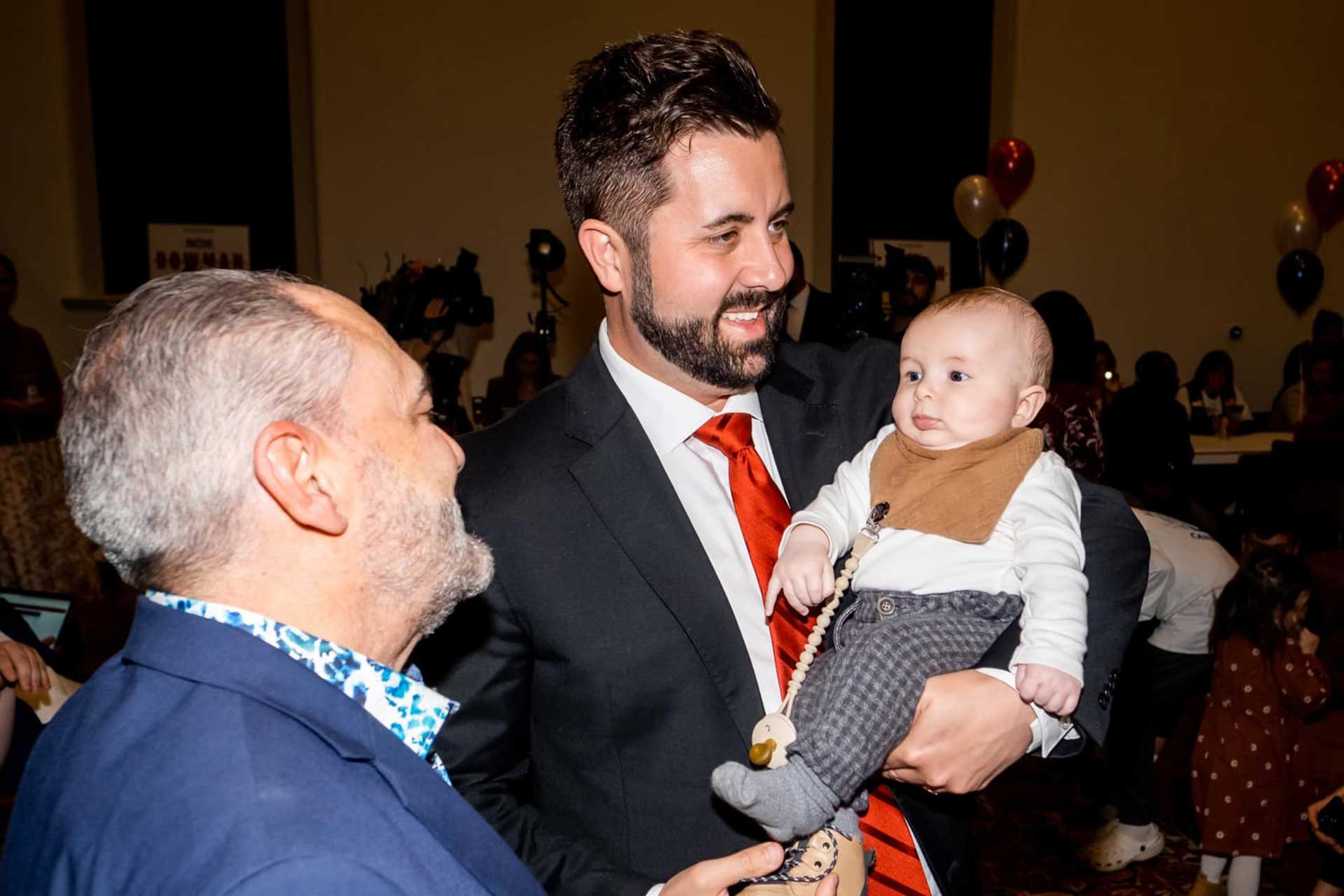
Fortunately, Cory’s status as the half-brother of Vice President JD Vance sparked substantial media coverage both locally and nationally. This was especially true during the Cincinnati mayoral election. On several occasions, we simply announced we’d be standing on a particular street corner at a specific hour — and the press consistently showed up.
We always knew this race would be an uphill battle. Our opponent, Aftab Pureval, won 18,505 votes in the primary while we received only 2,396. The disparity highlighted a deeper truth. Democrats in Hamilton County are far more organized and active at the precinct level than Republicans in the Cincinnati mayoral election. More than 200 precinct-executive positions remain unfilled. This leaves entire neighborhoods without GOP representation or engagement.
This organizational gap is so visible that even a simple Google search makes the imbalance obvious. When you search for “precinct executive” in Cincinnati, nearly every result points to Democratic resources, recruitment pages, or projects.
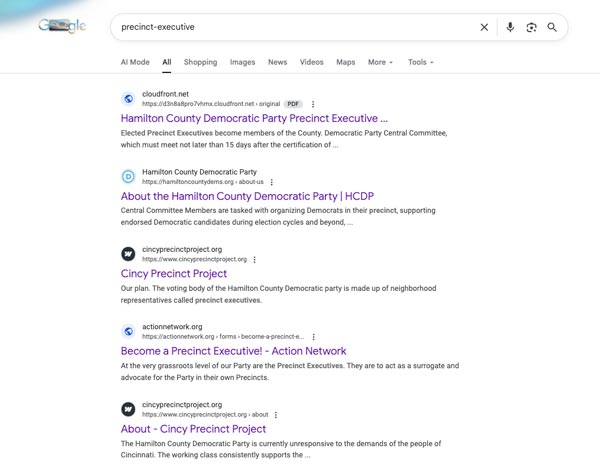
Republicans don’t show in the search results at all. The entire page is made up of references to Democrat organizations. That’s not because the GOP is less important. It’s because Democrats have spent years building their digital infrastructure, volunteer pipelines, and neighborhood-level organization. Meanwhile, hundreds of Republican precinct seats sit empty. When the information ecosystem itself skews toward one party, it becomes even harder for conservative voters. They struggle to know where to go, how to get involved, or who represents them locally during the Cincinnati mayoral election.
Compounding this disadvantage is the long-standing turnout problem. Republican voters reliably surge in presidential years. Then, they drop off dramatically during midterms and off-year elections, exactly when local leadership is decided.
Can we fix this? Absolutely — and we have the party leadership necessary to accomplish it.
What the Democrats Did in the Cincinnati Mayoral Election
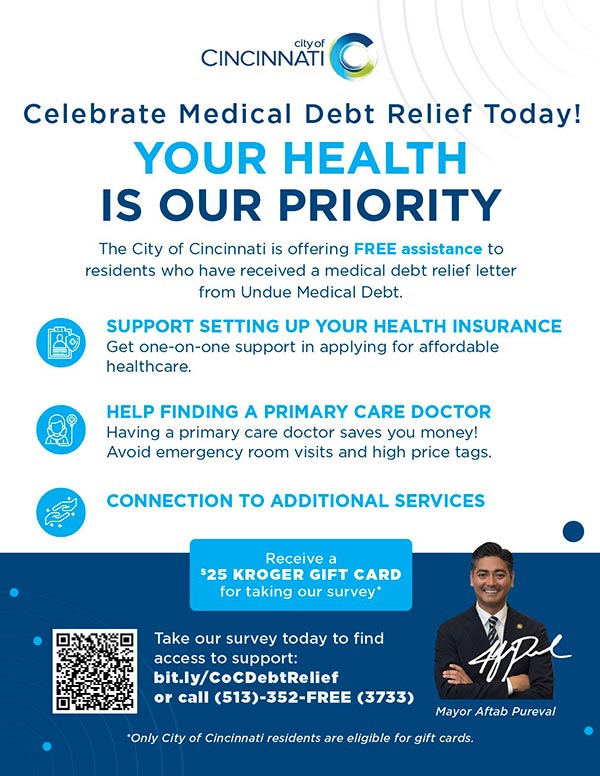
One month before Election Day, the city mailed out a taxpayer-funded flyer with the mayor’s face and signature. It declared that 110,000 people had received $1,000 of medical-debt forgiveness. It was election interference in everything but name. The forgiveness was targeted to specific zip codes. Northside, Clifton, and Over-the-Rhine benefited. However, Sayler Park, Hyde Park, and Oakley did not.
This wasn’t about broad relief. It was about political positioning.
The Democratic machine has built a system where large segments of the population rely on government dollars as a permanent support structure. What goes unacknowledged is that this model perpetuates dependence and discourages the very behaviors that help lift families out of poverty — but it reliably produces votes.
The Democratic Party is widely regarded as the party of handouts. Those who rely on these programs often become long-term loyal voters. Social services are meant to be a temporary bridge through hardship. Yet they too often evolve into lifelong and even multigenerational dependence.
Republicans support helping those in need. But we believe compassion means empowering people to become self-sufficient, not trapping them in a system that rewards dependency. We must do a better job communicating that message. A life built on welfare is not a life of prosperity.
Our Messaging
From day one, our platform focused on real issues affecting Cincinnati — crime, infrastructure, city services, and accountability — not national politics. But our opponents knew the national messaging environment benefitted them. They leaned heavily into national narratives, painting us as “MAGA extremists.”
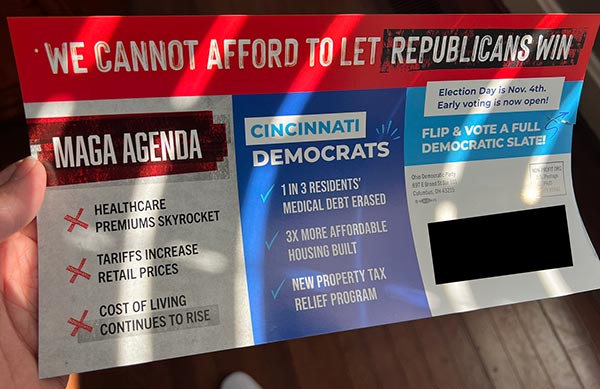
For many voters conditioned by a national political-media ecosystem meant to divide, that label carried more weight than local concerns. It overshadowed the issues directly affecting their daily lives.
One of our biggest challenges was cutting through that noise and helping people understand that local government — not Washington — determines the safety of their neighborhoods, the condition of their streets, the reliability of their services, and the integrity of their leadership.
National politics drive emotions. Local politics shape lives. That disconnect remains one of the biggest hurdles conservatives face in Cincinnati.
The Impact We Made Throughout the City
Despite the final vote count, our impact was real.
We forced accountability onto leaders who had grown comfortable with a lack of transparency. We exposed inefficiency, complacency, and corruption among city officials. Additionally, we brought renewed attention to communities — particularly in the West End — that have been overlooked and underserved for far too long.
We showed up in places conservatives rarely visit. We entered neighborhoods where Republicans have not been active in decades. These neighborhoods Democrats have taken for granted, while delivering very little in return.
The people we met appreciated seeing someone who wasn’t writing them off. That matters more than most political consultants are willing to admit.
Where Conservatives Must Go From Here
Cincinnati residents overwhelmingly want conservative policies: safer streets, fiscal responsibility, transparency, lower crime, and well-maintained infrastructure. Yet many remain unwilling to elect conservative leaders who would implement those policies.
This contradiction defines our central challenge.
We do not lose because our policies are unpopular. Instead, we lose because our presence is inconsistent, our grassroots infrastructure is thin, and our messaging is drowned out by national narratives that do not reflect what we stand for locally.
The question that keeps coming back to me is simple:
How do we show voters that the outcomes they want are delivered by conservative leadership — not by the Democrats they continue to elect?
That is the work ahead. And it starts now during the Cincinnati mayoral election.
Read More
Cincinnati ranks first as ‘most sought-after city’ for renters in Q3 2025


