


Share This Article
Article Summary
Cincinnati infrastructure projects in 2026 include major work on highways, bridges, and transit systems across Hamilton County and surrounding areas. Key efforts include the Brent Spence Bridge Corridor project and the Western Hills Viaduct replacement planning. State and local agencies are also coordinating ongoing road maintenance and interchange upgrades on interstates such as I-71, I-75, and I-275. Transit-related investments continue through programs focused on improving access to bus routes and pedestrian infrastructure.
Cincinnati is entering a pivotal construction year as large-scale infrastructure work expands across Hamilton County and the broader Tri-State region.
City leaders, state agencies, and transit officials are aligning investments to address aging structures, traffic congestion, and future growth.
Several projects now underway or beginning in 2026 are expected to reshape commuting patterns and economic activity for years to come.
The most visible efforts include highway reconstruction, bridge replacements, and transit-focused upgrades. According to reporting by WCPO and regional planning agencies, these projects span multiple phases and will continue into the next decade. While disruptions are expected in the short term, officials say the long-term benefits include improved safety, reduced congestion, and better multimodal access.
Brent Spence Bridge drives cincinnati infrastructure projects forward
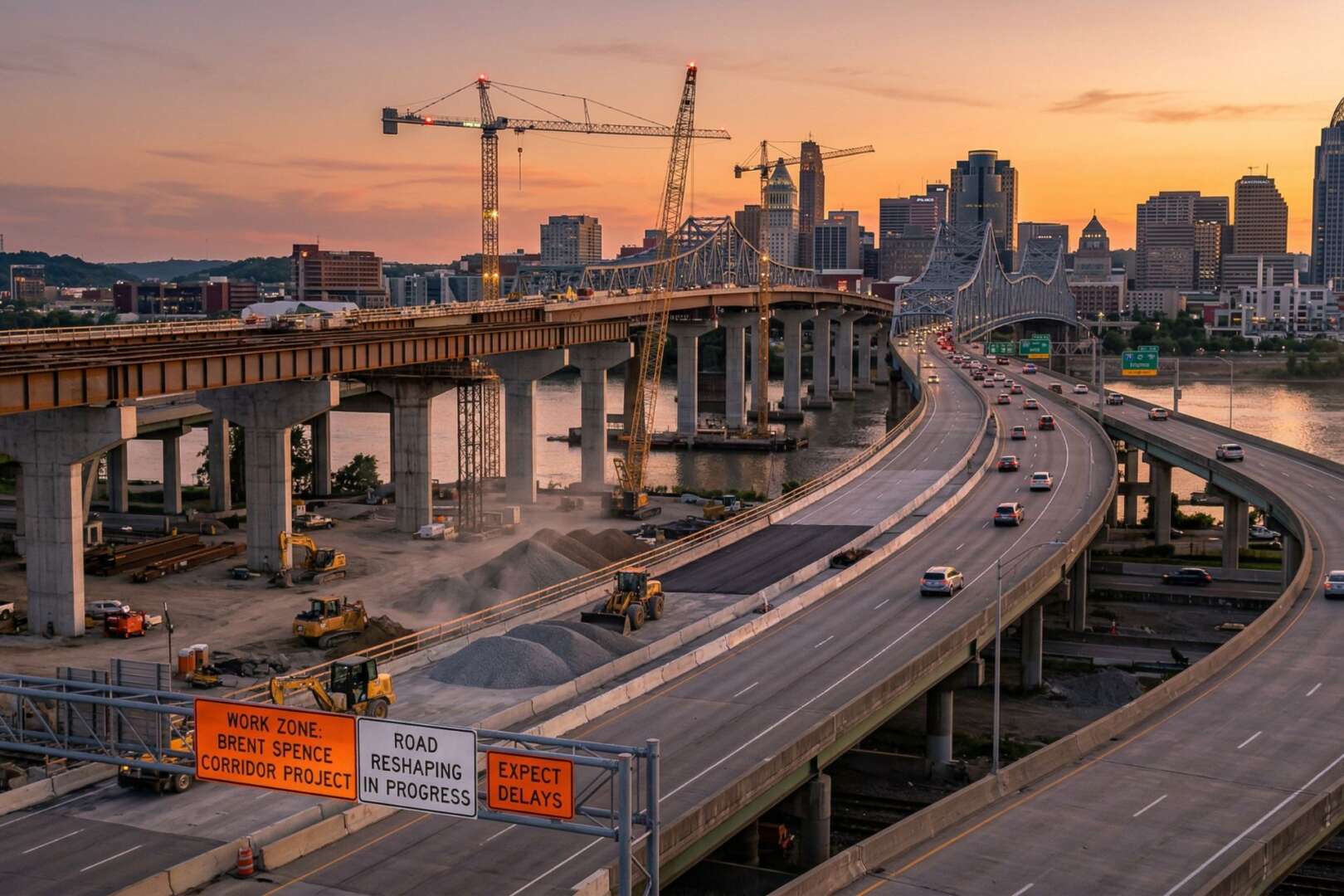
The Brent Spence Bridge Corridor project stands as the centerpiece of Cincinnati infrastructure projects in 2026. The $3.6 billion initiative will add a new companion bridge alongside the existing structure connecting Ohio and Kentucky.
Construction is expected to begin in early 2026 following years of planning and funding coordination. The new bridge will carry through traffic, while the existing bridge will shift to local use with fewer lanes and wider shoulders to improve safety.
Key components of the project include:
- A new double-decker companion bridge
- Redesigned ramps along I-71 and I-75
- Expanded pedestrian and bicycle infrastructure
- Safety improvements across an eight-mile corridor
According to ODOT project overview, the corridor is one of the most congested freight routes in the country. Officials expect the redesign to reduce bottlenecks and improve travel times across state lines.
However, the project has drawn attention beyond engineering. As reported by The Guardian, some residents and advocacy groups have raised concerns about environmental impact and neighborhood disruption tied to highway expansion. These discussions highlight broader debates about balancing mobility, sustainability, and community development.
Western Hills Viaduct anchors long-term bridge replacement plans
Another major effort shaping Cincinnati infrastructure projects is the replacement of the Western Hills Viaduct. The structure, originally built in the 1930s, carries more than 55,000 vehicles daily and is nearing the end of its functional lifespan.
City and county officials have secured funding for a new extradosed bridge, with construction expected to begin in 2026. The existing viaduct will remain operational during construction to minimize disruption.
The replacement project aims to:
- Improve structural safety and reliability
- Enhance connections between neighborhoods and downtown
- Support long-term traffic demand on the West Side
Local coverage from WCPO notes that this project is part of a broader set of regional upgrades scheduled over multiple phases.
Road projects and highway upgrades expand across the region
Beyond headline projects, Cincinnati infrastructure projects include a wide range of road improvements across interstate and local corridors. State transportation plans emphasize modernization of I-71, I-75, and I-275, which serve both commuters and freight traffic.
These improvements typically involve:
- Lane expansions and interchange redesigns
- Pavement rehabilitation and resurfacing
- Bridge repairs and structural upgrades
- Traffic flow and safety enhancements
Construction activity will likely lead to temporary closures and detours throughout 2026. Officials have warned drivers to expect delays, especially in high-traffic corridors near downtown and major interchanges.
According to regional reporting, additional projects such as the Fourth Street Bridge replacement are also beginning phases in 2026, adding to the overall construction footprint.
Transit investments support broader cincinnati infrastructure projects
Transit development plays a growing role in Cincinnati infrastructure projects, particularly through targeted funding programs. The Metro Transit Infrastructure Fund (MTIF) continues to support improvements near bus routes and transit corridors.
Since its launch, the fund has supported over 100 projects, including sidewalks, bridges, and road upgrades designed to improve access to public transportation.
The program focuses on:
- Enhancing pedestrian access to transit stops
- Improving safety along transit corridors
- Supporting local governments with infrastructure funding
A recent feature by WVXU reported that the fund has completed multiple funding rounds and continues to drive infrastructure improvements across Hamilton County.
Readers can learn more through Cincinnati Metro’s transit infrastructure program, which outlines eligibility and project criteria.
Economic impact and regional growth outlook
Cincinnati infrastructure projects are expected to generate significant economic activity. Large-scale construction creates jobs, supports local contractors, and attracts long-term investment. Regional planners view these projects as critical to maintaining competitiveness in freight, logistics, and urban development.
The Brent Spence Bridge project alone is projected to require millions of labor hours and hundreds of workers during peak construction phases.
At the same time, officials emphasize that infrastructure upgrades are necessary to support population growth and evolving transportation needs. Improved connectivity can also influence housing development, business expansion, and access to employment centers.
Community impact and planning considerations
While Cincinnati infrastructure projects bring long-term benefits, they also present challenges for residents. Construction zones, detours, and noise can disrupt daily life, particularly in neighborhoods near major corridors.
Community concerns include:
- Environmental and air quality impacts
- Displacement or land use changes
- Access during construction phases
As reported by national and local outlets, public input continues to shape how projects are implemented. Officials have incorporated pedestrian pathways, green space considerations, and urban design elements into several plans to address these concerns.
Looking ahead
Cincinnati infrastructure projects in 2026 represent a coordinated effort to modernize transportation systems across the region. From major bridges to neighborhood-level transit improvements, the scope of work reflects long-term planning priorities at both the city and state level.
Construction will continue for years, with some projects extending into the 2030s. Despite short-term disruptions, officials maintain that these investments are essential for improving safety, mobility, and economic growth across Cincinnati and the surrounding region.
FAQs
What are the major Cincinnati infrastructure projects in 2026?
Major projects include the Brent Spence Bridge Corridor initiative, the Western Hills Viaduct replacement planning, and multiple interstate rehabilitation efforts. These projects are part of long-term transportation upgrades coordinated by state and local agencies.
When will construction begin on the Brent Spence Bridge project?
Construction is expected to begin in phases following final planning and funding approvals. The project involves a new companion bridge and improvements to the existing structure, with work extending over multiple years.
Which highways are affected by road projects in Cincinnati?
Key highways affected include I-71, I-75, and I-275, where ongoing work includes resurfacing, interchange redesigns, and structural upgrades. These projects are part of statewide maintenance and modernization programs.
How will these infrastructure projects affect traffic in 2026?
Drivers should expect lane closures, detours, and congestion in active construction zones. Traffic impacts will vary by project phase and location, particularly near major interchanges and bridge construction areas.