
Share This Article
Article Summary
Housing development in Cincinnati is evolving following major zoning reforms designed to increase density and reduce regulatory barriers. City data shows a rise in housing production and fewer required hearings, signaling a more efficient permitting process. Officials say it is still too early to measure the full long-term impact, but early indicators point to increased construction activity. Suburban growth and regional trends continue to complement the city’s urban infill strategy.
Urban density drives local growth
Cincinnati is undergoing a shift in residential development following the adoption of its “Connected Communities” zoning reform in 2024.
The policy was approved by City Council to expand housing options and reduce regulatory barriers, particularly along transit corridors and neighborhood business districts, and has already influenced Cincinnati housing permits.
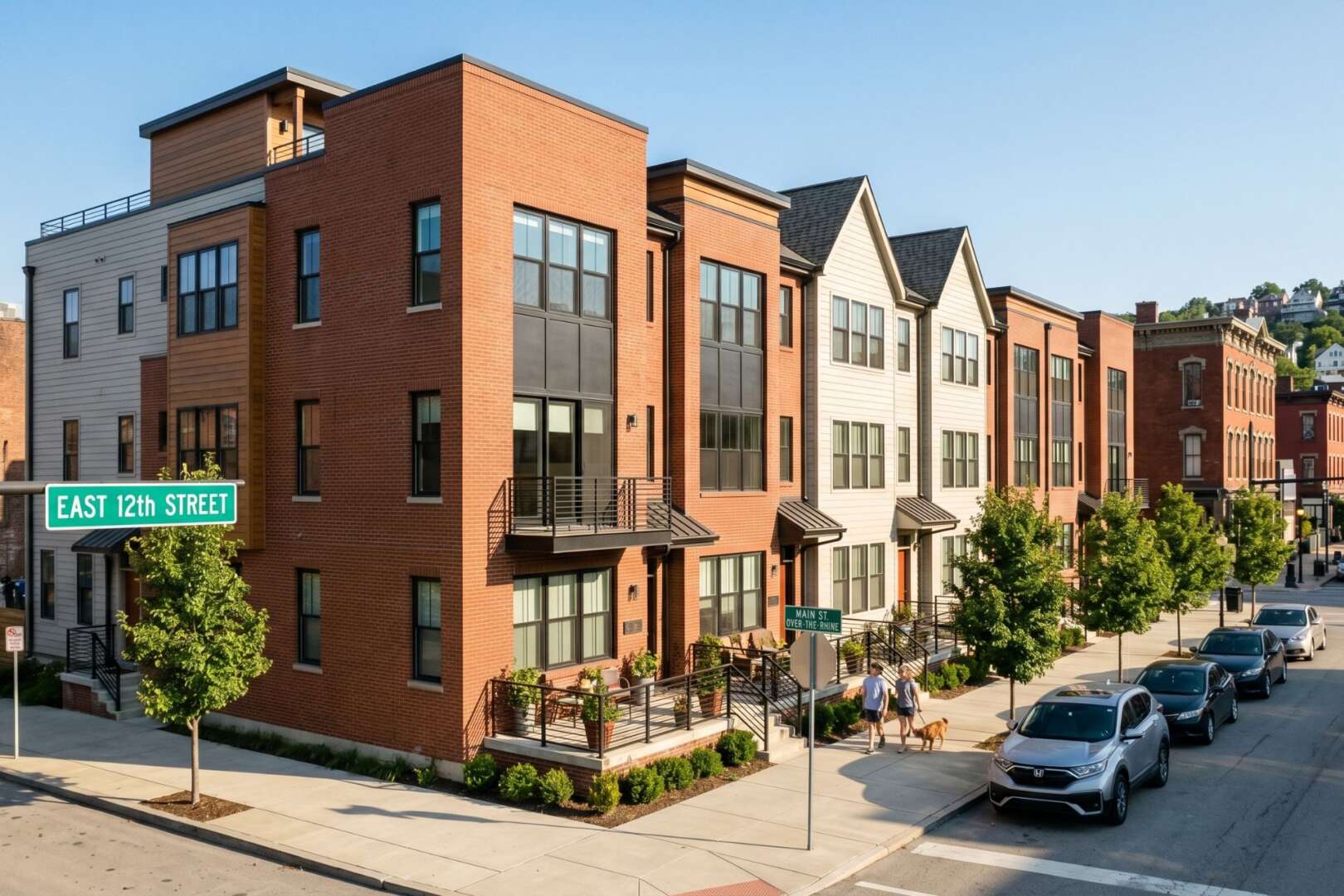
The reform allows small-scale multi-family housing—often called “missing middle” housing—such as duplexes, triplexes, and rowhouses in areas previously limited to single-family homes. It also removes certain density limits and reduces parking requirements, enabling developers to build more units per parcel.
City planners say the goal is to increase supply and improve affordability over time. According to a report by Cincinnati Department of Planning and Engagement, the changes are intended to “reduce regulatory barriers for construction.” Cincinnati housing permits data will be one way to measure this progress.
| Neighborhood | Permitted Units (2025-26) | Development Type | Primary Growth Driver |
|---|---|---|---|
| Oakley | 351 | Mixed-Use Mid-rise | Retail & Lifestyle Hub |
| Downtown | 341 | Adaptive Reuse | Office-to-Resi Conversions |
| West End | 285 | Multi-family | FC Cincinnati Stadium District |
| Walnut Hills | 215 | Urban Infill | Woodburn Exchange Project |
| Westwood | 167 | Affordable Housing | Commercial Site Redevelopment |
| Over-the-Rhine | 142 | Historic Infill | Preservation Tax Credits |
Measurable changes in permit activity
Early data suggests the zoning overhaul is already affecting development patterns.
A key metric cited by city officials is the ratio of building permits to zoning hearings, according to a report by WVXU:
- 2023: 13 permits per hearing
- 2024: 14.2 permits per hearing
- 2025: 16.3 permits per hearing
This upward trend indicates that more projects are moving forward with fewer discretionary approvals. Demand for Cincinnati housing permits continues to rise as a result.
Deputy Director Emily Ahouse said the shift reflects a reduction in procedural barriers:
“We’re seeing… fewer required hearings,” indicating regulatory streamlining.
In addition, the city recorded a net gain of nearly 1,300 housing units in 2025, with neighborhoods like Oakley and Downtown leading new development.
However, officials caution that permitting data alone does not fully capture long-term outcomes.
“It’s too soon to determine the impact… because units are tracked based on closed permits,” Ahouse said.
“Missing middle” housing and by-right development
The Connected Communities framework emphasizes “missing middle” housing as a core strategy to address affordability gaps. These housing types are typically more cost-efficient and fit within existing neighborhoods.
In many cases, projects that comply with updated zoning rules may bypass discretionary public hearings, moving through administrative review instead. This “by-right” approach creates a more predictable timeline for developers while still requiring compliance with building codes and planning standards.
Regional reporting and planning analyses indicate that Cincinnati is increasingly prioritizing this type of incremental density, particularly near transit routes and business districts.
Suburban growth and regional trends
While the urban core is densifying, suburban counties continue to expand rapidly.
Data from Clermont County shows record-setting development activity in 2025, marking continued growth in residential permits and construction.
This dual pattern—urban infill combined with suburban expansion—reflects broader housing demand across the Cincinnati metro area. Developers are increasingly treating the Cincinnati-Dayton corridor as a connected regional market, particularly as zoning and permitting processes evolve.
Ongoing challenges in the permitting pipeline
Despite improvements, developers still face constraints:
- Labor shortages
- High material costs
- Inspection and administrative backlogs
Industry feedback continues to highlight the time between application and construction as a key bottleneck, even as zoning reforms reduce upfront hurdles. Therefore, additional upgrades to the Cincinnati housing permits process are being considered.
Local officials acknowledge these challenges and are exploring additional measures, including digital permitting systems and standardized approvals, to improve efficiency.
Future outlook for Cincinnati housing permits
City leaders and analysts expect permit activity to stabilize as the initial surge from zoning reforms levels off.
The long-term impact of Connected Communities may take several years to fully materialize. Regional planning estimates suggest meaningful increases in density could take three to five years to become visible in the built environment.
In the near term, Cincinnati’s housing strategy will likely balance:
- Increased density in the urban core
- Continued suburban expansion
- Gradual improvements in permitting efficiency
Conclusion
Cincinnati’s zoning reforms are reshaping how housing projects move from proposal to construction. Early data shows more permits advancing with fewer hearings and a measurable increase in housing production. For residents and developers alike, understanding trends in Cincinnati housing permits will become increasingly important in the years ahead.
While challenges remain, the shift toward by-right development and “missing middle” housing signals a structural change in how the city approaches growth. The coming years will determine whether these reforms translate into sustained affordability and long-term housing supply gains.
FAQs
What is Cincinnati’s “Connected Communities” zoning reform?
“Connected Communities” is a zoning policy adopted in 2024 to allow more housing types in more areas of the city. It expands options like duplexes and triplexes while reducing density limits and parking requirements to support increased housing supply.
How have housing permits changed since the reform?
City data shows a rising ratio of permits to zoning hearings, indicating that more projects are moving forward with fewer approvals required. This suggests a more streamlined permitting process, though long-term trends are still being evaluated.
What is “missing middle” housing?
“Missing middle” housing refers to small-scale multi-family units such as duplexes, triplexes, and rowhouses. These housing types are designed to fit within existing neighborhoods and are generally more cost-efficient than large apartment developments.
Are there still challenges in the permitting process?
Yes, developers continue to face issues such as labor shortages, high material costs, and administrative delays. While zoning reforms reduce regulatory barriers, the time between application and construction remains a key constraint.