



Share This Article
Article Summary
Cincinnati events and tourism generate a $6.5 billion annual economic impact, supporting 67,000 jobs and producing $229 million in tax revenue for Hamilton County. The arts and entertainment sector is experiencing significant growth, highlighted by a 29% increase in related jobs and massive turnouts for events like the 2022 BLINK festival. To sustain this momentum, local officials are pursuing infrastructure upgrades, including a proposed $675-$800 million arena and $470 million in stadium renovations, while successfully attracting national conventions and sporting events.
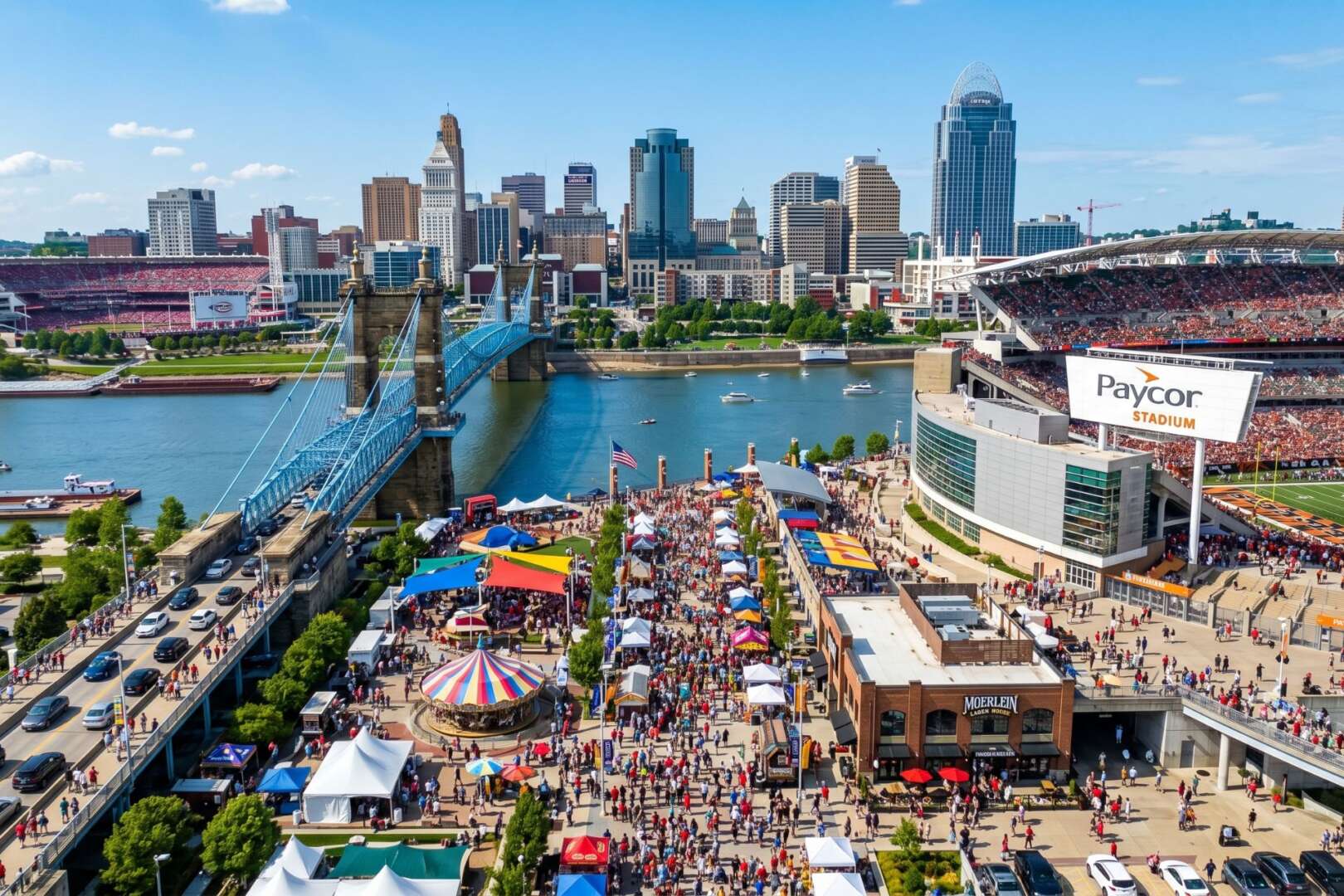
The growing momentum behind Cincinnati events is reshaping the regional economy in 2026.
Tourism officials expect Cincinnati events to drive billions in local revenue this year.
The local tourism sector is experiencing a historic surge. Major festivals and concerts attract millions of visitors annually. The city is rapidly transforming into a premier destination for entertainment. Local officials report record-breaking hotel bookings and restaurant sales. This surge brings massive financial benefits to the entire region.
According to a recent report by Visit Cincy, the visitor economy has a billion-dollar impact. Visitors currently spend about $6.5 billion annually in the region. This aggressive spending supports 67,000 local jobs. It also generates roughly $4 billion in regional wages. These numbers highlight the profound importance of local attractions.
How Cincinnati events boost local business
Small businesses thrive when large gatherings come to town. Restaurants, shops, and hotels rely on the foot traffic generated by these festivals. Cincinnati events create a ripple effect throughout Hamilton County. When attendees spend money, that capital recirculates locally. This dynamic strengthens the overall economic foundation of the city.
The local hospitality scene serves as a catalyst for urban development. Increased visitor spending generates millions in essential local tax revenue. Hamilton County alone sees roughly $229 million in tax revenue from tourism. This funding supports essential public services and infrastructure projects. It accounts for nearly a quarter of all local business revenue.
Employment opportunities continue to grow alongside tourism. The arts, entertainment, and recreation sector recently saw a 29% increase in job growth. This data comes from the Cincinnati Regional Chamber. More visitors mean a higher demand for skilled hospitality workers. A thriving entertainment sector directly improves the local job market.
Local breweries and independent eateries also see immediate boosts. Weekend festivals often double or triple their regular sales volumes. Food vendors participating directly in street fairs gain invaluable exposure. This expanded reach allows small food startups to establish a loyal customer base. The food and beverage industry remains closely tied to festival success.
The billion-dollar impact of festivals and arts
Arts and culture are significant economic drivers for the region. A recent study commissioned by ArtsWave reveals staggering numbers. The regional arts sector generated $1.6 billion in total economic impact between 2019 and 2022.Planners expect that annual impact to reach $586.7 million by 2027. Cultural vibrancy clearly translates into financial prosperity.
Large-scale art festivals completely transform the city. The acclaimed BLINK festival remains a prime example of this success. In 2022, BLINK attracted over two million attendees. This massive turnout resulted in a direct economic impact of $126 million. The festival also supported nearly 1,700 local jobs.
Concerts and music festivals also play a vital role in our growth. Live music draws enthusiastic fans from neighboring states. Attendees book hotel rooms for the weekend and explore downtown. These multi-day stays maximize the economic benefits for the community. Consistent programming of Cincinnati events keeps the regional economy robust and diversified.
New infrastructure supporting Cincinnati events
The city is actively investing in new entertainment infrastructure. Officials are discussing a brand-new, 18,000-seat sports arena. A feasibility study led by the Cincinnati Regional Chamber recommends this bold move. The projected cost sits between $675 and $800 million. This investment could generate over $1.2 billion in construction-related impact.
A new arena would drastically increase the city’s hosting capacity. The current facility hosts roughly 90 gatherings a year.A modern arena could easily host 116 or more. This means more national tours, sports tournaments, and major conventions. Expanding capacity is crucial for long-term tourism growth.
Stadium renovations are also securing the city’s sports future. Hamilton County and the Cincinnati Bengals recently locked in a lease agreement. The deal includes approximately $470 million in stadium renovations. As noted in our recent coverage on local stadium updates, this commitment keeps professional football in the city through at least 2036.Professional sports remain a cornerstone of the local visitor economy.
Why tourism growth in Ohio leads the Midwest
The region continues to outpace national travel trends. In fact, despite national industry challenges, the city reported exceptionally strong results. For example, new convention requests increased by 7% recently. Furthermore, this growth happened while the broader Midwest saw a 15% decline. As a result, the city is aggressively capturing a larger share of the market.
To build on this momentum, a reimagined convention district is currently underway. Specifically, Visit Cincy recently announced a bold new era for the Cincinnati Convention Center. The transformation includes a future headquarters hotel. Additionally, it features a walkable, connected district that flows seamlessly into the Fountain District. Ultimately, this development creates a vibrant visitor experience.
Alongside convention growth, sports tourism is another rapidly expanding sector. The newly formed Cincinnati Regional Sports Commission is leading this charge. Specifically, this commission aims to capture more youth, amateur, and national competitions. Consequently, these massive tournaments bring thousands of families into the city. Overall, the economic and quality-of-life benefits are substantial.
Here is a breakdown of why this growth matters:
- It lowers the local tax burden on residents.
- It spurs real estate and infrastructure development.
- It creates a wider variety of dining and retail options.
- It elevates the national profile of the region.
The future of Cincinnati events in 2026
The momentum shows no signs of slowing down this year. Planners are already executing aggressive marketing campaigns. Visit Cincy recently unveiled its “ALWAYS BOLD” destination advertising campaign. This initiative targets meeting and convention planners nationwide. It perfectly aligns the city’s brand with its revitalized facilities.
Community engagement remains essential to this continued success. Tourism officials encourage locals to advocate for their city. Residents can help bring professional associations and meetings home. Every new convention booked directly impacts the local small business ecosystem. Collective effort ensures continued growth for the entire region.
The calendar is packed with upcoming cultural celebrations. The city will soon host the 2026 USA Fencing North American Cup. Various music festivals, art exhibits, and concerts are also scheduled. These ongoing activities keep the city vibrant and dynamic. A steady flow of Cincinnati events ensures consistent visitor spending.
FAQs
How much revenue does the Cincinnati visitor economy generate?
The Cincinnati visitor economy generates $6.5 billion in annual spending. This activity directly supports 67,000 local jobs and creates roughly $4 billion in regional wages.
What is the economic impact of arts and cultural festivals in the region?
The regional arts sector produced a $1.6 billion economic impact between 2019 and 2022. Large-scale events significantly contribute to this, such as the 2022 BLINK festival which generated $126 million directly and attracted over two million attendees.
What new infrastructure is being planned to support future events?
Local officials are considering a new 18,000-seat sports arena estimated to cost between $675 and $800 million to increase event capacity. Additionally, Hamilton County and the Cincinnati Bengals agreed to a lease that includes $470 million in stadium renovations. A reimagined convention district featuring a new headquarters hotel is also currently underway.
How does Cincinnati's tourism growth compare to broader regional trends?
Cincinnati recently experienced a 7% increase in new convention requests. During this same period, the broader Midwest region experienced a 15% decline in similar requests.