



Share This Article
Article Summary
Major ramp closures connected to the Brent Spence Bridge Corridor Project will begin in downtown Cincinnati starting June 28 and continue through July. The closures include permanent shutdowns of several interstate and U.S. 50 ramps, along with a long-term closure of the I-71 northbound exit to Second Street through approximately fall 2028. Transportation officials say the changes are necessary to support construction of the new companion bridge and related highway improvements. Drivers should expect detours, modified downtown access routes, and ongoing traffic impacts as work progresses on the multi-year infrastructure project.
Drivers who travel through downtown Cincinnati will soon encounter significant changes as state transportation officials move forward with a new phase of construction tied to the Brent Spence Bridge Corridor Project.
Officials from the project announced a series of permanent and long-term ramp closures on the Ohio side that will begin June 28 and continue into July.
The changes are expected to alter traffic patterns throughout downtown and nearby neighborhoods. Transportation leaders say the closures are necessary to support construction of the new companion bridge and related highway improvements. The project represents one of the largest infrastructure investments in the Cincinnati region.
The announced closures include both permanent ramp removals and temporary restrictions that will remain in place for several years. According to project officials, motorists should prepare for detours, increased congestion, and changing access routes into downtown Cincinnati. Similar traffic changes have already started on the Kentucky side of the river, where multiple ramps in Covington closed earlier this month. Local transportation agencies continue to encourage drivers to review updated traffic maps before traveling through the corridor.
Brent Spence closures begin in late June
The first of the Brent Spence closures is scheduled for June 28 at approximately 10 p.m. At that time, the exit ramp from eastbound U.S. 50, also known as the Sixth Street Viaduct, to Second Street will permanently close.
Additional closures will follow:
- June 29: I-75 southbound Exit 1A to Second Street permanently closes.
- July 7: Westbound U.S. 50 ramp to Gest Street permanently closes.
- July 8: I-71 northbound Exit 1A to Second Street closes until fall 2028.
- July 9: Second Street reduces to one lane between the Clay Wade Bailey Bridge and Elm Street through spring 2027.
Officials said the permanently closed ramps will eventually be replaced by redesigned roadway connections that better integrate with the future traffic configuration. A new ramp to Third Street is expected to provide access to Second Street, while other roadway improvements will be introduced during later phases of construction. The timeline remains subject to weather conditions and construction progress.
What the Brent Spence closures mean for drivers
The upcoming traffic changes are expected to have the greatest impact on commuters entering downtown Cincinnati from Interstate 71, Interstate 75, and U.S. 50. Drivers who regularly use Second Street access points may need to adjust routes and allow extra travel time during peak hours.
According to reports from WLWT and WCPO, project planners have attempted to stage the closures in a way that maintains access to downtown while construction continues. However, transportation officials acknowledge that some congestion is unavoidable during major infrastructure projects of this scale. Reporters from both outlets noted that motorists in Northern Kentucky have already experienced detours and route changes following recent ramp closures associated with the corridor project.
Community discussions on social media have reflected mixed reactions. Some commuters expressed frustration over the loss of familiar downtown access routes, while others noted that temporary disruptions are necessary to deliver long-term transportation improvements. Discussions on Cincinnati-area forums have highlighted concerns about longer commute times during construction, particularly for drivers heading to The Banks and downtown employment centers.
Why the project is moving forward
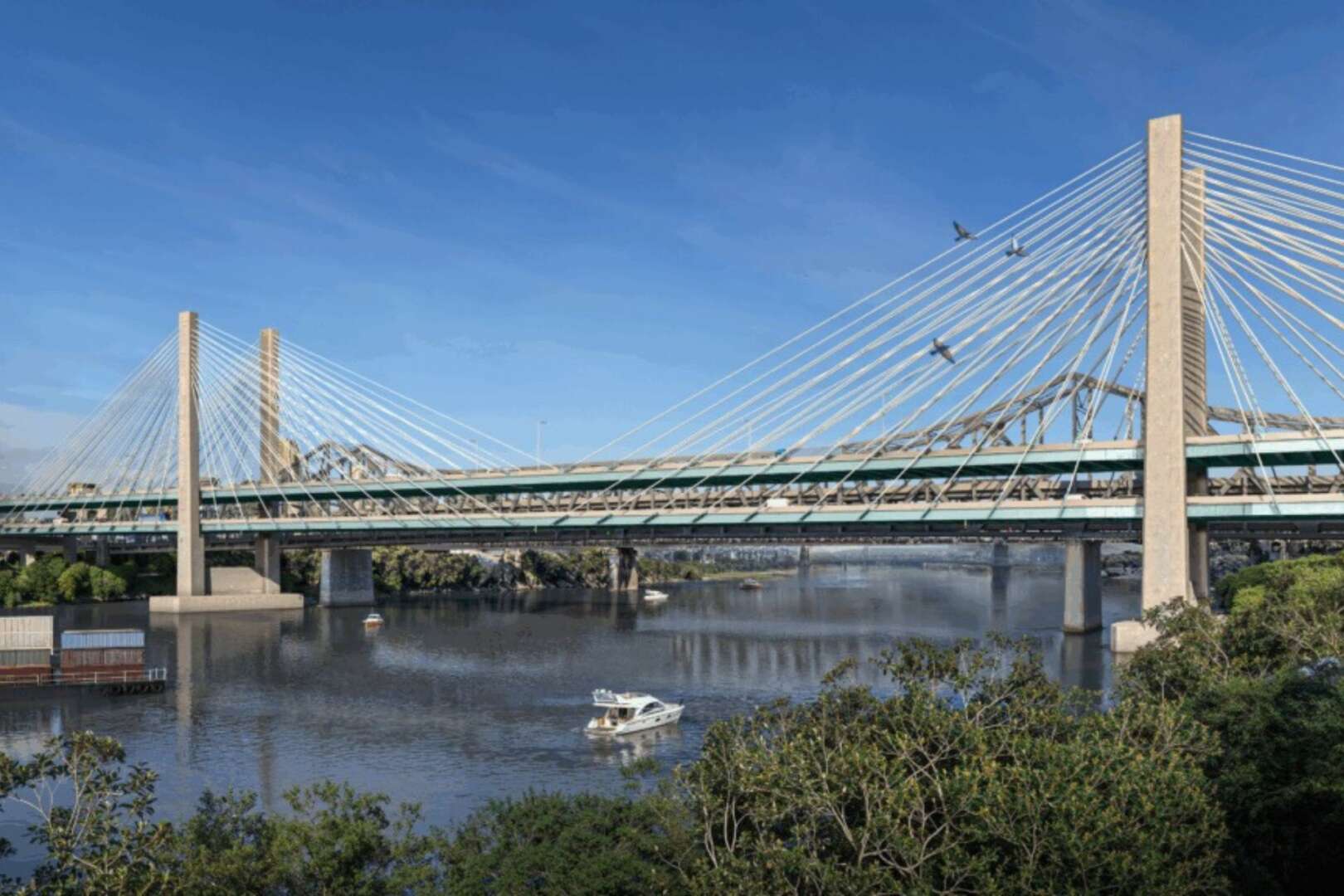
The Brent Spence Bridge Corridor Project extends far beyond the construction of a new bridge. The effort includes a companion bridge west of the existing Brent Spence Bridge, major interstate reconstruction, improved local road connections, and redesigned traffic flow patterns through Cincinnati and Covington.
Transportation officials have repeatedly stated that the project aims to separate local traffic from interstate through traffic. Under the future design, the existing Brent Spence Bridge will primarily serve local travelers, while the new companion bridge will accommodate through traffic. Officials believe the change will improve safety, reduce bottlenecks, and increase overall capacity across one of the nation’s most important freight corridors.
The project officially entered a major construction phase in 2026 following a groundbreaking ceremony attended by state and federal leaders from Ohio and Kentucky. Officials described the undertaking as a transformative investment for the regional economy and transportation network.
Brent Spence closures mark a long-term transition
The current closures represent only one portion of a construction effort expected to continue through the end of the decade. Project leaders anticipate that the companion bridge will open around 2031, while additional corridor improvements will continue afterward.
Drivers should expect periodic traffic advisories, detours, and lane restrictions as construction progresses. Transportation agencies encourage travelers to monitor updates from the Brent Spence Bridge Corridor Project, the Ohio Department of Transportation, and the Kentucky Transportation Cabinet.
For additional information, drivers can review updates from the Brent Spence Bridge Corridor Project and traffic guidance from the Ohio Department of Transportation.
As construction enters a more visible phase, the Brent Spence closures will become one of the most significant traffic stories affecting Cincinnati commuters in 2026. While disruptions are expected, transportation officials maintain that the long-term benefits will reshape travel across the Ohio River corridor for decades to come.
FAQs
What ramps will close first as part of the Brent Spence closures?
The first closure is scheduled for June 28, when the eastbound U.S. 50 ramp to Second Street permanently closes. The I-75 southbound Exit 1A to Second Street will permanently close the following day.
How long will the I-71 northbound exit to Second Street remain closed?
The I-71 northbound Exit 1A to Second Street is expected to close on July 8. Project officials estimate the closure will remain in place until approximately fall 2028.
Why are these closures necessary?
The closures support construction activities related to the Brent Spence Bridge Corridor Project. Officials are redesigning roadway connections and building infrastructure needed for the future traffic configuration.
Will drivers still be able to access downtown Cincinnati?
Yes. Transportation officials say access to downtown will remain available throughout construction. However, motorists may need to use alternate routes and should expect changing traffic patterns and possible delays.