



Share This Article
Article Summary
The U.S. Supreme Court vacated a lower court ruling involving former Cincinnati councilman P.G. Sittenfeld and sent the case back for further review. The action follows a 2025 pardon issued by Donald Trump. The decision allows a lower court to reconsider whether Sittenfeld’s conviction should be dismissed. The case centers on how fully a presidential pardon applies to prior convictions.
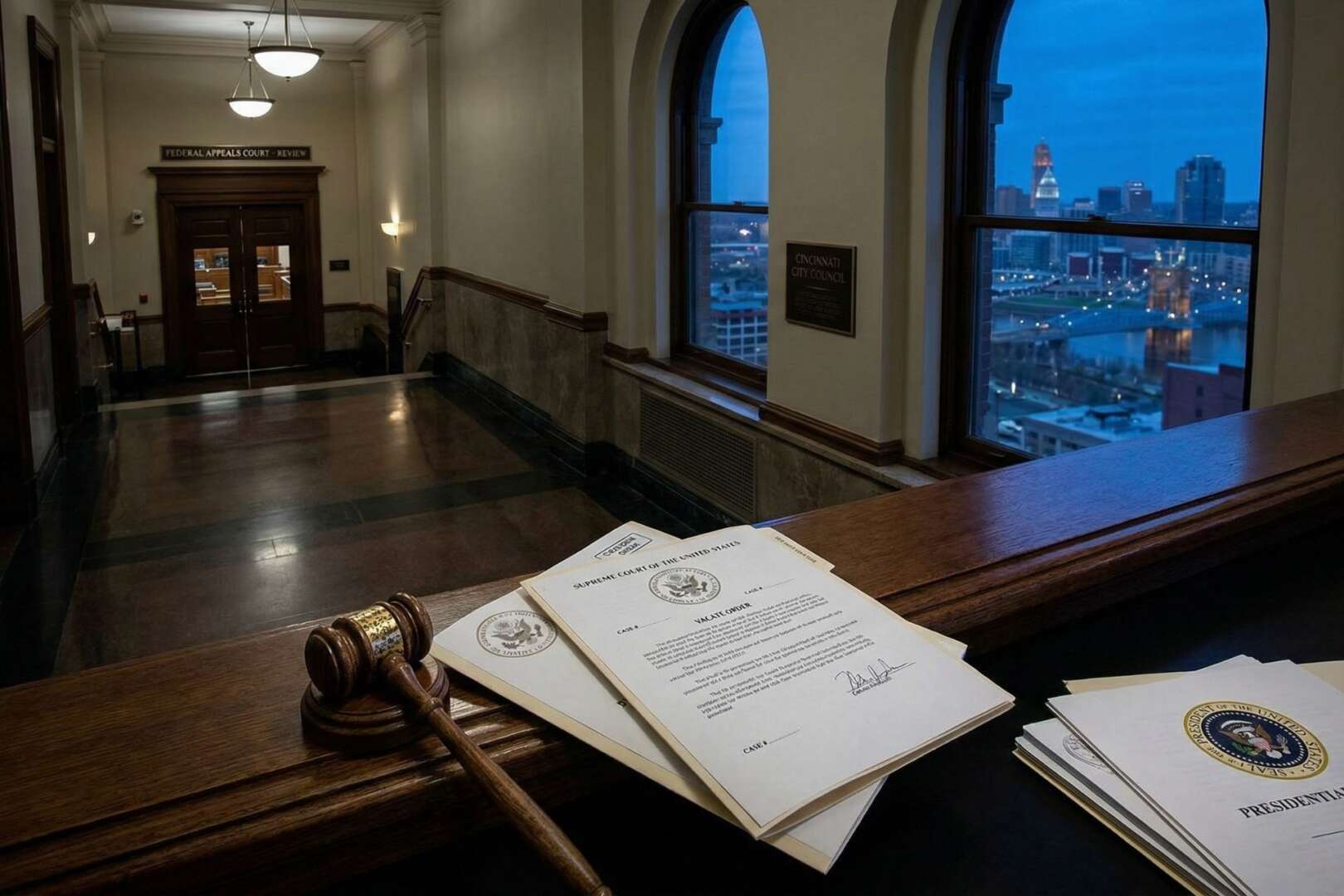
The U.S. Supreme Court issued an order in April 2026 that gives former Cincinnati City Council member P.G. Sittenfeld a renewed legal opportunity.
The justices vacated a lower court ruling that had upheld his conviction and sent the case back for further review.
The move follows a 2025 presidential pardon granted by Donald Trump. While the pardon forgave the offense, it did not automatically erase the conviction. This latest development could change that outcome. Legal experts say the decision may influence how courts treat pardoned cases nationwide.
Supreme Court break sends case back to lower court
The Supreme Court break directs a federal appeals court to reconsider Sittenfeld’s case in light of the pardon. According to The Boston Globe, the high court did not rule on guilt or innocence. Instead, it cleared procedural barriers that had kept the conviction intact.
This type of action, known as a “vacate and remand,” gives lower courts authority to revisit earlier decisions. Judges must now determine whether the conviction should stand or be dismissed entirely.
The U.S. Department of Justice has supported dismissing the case to fully implement the pardon. According to FOX19, federal prosecutors argued that leaving the conviction in place undermines the intent of presidential clemency. The lower court will weigh that position against legal precedent. The decision could come in the coming months.
Sittenfeld was convicted in 2022 on bribery and attempted extortion charges tied to a federal corruption probe. Prosecutors said he sought campaign contributions in exchange for favorable treatment on development projects. He served part of a 16-month prison sentence before receiving clemency. The case drew national attention due to its implications for local government ethics.
What the Supreme Court break means for pardoned cases
The Supreme Court break highlights a key legal issue: what a presidential pardon actually does. A pardon removes punishment but does not always erase the conviction itself. That distinction can carry long-term consequences. Individuals may still face reputational harm, financial penalties, or restrictions tied to a criminal record.
Legal scholars note that courts sometimes step in to resolve these gaps. In this case, the Supreme Court signaled that lower courts should reconsider how fully a pardon should apply. The outcome could set a precedent for similar cases. If the conviction is dismissed, it would go beyond forgiveness and effectively wipe the slate clean.
Key legal questions now include:
- Should a pardon automatically nullify a conviction?
- Do courts have authority to dismiss charges after clemency?
- How should unresolved penalties be handled?
These issues have surfaced in other high-profile cases involving federal pardons. However, rulings have varied across jurisdictions. This case may help clarify the standard moving forward.
Political and legal reactions to the Supreme Court break
The Supreme Court break has drawn mixed reactions from legal analysts and political observers. Supporters argue the move ensures that presidential pardons carry full legal weight. Critics warn it could weaken accountability in public corruption cases. The debate reflects broader tensions around executive clemency powers.
Some experts point to the constitutional authority granted to presidents. Under Article II, the president can issue pardons for federal offenses. However, the Constitution does not clearly define how courts must treat those pardons afterward. That ambiguity has led to differing interpretations.
Local reaction in Cincinnati has also been divided. The original case was part of a broader federal investigation into corruption within city government. Residents and officials have expressed concern about maintaining public trust. Others view the legal process as separate from political accountability.
How this affects Cincinnati and future cases
The Supreme Court break could have lasting implications beyond this single case. If the lower court dismisses the conviction, it may influence how future pardons are handled. Legal experts say the ruling could encourage more challenges from individuals seeking to clear their records.
For Cincinnati, the case remains a reminder of past corruption concerns. It also highlights the intersection of local governance and federal law enforcement. The city has since taken steps to strengthen ethics rules and oversight. Still, the outcome of this case may shape public perception.
At the national level, the decision may prompt further legal challenges. Courts could face increased pressure to define the scope of presidential pardons. Lawmakers may also revisit the issue through legislation or hearings.
What happens next after the Supreme Court break
The case now returns to a lower federal court for review. Judges will consider whether to dismiss the indictment or uphold the conviction despite the pardon. The timeline for a decision remains unclear. Legal filings and arguments could extend the process.
If the court dismisses the case, Sittenfeld’s conviction would no longer carry legal weight. If not, the conviction could remain on record despite the pardon. Either outcome may lead to additional appeals.
For now, the Supreme Court break represents a significant step in the legal process. It does not resolve the case but reopens it. The final decision will determine how far a presidential pardon can go in erasing a criminal case.
FAQs
What is the Supreme Court break in this case?
The Supreme Court break refers to the U.S. Supreme Court vacating a lower court ruling and sending the case back for review. It allows judges to reconsider the legal impact of a presidential pardon.
Who is P.G. Sittenfeld?
P.G. Sittenfeld is a former Cincinnati city councilman convicted in 2022 on bribery-related charges. He later received a presidential pardon in 2025.
Does a presidential pardon erase a conviction?
A pardon forgives the crime and removes punishment, but it does not automatically erase the conviction. Courts may need to take additional steps to dismiss the case.
What happens next in this case?
A lower federal court will review the case following the Supreme Court break. Judges will decide whether to dismiss the conviction or leave it in place.