



Share This Article
Article Summary
A recent investigation by The Marshall Project and Ohio news outlets reveals that drug-related offenses in Ohio prisons doubled to nearly 21,000 between 2020 and 2024. The crisis is heavily driven by synthetic cannabinoids, often referred to as K2, which are smuggled into facilities through drug-soaked mail, commercial drone drops, and corrupt prison staff. Consequently, fatal overdoses among inmates have sharply increased, with state officials confirming at least 13 drug-related deaths in 2024.
State leaders face mounting pressure to solve a deadly prison drug crisis across Ohio.
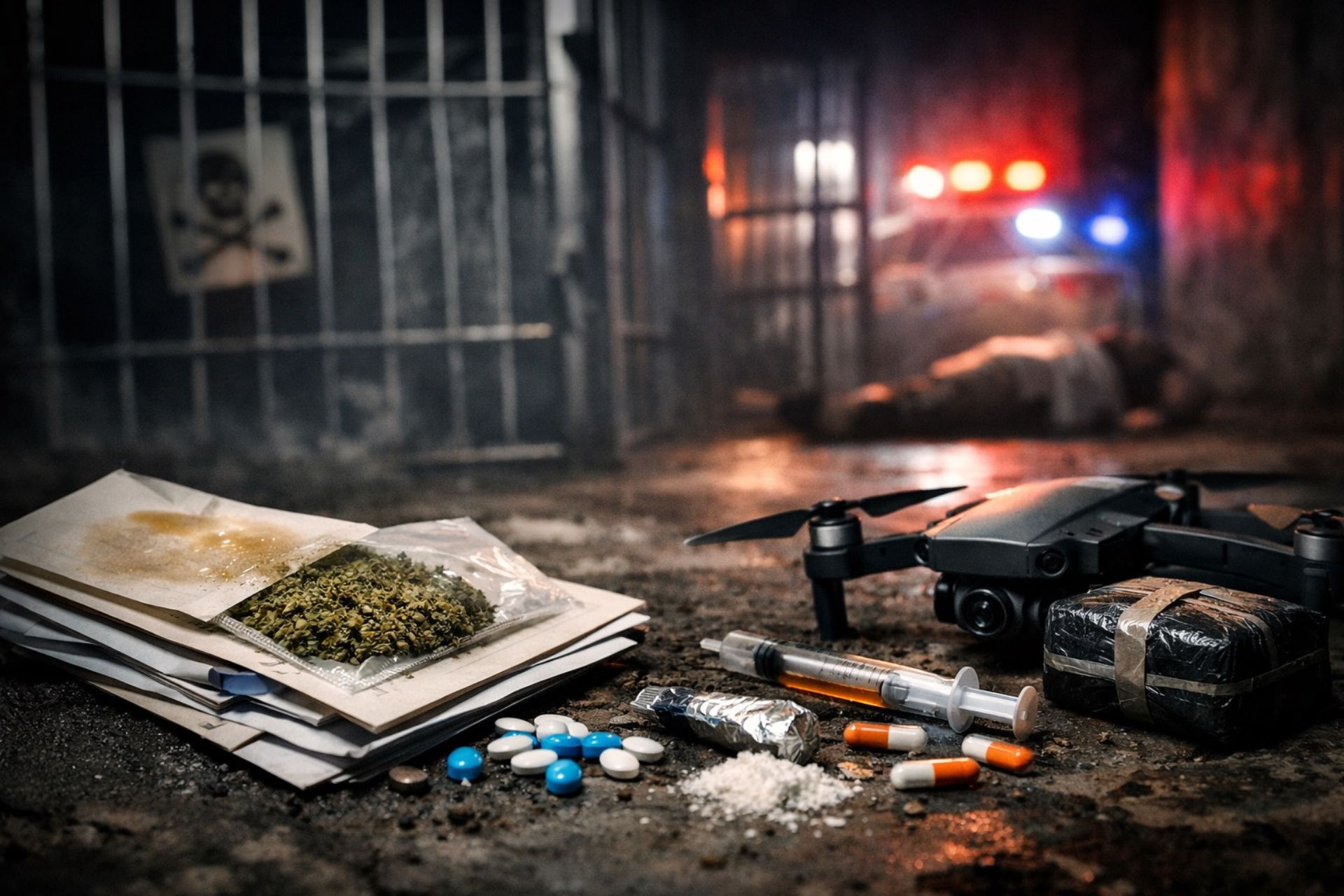
This multimillion-dollar prison drug crisis drives addiction, violence, and fatal overdoses inside state facilities.
A major investigation exposes a massive underground economy. The Marshall Project led this yearlong reporting effort.
The Columbus Dispatch and Cincinnati Enquirer also partnered on the project. Their findings reveal a staggering system failure.
Contraband floods into state correctional facilities daily. A sophisticated network of smugglers completely undermines state authority.
The true scale of the prison drug crisis
State records show a dramatic spike in contraband violations. Inmates committed nearly 21,000 drug offenses between 2020 and 2024.
These numbers doubled over just a four-year period. The overall inmate population grew by only six percent simultaneously.
This wide disparity highlights a severe breakdown in facility security. Millions of taxpayer dollars fund new scanning technology.
Yet, illegal substances still bypass these expensive defense measures daily. Authorities admit they are losing ground against organized smuggling rings.
Tracking the rise of fatal overdoses
Fatal overdoses highlight the deadly nature of this problem. In fact, officials confirmed at least 13 drug-related deaths in 2024.
This figure marks a sharp jump from three deaths the previous year. However, medical experts suspect the actual death toll runs much higher.
This is because standard toxicology tests frequently fail to detect new chemical compounds. As a result, inmates often collapse before guards can administer emergency medical aid.
In response, families of incarcerated individuals demand immediate transparency from state leaders. They also want officials held responsible for these preventable deaths.
Synthetic chemicals dominate the underground market
Synthetic cannabinoids represent nearly half of all recovered contraband. Inmates commonly refer to these dangerous chemicals as K2.
Smugglers soak liquid chemicals into ordinary sheets of paper. They dry the paper and disguise it as legal mail.
Guards struggle to intercept these seemingly harmless letters. Sometimes, these drug-soaked pages enter hidden inside bound books.
The invisible nature of these chemicals makes detection almost impossible. Traditional drug-sniffing dogs cannot smell these new synthetic strains.
How smugglers bypass basic mail security
Smugglers use several deceptive methods to bypass mailroom security. For instance, they forge return addresses from legitimate law firms.
In other cases, some criminals disguise drug-laced pages as children’s coloring books. Meanwhile, others hide chemical strips inside greeting card seams.
Additionally, a few slip tainted magazine subscriptions past basic visual inspections.
In response, authorities force inmates to read digital copies of their mail on tablets. To support this shift, the state spent heavily on electronic mail scanning systems.
These systems were designed to eliminate paper-based drug smuggling entirely. However, clever smugglers constantly adapt to these new technological hurdles.
As a result, they find gaps in the scanning process or exploit human error. Notably, our previous reporting on state spending measures highlights these exact procurement issues.
Commercial drones escalate the prison drug crisis
Criminal networks now use commercial drones to bypass perimeter fences. Smugglers fly heavy payloads directly over high prison walls.
They drop packages onto recreation yards and building roofs. Some skilled pilots even hover drones near open cell windows.
One convicted pilot recently confessed to running a massive operation. Cory Sutphin described his business as a delivery service for illegal narcotics.
Pilots disguise illegal drone payloads
Sutphin successfully completed roughly 50 to 70 separate drone drops. Over time, he targeted multiple correctional facilities across the state of Ohio.
In each operation, his drone carried methamphetamine, prescription pills, and illegal cell phones. To avoid detection, he disguised his packages to blend in with prison surroundings.
For example, he stuffed contraband inside fast-food trash or dead bird carcasses. As a result, guards often walked right past these hidden stashes during routine patrols.
In response, state officials installed anti-drone sensors at several rural facilities. These systems alert guards to unauthorized airspace incursions.
However, drone pilots work quickly and fly under the cover of darkness. For more details, you can read about drone regulations in Ohio in our dedicated technology section.
Corrupt employees exploit facility vulnerabilities
Some prison workers actively participate in the illicit drug trade. Incarcerated individuals frequently identify staff members as primary contraband sources.
State disciplinary records support these troubling allegations. Corrupt officers use their security clearances to bypass standard checkpoints.
They hide large quantities of narcotics inside personal items. The lure of fast cash convinces some guards to break the law.
Betraying the public trust
Former corrections officer Barbara Devine exemplifies this systemic breach of trust. A judge sentenced Devine to three years in state prison.
She smuggled methamphetamine and SIM cards into the Chillicothe Correctional Institution. Investigators discovered workers hiding contraband in lunchboxes and insulated water bottles.
Some employees even conceal drugs underneath their state-issued uniforms. This betrayal endangers both inmates and honest correctional officers.
Union leaders demand strict accountability
A glaring lack of prosecution frustrates honest prison employees. Investigators rarely file criminal charges against staff members caught smuggling.
Facility wardens usually allow these corrupt workers to simply resign. Some face termination but avoid formal criminal trials entirely.
This lenient approach fails to deter other employees from taking bribes. Honest guards feel completely abandoned by the current justice system.
Vendor bans fail to stop the flow
State officials also target external vendors who supply prison commissaries. Since 2020, authorities have banned nearly 400 vendors from state property.
Specifically, they cited smuggling attempts and inappropriate relationships with inmates. However, despite these vendor bans, the illicit market continues to thrive.
A review of Ohio Department of Rehabilitation and Correction policies shows a desperate need for stricter enforcement. The flow of drugs remains largely uninterrupted despite these bans.
The path forward requires comprehensive state action
State prison union leaders publicly acknowledge the severe danger. They recently described the situation as an infestation of narcotics.
Guards face daily risks from violent inmates under the influence of synthetic drugs. Union officials demand strict criminal prosecution for any employee caught smuggling.
Lawmakers must address the root causes of this dangerous epidemic. Enhanced security hardware alone cannot solve a human corruption problem.
True reform requires a massive overhaul of internal accountability measures.
Exploring new treatment options
The state legislature plans to review prison funding allocations next month. Advocates want more money directed toward addiction treatment programs inside facilities.
Treating the demand for drugs might naturally slow the illicit supply chain. The recent investigation proves that current containment strategies fail miserably.
Calls for systemic reform
The National Institute of Corrections suggests that a holistic approach works best. This strategy includes better staff pay to reduce the temptation of bribes.
It also requires independent oversight of the state grievance process. Families hope this new public awareness forces immediate legislative action. Until then, the underground economy will continue destroying lives.
FAQs
What is the main drug causing the crisis in Ohio prisons?
The crisis is primarily driven by synthetic cannabinoids, commonly known as K2. Smugglers often soak liquid versions of these chemicals into sheets of paper or mail, making them extremely difficult for standard security measures and drug-sniffing dogs to detect.
How are drugs being smuggled into the facilities?
Contraband enters Ohio prisons through three main pipelines: drug-soaked paper disguised as legal mail, commercial drone drops over facility walls, and corrupt prison employees. Smugglers constantly adapt their methods to bypass expensive electronic mail scanners and anti-drone sensors.
Has the increase in prison drugs led to more inmate deaths?
Yes, fatal overdoses have risen significantly, with state officials confirming at least 13 drug-related inmate deaths in 2024 compared to just three the previous year. Medical experts believe the actual number of fatalities is higher because standard toxicology tests struggle to detect new synthetic chemical strains.
What is being done to hold corrupt prison staff accountable?
Currently, there is a systemic lack of criminal prosecution for facility employees caught smuggling contraband. Most corrupt workers are simply fired or allowed to resign without facing formal criminal trials, prompting state prison union leaders to demand stricter legal accountability.
The Cincinnati Exchange publishes news content for informational purposes only. The article regarding the prison drug crisis in Ohio is based on reporting and findings from reputable organizations, including The Marshall Project and other regional media partners. This content may include summaries, analysis, and interpretations of publicly available reports. It should not be considered legal, medical, or policy advice. The views, conclusions, and statements expressed in cited reports belong to their respective authors and do not necessarily reflect the editorial position of The Cincinnati Exchange.


