




Share This Article
Article Summary
As Ohio Republicans prepare for the 2026 primary, Vivek Ramaswamy has emerged as the clear institutional frontrunner. However, a lesser-known ticket is attempting to challenge that advantage through grassroots organizing and direct voter engagement. This opinion piece examines how funding, endorsements, and party infrastructure shape the outcome of the Ohio GOP primary.
As the Ohio GOP primary approaches, Vivek Ramaswamy is widely viewed as the frontrunner.
He has raised significant funding, secured high-profile endorsements, and benefits from national name recognition.
However, at the same time, some Republican voters are questioning how much those advantages reflect voter preference versus institutional support, particularly in the Ohio GOP primary.
The Institutional Advantage in the Ohio GOP Primary
Ramaswamy’s position in the Ohio GOP primary is difficult to ignore. With more than $19 million raised by late 2025, along with endorsements from former President Donald Trump, Governor Mike DeWine, and the Ohio Republican Party, he enters the race with strong backing.
These advantages matter. In statewide races, fundraising and endorsements often determine early visibility, media coverage, and voter awareness. As a result, candidates with institutional support tend to start far ahead of lesser-known challengers.
Grassroots Candidates and the Visibility Challenge
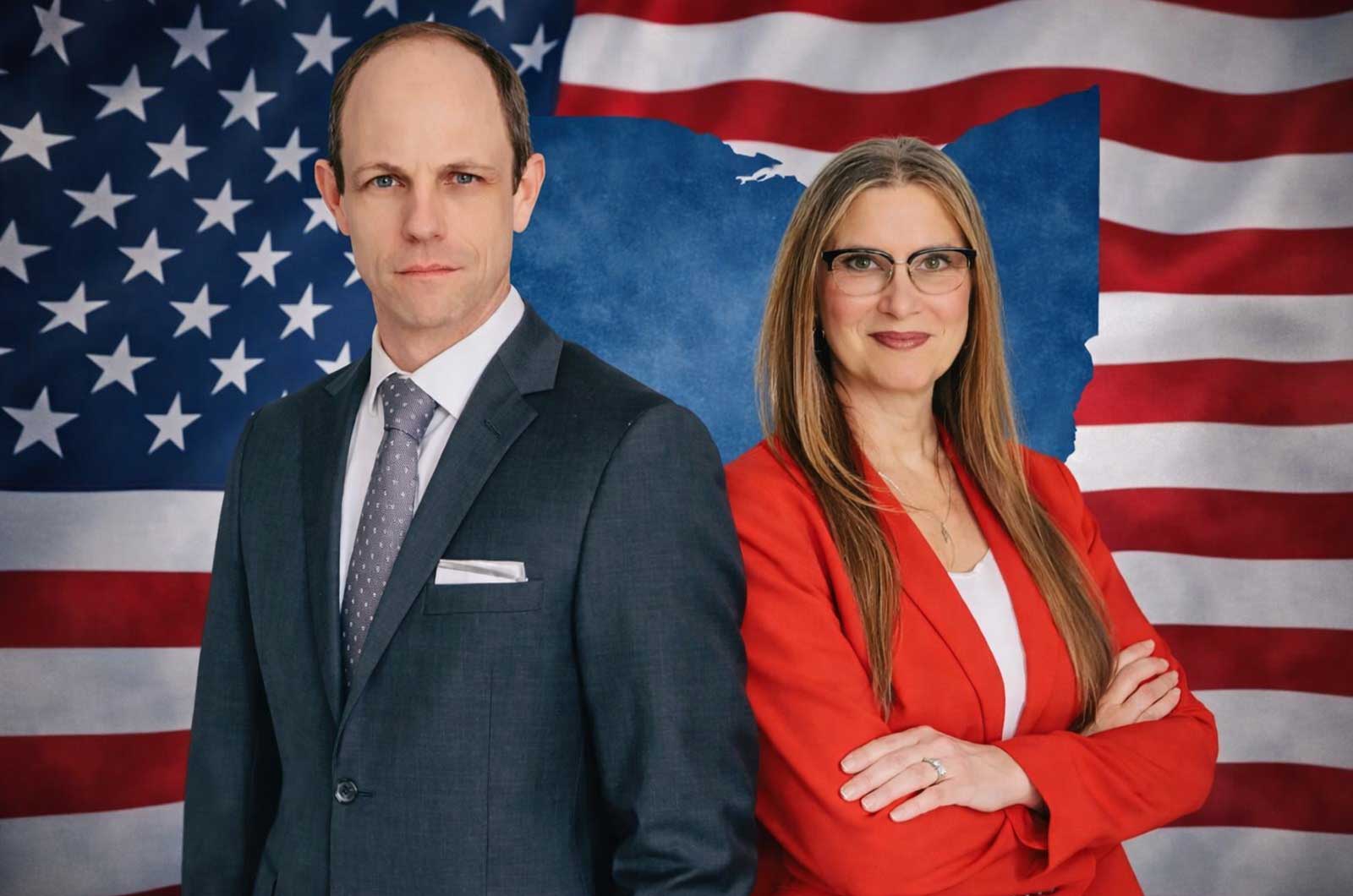
At the same time, other candidates are attempting to compete without that level of backing. The ticket of Casey Putsch and Kim Georgeton is running a campaign built on volunteer energy, social media outreach, and direct engagement rather than large advertising budgets.
However, in the Republican primary in Ohio, name recognition remains one of the biggest barriers. Without access to major funding or party infrastructure, grassroots candidates often struggle to reach a statewide audience. In many cases, voters may never hear about these campaigns at all.
Some activists argue that party dynamics can further reinforce this gap by limiting access to key events, donor networks, and coordinated outreach efforts. Whether intentional or structural, the result is the same: visibility becomes uneven across the field.
Casey Putsch’s Background and Ohio Roots
Casey Putsch, a Northwest Ohio entrepreneur and designer, brings a background grounded in small business and engineering. Raised in Tiffin, he grew up working in a family-run golf course operation and later earned a degree in Industrial Design from The Ohio State University.
He went on to found Genius Garage, a nonprofit organization that has mentored thousands of students in engineering and automotive design. Many participants have moved into roles at major companies such as Tesla, GM, and Lockheed Martin.
Putsch frames his campaign around a belief that many long-standing problems are driven by government inefficiencies rather than a lack of resources.
Kim Georgeton’s Private-Sector Experience
Kim Georgeton adds a different dimension to the ticket, with more than 30 years of private-sector experience. She began her career with Amazon in its early stages and later held leadership roles in e-commerce and cloud-based business services.
In addition, she has been active in local politics and advocacy, including serving on the Warren County Republican Central Committee. Her campaign positions emphasize fiscal reform, education changes, and restructuring certain state programs.
Policy Differences in the Ohio Governor Race
The contrast between candidates becomes clearer when looking at policy priorities in the Ohio governor’s race.
Ramaswamy has focused on economic expansion, including eliminating the state income tax, encouraging energy development, and positioning Ohio as a hub for technology and AI investment.
By comparison, Putsch and Georgeton emphasize reducing government waste, including proposals to eliminate property taxes and reevaluate organizations such as JobsOhio. They argue that certain economic development strategies prioritize large external investments over local taxpayers.
Data Centers, Energy, and Economic Development
One of the sharper divides in Ohio politics involves data centers and energy usage.
Ramaswamy supports continued growth in this area as part of a broader economic strategy. Meanwhile, Putsch and Georgeton have called for a temporary pause on new approvals, citing concerns about energy consumption, infrastructure strain, and long-term costs for residents.
This debate reflects a broader question facing the state: how to balance economic growth with resource management and local impact.
Who Benefits from Party Infrastructure and Funding
Ultimately, the Ohio GOP primary highlights a larger issue within modern elections—how much influence funding, endorsements, and party structure have over outcomes.
Candidates with strong financial backing and institutional support often gain early advantages that are difficult to overcome. At the same time, grassroots campaigns must rely on alternative strategies to compete for attention and credibility.
For voters, this creates a different kind of decision. It is not only about policy preferences, but also about how candidates emerge and gain traction in the first place.
The outcome of the Ohio GOP primary will likely reflect more than just voter preferences. It will also reveal how funding, endorsements, and visibility shape the field before many voters fully engage.
For Ohio Republicans, the question is not simply which candidate they support—but how much weight they place on institutional backing versus grassroots momentum when making that choice.
Read More
FAQs
What is the Ohio GOP primary?
The Ohio GOP primary is the election where Republican voters choose their nominee for governor ahead of the general election. It typically has lower turnout than the general election but plays a decisive role in determining the final candidates.
Why is Vivek Ramaswamy considered the frontrunner?
Vivek Ramaswamy has raised significant funding, secured major endorsements, and built national name recognition from his presidential campaign. These factors give him a strong early advantage in visibility and voter awareness.
Who are Casey Putsch and Kim Georgeton?
Casey Putsch is an Ohio-based entrepreneur and nonprofit founder, while Kim Georgeton is a business executive and political activist. Together, they are running a grassroots campaign focused on reducing government spending and increasing local accountability.
How do grassroots candidates compete in statewide elections?
Grassroots candidates typically rely on volunteer networks, social media, and direct voter outreach instead of large advertising budgets. However, limited funding and lower visibility can make it difficult to compete against well-funded campaigns.
The views expressed in this article are those of the author and do not necessarily reflect the views of The Cincinnati Exchange.


