



Share This Article
Article Summary
Ohio lawmakers are currently reviewing bipartisan legislation designed to reduce collateral sanctions for formerly incarcerated individuals. The proposed bills aim to remove strict post-conviction barriers to employment and housing, such as occupational licensing restrictions and blanket rental bans. Legislators and advocates argue these reforms will help alleviate statewide workforce shortages and decrease recidivism by facilitating smoother societal reentry.
Bipartisan efforts in the statehouse seek to eliminate collateral sanctions that prevent returning citizens from finding good jobs.
Advocates argue that reducing collateral sanctions is a humanitarian issue that greatly benefits both individuals and local communities.
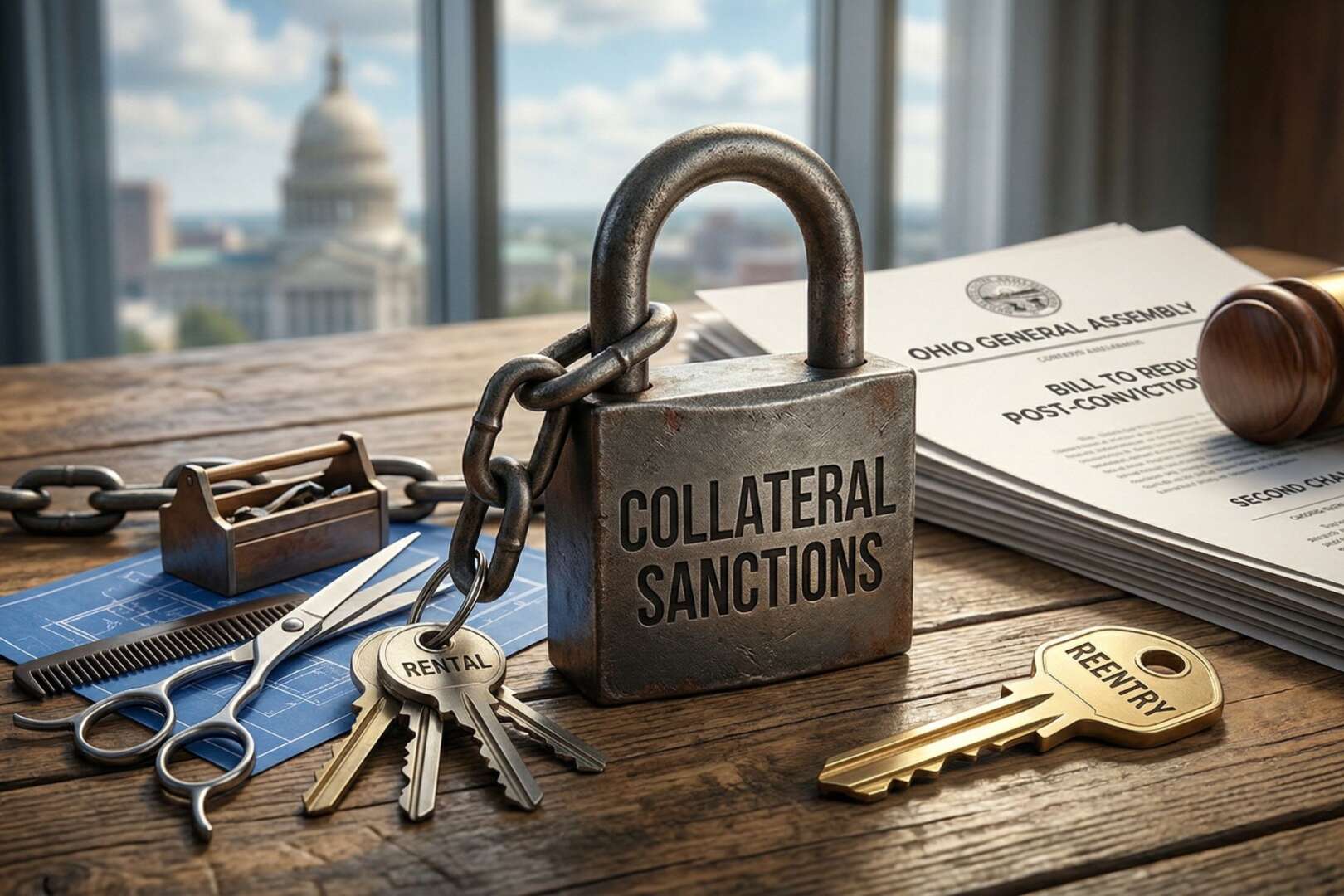
The Ohio legislature is currently considering new bills that directly target collateral sanctions. These collateral sanctions create severe legal and regulatory barriers for people after they serve criminal sentences. Ohio Capital Journal recently reported that advocates view this crisis as a strict humanitarian issue.
Advocates argue that individuals should not face endless punishment once they complete their prison time. Continued punishment only increases poverty and raises the likelihood of recidivism. Society benefits when returning citizens can successfully reintegrate.
The daily impact of collateral sanctions
Finding a stable job proves nearly impossible for many returning citizens today. Background checks often immediately disqualify applicants who have past criminal convictions. This unfair rejection occurs even when the past offense has absolutely no relation to the desired job.
The state enforces hundreds of strict rules that limit employment options for formerly incarcerated people. Consequently, thousands of capable Ohioans find themselves completely locked out of the workforce each year. Families suffer greatly when parents cannot secure reliable income.
How workforce shortages drive reform
The negative impact of these barriers extends far beyond the individual seeking work. Ohio currently faces a tight labor market and significant workforce shortages in several key industries. Excluding a massive segment of the population from employment directly hurts the overall state economy.
Research from Policy Matters Ohio notes that these restrictions represent a massive waste of human capital. Their “Wasted Assets” report found that over 850 collateral sanctions restrict access to 1 in 4 Ohio jobs (roughly 1.3 million jobs), costing individuals an estimated $3.4 billion in foregone wages.
When people cannot find legitimate work, state tax revenues decrease significantly. Reliance on state public assistance simultaneously increases.
Businesses struggle with strict licensing
Local businesses are also feeling the strain of these restrictive workforce rules. Many employers want to hire willing workers but find their hands tied by rigid licensing laws. A returning citizen wanting to become a barber, plumber, or healthcare worker faces massive licensing hurdles.
State lawmakers want to change this restrictive dynamic through comprehensive legislative action. They aim to open occupational licensing to people who have clearly demonstrated their rehabilitation. This smart approach helps businesses find dedicated workers while giving individuals a true second chance.
Framing reentry as a humanitarian issue
Legislators and grassroots advocates increasingly frame this specific reform as a moral imperative. Labeling the crisis as a humanitarian issue highlights the extreme difficulties returning citizens face daily. Many individuals simply want to work hard and support their families.
Without basic access to jobs or housing, many individuals become homeless out of sheer desperation. Supporters of the new state bills argue that removing barriers is necessary for successful societal reentry. Focusing heavily on rehabilitation builds stronger neighborhoods and prevents future crime.
Breaking the continuous cycle of poverty
The lingering negative effects of a criminal conviction can follow a person for decades. A minor drug offense from twenty years ago can still prevent a mother from renting a safe apartment. This reality forces many vulnerable people into dangerous living situations.
This continuous cycle of poverty and exclusion is exactly what the new bills hope to dismantle. Addressing these rules directly allows the state to offer a more humane approach to criminal justice. People who have paid their debt to society fully deserve the fair opportunity to rebuild their lives.
National trends in criminal justice reform
Ohio is definitely not the only state currently reevaluating its approach to post-conviction penalties. Legislatures across the United States are realizing that perpetual punishment remains an outdated and harmful concept. Lawmakers recognize that endless punishment does not improve public safety.
Neighboring states have recently implemented automated record-sealing systems for certain low-level offenses. States like Pennsylvania and Michigan have successfully pioneered “Clean Slate” legislation, which automates the expungement process for certain offenses after a set period of remaining crime-free.
These modernized systems easily remove the financial and bureaucratic burdens of petitioning the local court. Ohio advocates hope to bring similar restorative justice models to the Buckeye State soon.
Proposals to reduce collateral sanctions
The proposed legislation targets several specific areas of the state legal code. Lawmakers want to make the transition back into society as smooth and fair as possible. Providing a clear path forward benefits everyone in the community.
While specific bill numbers move through committees, the broad reform goals remain incredibly clear. The primary focus relies heavily on streamlining the complex record sealing and expungement processes. Fixing these confusing systems provides a clearer path forward for those seeking a fresh start.
The state legislature has actively debated measures to ease these burdens. For example, Ohio House Bill 50 sought to create a “Certificate of Qualification for Housing” (CQH) to give returning citizens relief from blanket rental bans. Recent years have also seen the passage of bills expanding expungement eligibility and reducing driver’s license suspensions.
Key legislative updates proposed
Key proposals in the developing legislative package include several critical updates to existing law. Lawmakers crafted these points after consulting with various community stakeholders and legal experts.
- Expanding basic eligibility for record sealing for non-violent offenses.
- Reducing the lengthy waiting periods required before a person can apply for expungement.
- Capping or entirely eliminating application fees that deter low-income individuals from seeking legal relief.
- Banning housing providers from enforcing blanket bans on applicants with any criminal history.
- Preventing state licensing boards from denying occupational licenses based on unrelated past convictions.
Balancing reform and public safety
These proposed changes to collateral sanctions would significantly alter the difficult landscape for returning citizens. Easing these strict rules absolutely does not mean ignoring broader public safety concerns. Judges still retain ultimate authority over high-risk individuals.
Instead, the bills mean applying basic common sense to how the state evaluates a person’s distant past. Creating a fair system ultimately encourages formerly incarcerated individuals to become productive, tax-paying members of society. Communities thrive when everyone has a chance to participate.
Overcoming collateral sanctions in housing
Finding a safe place to live remains the first major hurdle after leaving state prison. It is incredibly difficult to secure a job or access government services without a permanent address. Returning citizens frequently encounter closed doors when applying for leases.
Unfortunately, background checks in the current rental market routinely screen out anyone with a felony record. Property landlords often implement blanket applicant bans, regardless of the age or nature of the offense. These severe housing restrictions force many returning citizens into crowded shelters or onto the dangerous streets.
Fairer screening guidelines for rentals
The proposed statehouse bills seek to introduce much fairer screening guidelines for rental properties. Advocates desperately want landlords to consider verifiable evidence of personal rehabilitation during the application process.
Completing educational programs or maintaining steady employment should demonstrate that an applicant is trustworthy. Treating applicants as individuals rather than statistics promotes fairness. Providing stable housing is a scientifically proven method for dramatically reducing the chances of a person reoffending.
Building on previous Ohio reforms
This current legislative push does not exist in a political vacuum. Ohio has a strong recent history of enacting smart, bipartisan criminal justice reform measures. The state previously passed comprehensive reform laws that expanded judicial release and earned time credits.
Local community leaders heavily favor fair chance hiring. Cities like Cincinnati have already successfully implemented progressive ban the box policies for municipal employment opportunities.
Cincinnati successfully implemented progressive “Ban the Box” policies for municipal hiring in 2010 to prevent the immediate disqualification of applicants with records, and local community leaders continue to champion fair-chance employment initiatives.
The path forward for reform bills
Getting these important bills signed into state law will require sustained pressure from informed voters. The legislative process moves slowly, and reform bills always face heavy scrutiny from various stakeholders.
Prosecutors, local judges, and law enforcement agencies all have a prominent voice in shaping these laws. However, the unique coalition supporting the vital reduction of barriers grows larger and more diverse every day. Giving people a fair chance to succeed is ultimately the best way to ensure thriving communities.
FAQs
What are collateral sanctions?
Collateral sanctions are lingering legal and regulatory restrictions that limit the rights of individuals long after they have completed their criminal sentences. In Ohio, these systemic barriers frequently prevent returning citizens from securing employment, obtaining necessary occupational licenses, or finding stable housing.
How do these proposed bills affect employment in Ohio?
The legislation aims to prevent state licensing boards from automatically denying occupational licenses based on past convictions that are unrelated to the desired job. By removing these strict regulatory barriers, lawmakers hope to integrate thousands of capable workers into the state’s tight labor market and address current workforce shortages.
Will the new legislation change the record-sealing process?
Yes, the proposed bills actively aim to streamline the complex bureaucratic processes for record sealing and expungement. Key proposed changes include expanding basic eligibility for non-violent offenses, reducing required waiting periods, and capping application fees that often deter low-income applicants.
Do these criminal justice reforms ignore public safety concerns?
The proposed legislation is designed to carefully balance fair societal reentry with ongoing community public safety needs. Judges and law enforcement maintain their authority over high-risk individuals, while the reforms primarily focus on applying common sense to non-violent or distant past offenses.