

Share This Article
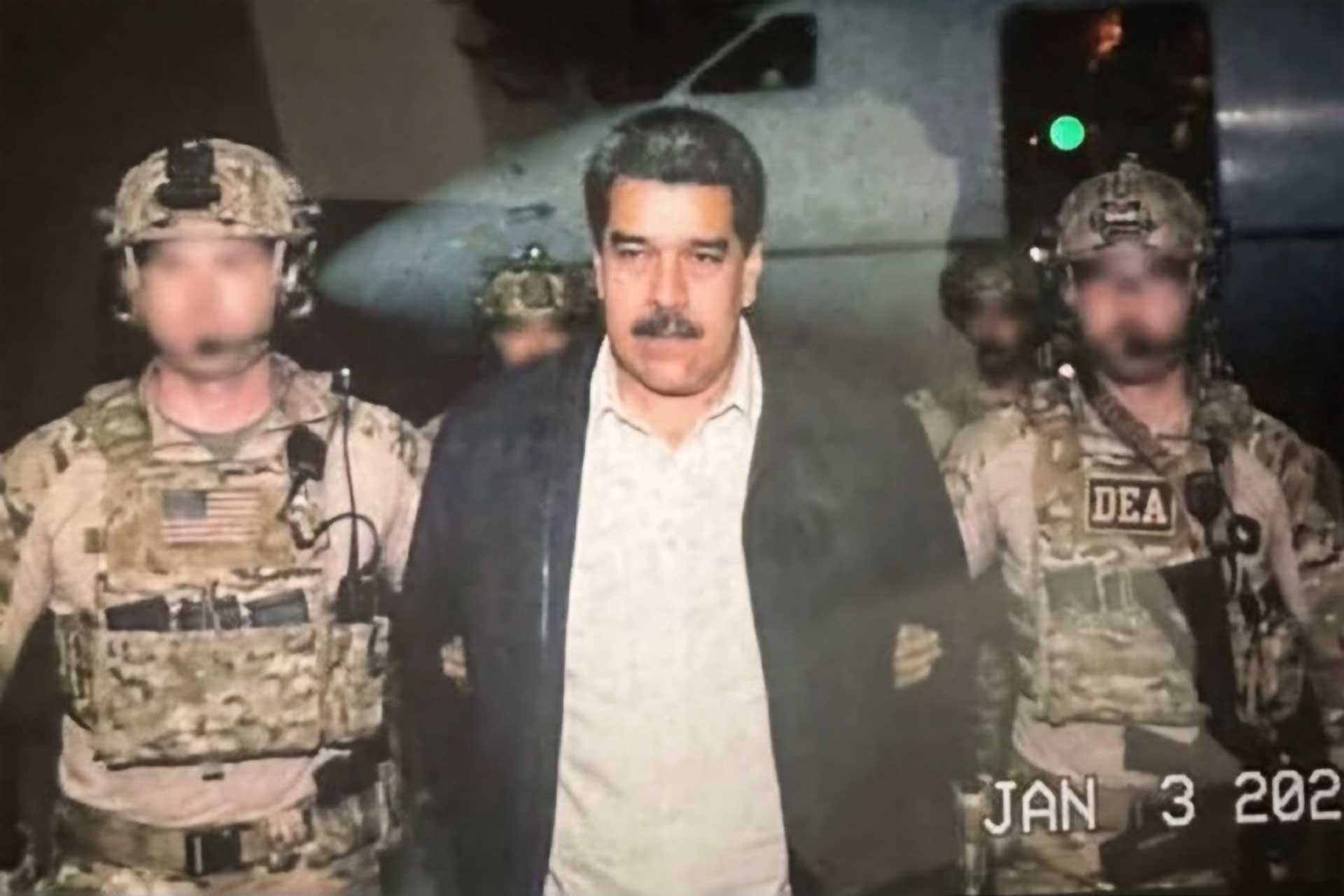
On January 3, President Donald Trump announced that U.S. forces captured Venezuelan leader Nicolás Maduro and removed him from the country—along with his wife, Cilia Flores. The event marked a significant moment with “Maduro captured” dominating headlines.
If confirmed through the legal and diplomatic steps that follow, this is one of the most consequential foreign-policy moves the United States has made in the Western Hemisphere in decades—an operation that Venezuelans at home and in exile have prayed for, feared, argued over, and waited on for years.
Recent reports are abuzz with the news of Maduro captured, marking a potential turning point for Venezuela. Whatever your politics, there is a straightforward truth: Maduro’s Venezuela became a case study in what happens when a ruling party fuses state power, ideological control, and corruption—and then dares the world to stop it.
Recently, news broke about Maduro captured by authorities, adding another chapter to his controversial legacy. Reuters describes a regime accused for years of repression, corruption, and elections widely criticized by international observers, presiding over national collapse and mass flight.
🚨 IT’S OFFICIAL: The U.S. lost ZERO aircraft in the Venezuelan operation and capture, it was planned DAYS ago with absolutely no leaks
“Plans 4 days ago! It was delayed for better weather…this was considered a HUGE success. No aircraft were lost.” 🇺🇸🇺🇸 pic.twitter.com/0c2HI2l2AX
— Eric Daugherty (@EricLDaugh) January 3, 2026
Honor where it’s due: the people who do the hard work
If the public reports are accurate, this was a complex operation involving elite U.S. personnel, intelligence work, and serious risk—conducted against an entrenched security apparatus. Reuters reports U.S. Special Forces were involved and that the operation triggered immediate international condemnation from some governments and support from others, underscoring just how explosive the move is geopolitically.
Americans debate policy; our operators execute it. These missions are never Hollywood—never simple, never guaranteed, and never “free.” If the U.S. pulled this off, then the country owes gratitude to the professionals who train for the worst, move fast, and accept the burden the rest of us don’t carry after seeing Maduro captured.
What Maduro leaves behind: a broken country and a diaspora
Venezuela didn’t become a cautionary tale overnight. It became one because power consolidated, dissent was punished, and the economy was treated like a political tool rather than a system that must produce real goods, real investment, and real opportunity. After Maduro captured, new challenges of recovery remain.
Reuters notes Venezuela’s broader humanitarian and economic collapse and the scale of emigration—over 7.7 million Venezuelans leaving the country in recent years. That exodus didn’t happen because of “bad vibes” or “Western narratives.” It happened because normal life became impossible for too many people: unstable currency, shortages, decaying infrastructure, public services breaking down, and a government more focused on preserving power than fixing the nation.
The bigger lesson: “socialist” branding can cover authoritarian reality
Defenders of socialist projects often insist the failures are always someone else’s fault: sanctions, foreign meddling, “capitalist sabotage.” But at some point, the pattern is too consistent to ignore:
-
When the state gains control over courts, elections, media, and industry, corruption becomes systemic.
-
When price controls and political favoritism replace market signals, production collapses.
-
When opposition is criminalized, bad policy never gets corrected—it gets enforced.
Venezuela’s leadership didn’t merely “mismanage.” It engineered a system where loyalty mattered more than competence, where the public sector became a patronage machine, and where the population paid the price.
The legal reality: Maduro’s U.S. case is serious
U.S. authorities have long accused Maduro and associated figures of crimes including narco-terrorism and drug trafficking conspiracies, and today’s reporting includes references to additional or updated charging steps in the broader case landscape.
If Maduro is now in U.S. custody, the next phase isn’t a victory lap—it’s due process: charges, courts, evidence, and a public record that shows exactly what the U.S. can prove.
That matters, because the story isn’t just “regime topples.” The story is whether this moment becomes a lasting deterrent: tyranny has consequences, and corruption doesn’t get a lifetime pass.
What happens next in Venezuela is the real test
Removing a dictator is not the same as rebuilding a republic. The post-Maduro future will hinge on whether Venezuela can:
- restore credible institutions (courts, elections, rule of law)
- protect property rights and stabilize currency
- invite investment without turning the country into a new oligarchy
- rebuild public services without recreating political patronage
If Venezuela replaces one corrupt network with another, the country won’t heal. If it replaces state capture with a real constitutional order, Venezuela can begin to climb out of the crater.
The question of leadership looms next, but it should be approached with caution. Venezuela’s future does not hinge on crowning a single figure, but on opening political space long denied by authoritarian rule. Still, opposition leaders such as María Corina Machado—a prominent democracy advocate and recipient of the European Parliament’s Sakharov Prize for Freedom of Thought—have emerged as symbols of resistance to state capture and repression.
Venezuelan opposition leader, 2025 Nobel Peace Prize winner Maria Corina Machado poised to take the place of Nicolas Maduro https://t.co/ePeOKiVrv4 pic.twitter.com/IGN9JDHV6R
— New York Post (@nypost) January 3, 2026
Whether through a transitional authority or internationally monitored elections, any post-Maduro path forward must prioritize legitimacy, constitutional order, and the restoration of basic freedoms before personalities or power struggles take center stage.
A message beyond Venezuela After the Maduro Arrest
The broader warning isn’t just to Caracas. It’s to every would-be strongman who thinks the playbook is foolproof: rig the system, control the narrative, enrich the insiders, suppress the opposition, and wait out the West.
If today’s events hold, that playbook just got a lot riskier.
And for Americans watching: this is the clearest reminder in years that freedom is not self-executing. It requires strength, seriousness, and leaders willing to act—and it requires citizens who refuse to romanticize state control when history keeps showing the same end result.
Read More
America250: A Monument to Sacrifice, Service, and the Soul of a Nation