
Share This Article
The new Fairfield solar array in Fairfield, Ohio, will generate nearly two-thirds of the power needed for the city’s largest energy consumer.
Officials say the Fairfield solar array project is expected to save millions in utility costs over the next three decades.
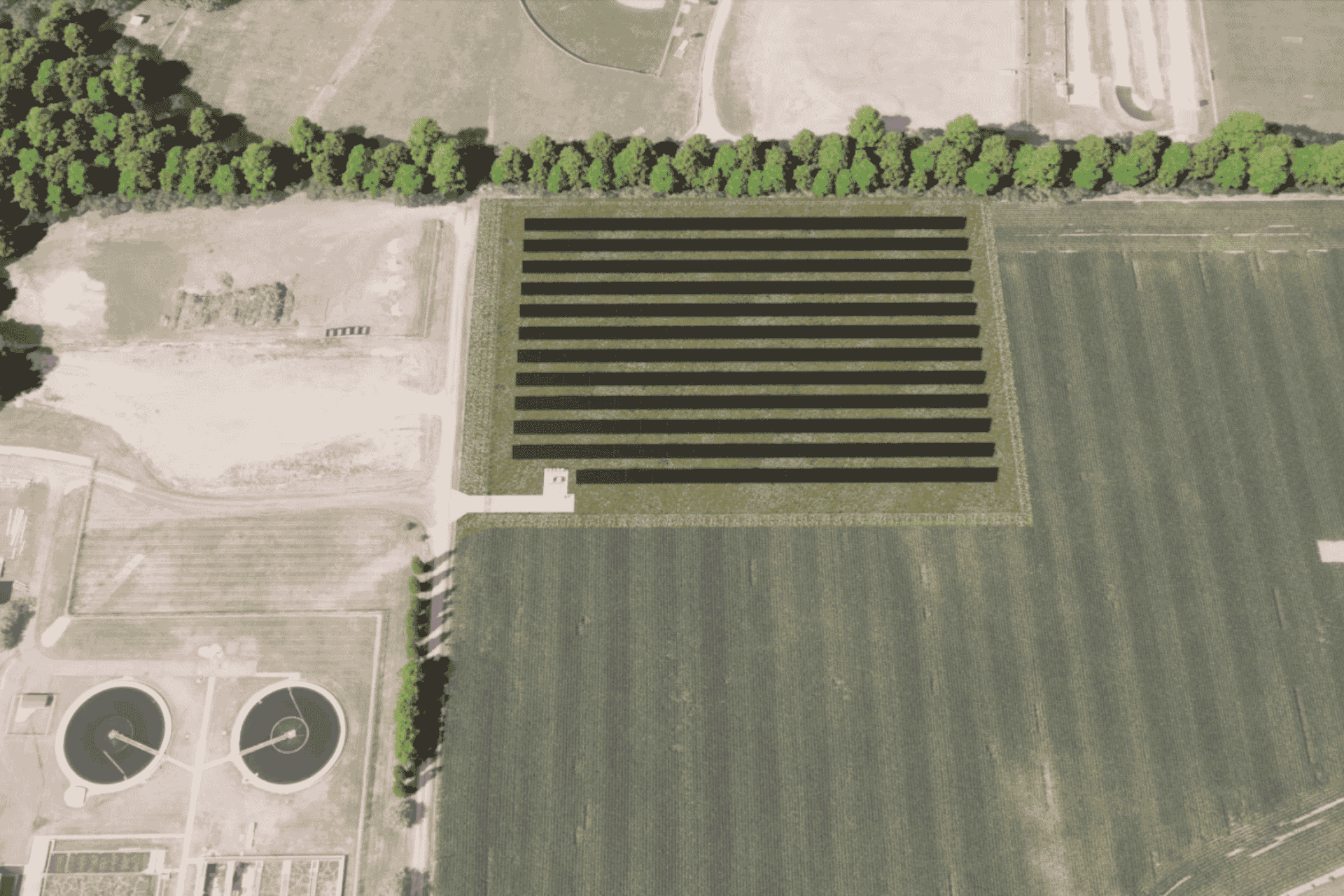
The City of Fairfield officially broke ground Monday on a major renewable energy infrastructure project. This project is designed to insulate taxpayers from rising electricity rates. City leaders and representatives from Melink Solar gathered at the wastewater treatment plant on Groh Lane. They launched construction on the 1.5-megawatt system.
Once operational, the new installation will provide approximately 65-percent of the electricity required to power the facility. This facility currently stands as the city’s single largest energy user.
This initiative serves as the first significant capital project under the “Fairfield Sustains” plan. It is a comprehensive sustainability framework adopted by the City Council in 2024. By utilizing vacant land adjacent to the treatment plant, the city aims to turn underused property into a long-term financial asset.
According to Assistant City Manager Adam Sackenheim, the project addresses both fiscal responsibility and environmental stewardship.
“It’s going to help us save money,” Sackenheim told WVXU during the event. “It’s going to help us reduce our environmental footprint.”
Fairfield solar array to offset rising energy costs
The financial logic behind the project is driven by the sharp increase in regional energy prices over the last few years. City officials noted that electricity rates for municipal operations have nearly doubled recently. They jumped from roughly 3.9 cents per kilowatt-hour to nearly 8 cents.
Without the intervention of the Fairfield solar array, the wastewater plant alone was projected to spend $370,000 on electricity in 2026.
By locking in a renewable energy source, Fairfield expects to stabilize these operating expenses significantly. The project comes with an upfront price tag of approximately $2.9 million. However, the long-term math works in the city’s favor. Projections indicate the system will generate an estimated $2.5 million in savings over its 30-year expected lifespan.
Sackenheim explained that the capital cost is justifiable because the city does not expect energy inflation to slow down.
“Just in the last three to four years, our electric rates, like everyone, have doubled,” he said. “And we don’t see that slowing down.”
The project is being constructed by Melink Solar, a Cincinnati-based developer specializing in commercial and municipal renewable energy solutions. The array will cover roughly five acres of land next to the treatment facility.
Funding for the construction is supported in part by a federal tax rebate, which helps lower the net cost to the city and shortens the return on investment period.
Sustainability plan drives renewable energy focus
While cost savings are the primary driver, the environmental impact of the project is a key component of Fairfield’s broader strategic goals. The wastewater treatment process is energy-intensive. It requires constant power to run pumps, aerators, and filtration systems 24 hours a day.
Transitioning a majority of this load to solar power will significantly reduce the greenhouse gas emissions associated with the city’s operations.
Gillian Hart, Fairfield’s Sustainability Program Manager, highlighted that this project is just the beginning. The “Fairfield Sustains” plan outlines a roadmap for integrating more renewable technologies into municipal infrastructure.
The successful deployment of this system could serve as a model for future installations at other city-owned properties.
By generating clean energy on-site, the city reduces the demand on the local grid. This is beneficial during peak usage times in the summer months. This approach aligns Fairfield with a growing number of Ohio municipalities. They are leveraging Power Purchase Agreements or direct ownership models to take control of their energy futures.
Construction of Fairfield solar array aligns with regional trends
Fairfield is not alone in turning to solar power to manage the high costs of water and wastewater treatment. Across Ohio, local governments are increasingly viewing water infrastructure as ideal sites for renewable energy development.
These facilities typically have large electrical loads and often possess available buffer land that is unsuitable for commercial or residential development but perfect for ground-mounted solar panels.
The movement toward municipal solar is also gaining traction. This happens as technology costs stabilize and federal incentives remain available. Other nearby communities have explored similar partnerships to hedge against market volatility.
By owning the power generation asset, Fairfield effectively fixes a portion of its energy costs for decades, providing budget certainty that is difficult to achieve in the open utility market.
Sackenheim expressed hope that the savings generated by the Fairfield solar array will help keep sewer rates stable for residents. With construction now underway, the city anticipates the system will be fully operational later this year.
The visibility of the project on Groh Lane will also serve as a public demonstration of the city’s commitment to modernizing its infrastructure.
What it means to Fairfield residents
As the panels rise over the coming months, they will represent a tangible shift in how local governments in the Cincinnati region approach utility management. The project transforms a standard line item in the annual budget into a strategic investment.
For Fairfield residents, the immediate activity on Groh Lane signals that the city is taking proactive steps to manage resources efficiently in a changing economic landscape.
The Fairfield solar array is expected to produce power for at least 30 years. It will span well into the 2050s. As energy demands evolve, this foundational project positions the city to adapt to future technologies and grid changes.
Officials plan to monitor the performance of the system closely once it goes online to validate the projected savings and environmental benefits.
For more information on the city’s sustainability initiatives, residents can visit the City of Fairfield’s official website.
Solar presence in Cincinnati
Meanwhile, there is actually a major solar presence in Cincinnati, but there is a key distinction between the ones you can see and the one that powers the government.
While Fairfield is building its array on-site at the wastewater plant, the City of Cincinnati took a different approach for its massive energy needs.
Here are the two main “solar arrays” associated with Cincinnati:
1. The “Invisible” Giant: New Market Solar
This is the most important one for city operations, but you won’t see it when driving through downtown.
- Location: Highland County (about 45 miles east of Cincinnati).
- Size: A massive 100-megawatt solar farm.
- Purpose: It powers a huge portion of the City of Cincinnati’s municipal footprint (police stations, health centers, City Hall) and supplies electricity for residents who are part of the city’s electric aggregation program.
- Status: It is operational. It is considered one of the largest city-led solar projects in the country, even though it is physically located outside the city limits to take advantage of cheaper land.
2. The “Visible” Icon: The Cincinnati Zoo
This is the one most locals know about because it is a very public landmark.
- Location: The Vine Street parking lot (and now Euclid Ave).
- The “Solar Canopy”: The Zoo built a massive solar structure over its main parking lot. It was famous for being the “largest publicly accessible urban solar array” in the U.S. when it opened.
- Benefit: It provides shade for cars while generating roughly 20-percent of the Zoo’s power needs.
The Difference:
Fairfield’s new project (from your article) is interesting because they are building it on their own property (the “buffer land” next to the plant). Cincinnati couldn’t find enough contiguous land inside city limits for a 100MW farm, so they partnered with a developer to build it out in the countryside.