

Share This Article
CVG shipments sparked a major enforcement action by federal authorities in Cincinnati.
CVG shipments included nearly 450 packages of high-risk, misbranded prescription drugs and contact lenses.
Federal customs agents at Cincinnati/Northern Kentucky International Airport intercepted a significant number of illegal and potentially dangerous products. This occurred in a targeted operation.
The enforcement effort focused on CVG shipments carrying undeclared medical supplies, prescription medications, ophthalmic products, and devices that failed to meet U.S. safety standards.
According to U.S. Customs and Border Protection (CBP) and the U.S. Food and Drug Administration (FDA), the haul highlights ongoing concerns. Specifically, there are issues about counterfeit and unapproved medical goods entering the domestic supply chain, as reported by WKRC.
What was intercepted in CVG shipments
Customs agents seized nearly 450 shipments including undeclared contact lenses and misbranded drugs destined for addresses across the United States. According to federal officials, the bulk of the intercepts occurred during inspections of cargo arriving at CVG shipments in late October.
Officials reported the following breakdown of the seizures:
- 398 shipments contained more than 8,500 pairs of undeclared or misdeclared contact lenses that did not comply with FDA regulations.
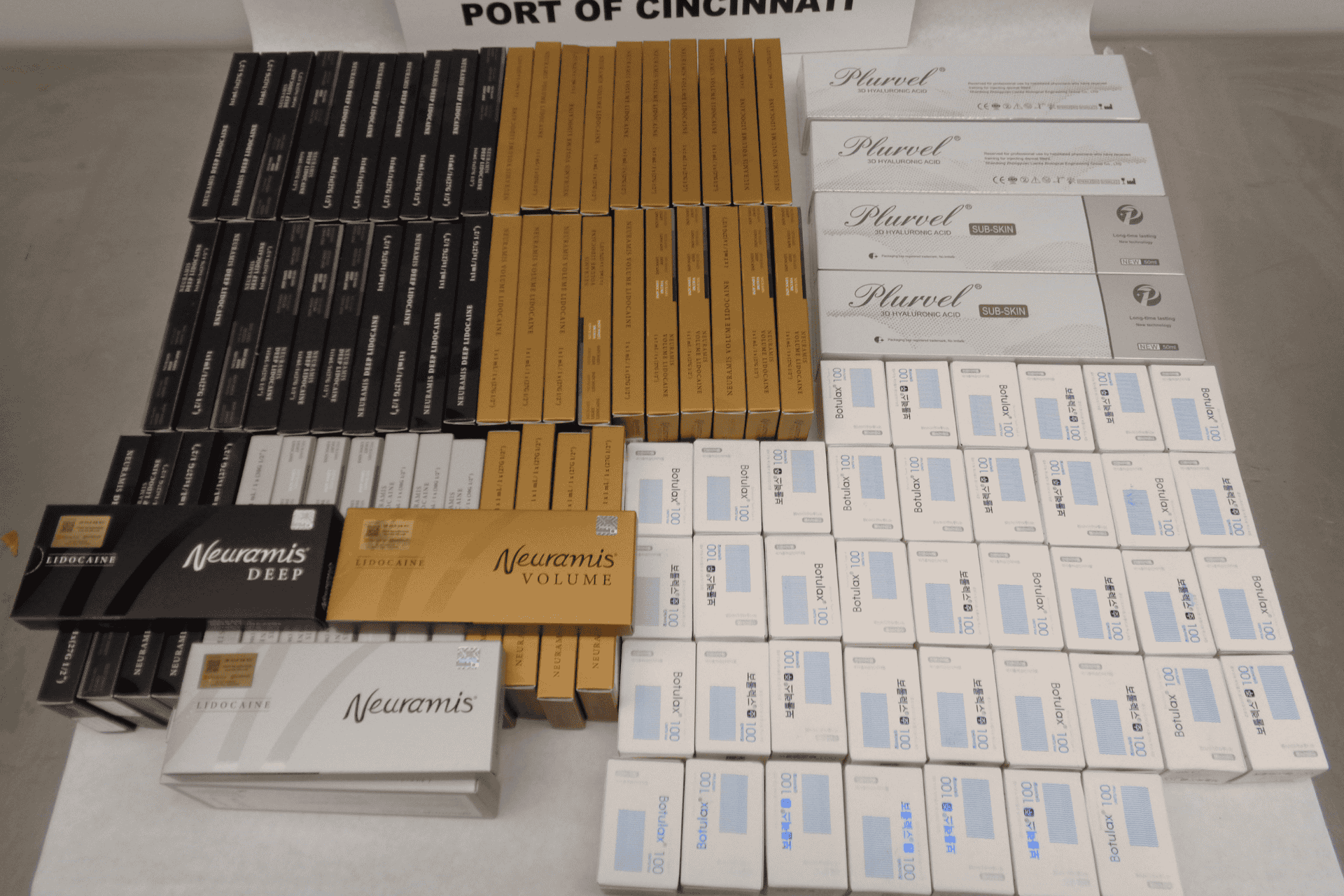
- 50 additional shipments included misbranded or unapproved FDA-regulated prescription drugs and medical devices, such as GLP-1 weight-loss medications, Botox, dermal fillers, cosmetic injectables, orthopedic injections, rheumatology infusions, and certain oncology drugs.
- Customs authorities emphasize that all contact lenses are medical devices and require a valid prescription from a licensed eye care professional — they are not legally sold over the counter.
Public health and safety concerns
Federal officials warn that CVG shipments of these products pose significant risks to consumers. According to CBP, the cumulative manufacturer’s suggested retail price of the unlawfully imported pharmaceuticals and devices would have exceeded $407,000. This estimation considers if they had been legally distributed in the U.S. marketplace.
In a statement, LaFonda Sutton-Burke, Director of Field Operations for CBP’s Chicago Field Office, noted a severe risk. She highlighted that counterfeit and misbranded products often contain unknown or toxic substances. Furthermore, these products lack proper labeling and safety information. Authorities say such goods can cause serious health issues or fail to treat medical conditions as intended.
The FDA underscores that medications and medical devices imported into the United States must meet strict safety, quality, and effectiveness standards. Many online pharmacies and unregulated sellers have bypassed these requirements. Consequently, they encourage consumers to buy cheaper products that may be unsafe or ineffective.
How the operation unfolded
The joint operation involved CBP officers working in coordination with FDA Office of Criminal Investigation special agents. Also included were FDA Office of Import Operations Consumer Safety officers. Their primary objective was to identify high-risk, FDA-regulated ophthalmology products, misbranded prescription drugs, and medical devices among incoming international cargo.
Federal agents used risk-based targeting, document and cargo inspections, and advanced screening tools. These methods helped them intercept suspect shipments. Once identified, packages were held for further examination leading to their seizure.
Officials say similar operations earlier in the fiscal year also resulted in the confiscation of harmful and non-compliant products, demonstrating a sustained enforcement effort to address illicit imports.
What consumers should know
Authorities urge consumers to use caution when purchasing medical products online, especially from unfamiliar or unverified sellers. Dangerous products in CVG shipments often target online marketplaces. Here, counterfeiters exploit demand for lower prices.
To protect public health, consumers are encouraged to:
- Verify that pharmacies and online retailers are legitimate and licensed.
- Consult a licensed health care provider before purchasing prescription medications or medical devices.
- Report suspicious vendors or products to the FDA or CBP.
Learning more about how to identify legitimate vendors and safe purchasing practices can help reduce the risk of exposure to harmful or counterfeit medical products.
Broader context and significance
Illegal and misbranded products in CVG shipments are not isolated issues. Across the country, federal agencies continue to see trends in the trafficking of counterfeit pharmaceuticals, unapproved medical devices, and improperly declared medical supplies.
These trends raise concerns about consumer safety and the vulnerability of the supply chain to illicit products. External research indicates similar interdictions at other border points, underscoring the importance of coordinated enforcement.
This recent enforcement action at CVG reflects ongoing federal efforts to safeguard public health. It also maintains the integrity of medical products entering the United States. As authorities refine their detection strategies and expand interagency collaboration, officials say they hope to stay ahead of evolving threats. These threats come from counterfeiters and illegal importers.
Also read:
Over 1.5 million bags of shredded cheese recalled for potential metal contamination