



Share This Article
Article Summary
Cincinnati officials are seeking public input for the fiscal year 2027 municipal budget as the city navigates ongoing financial constraints. Following recent cuts to cover a $10 million deficit, leaders have instructed city departments to prepare for potential 5% reductions. To secure long-term revenue, Mayor Aftab Pureval recently proposed increasing the local earnings tax to fund public safety and anti-poverty initiatives. The city council finance committee will weigh these revenue options against community funding requests, prioritizing core services, infrastructure, and housing affordability. The council must finalize a balanced financial plan by July 1.
Residents are invited to share their priorities for the upcoming Cincinnati city budget.
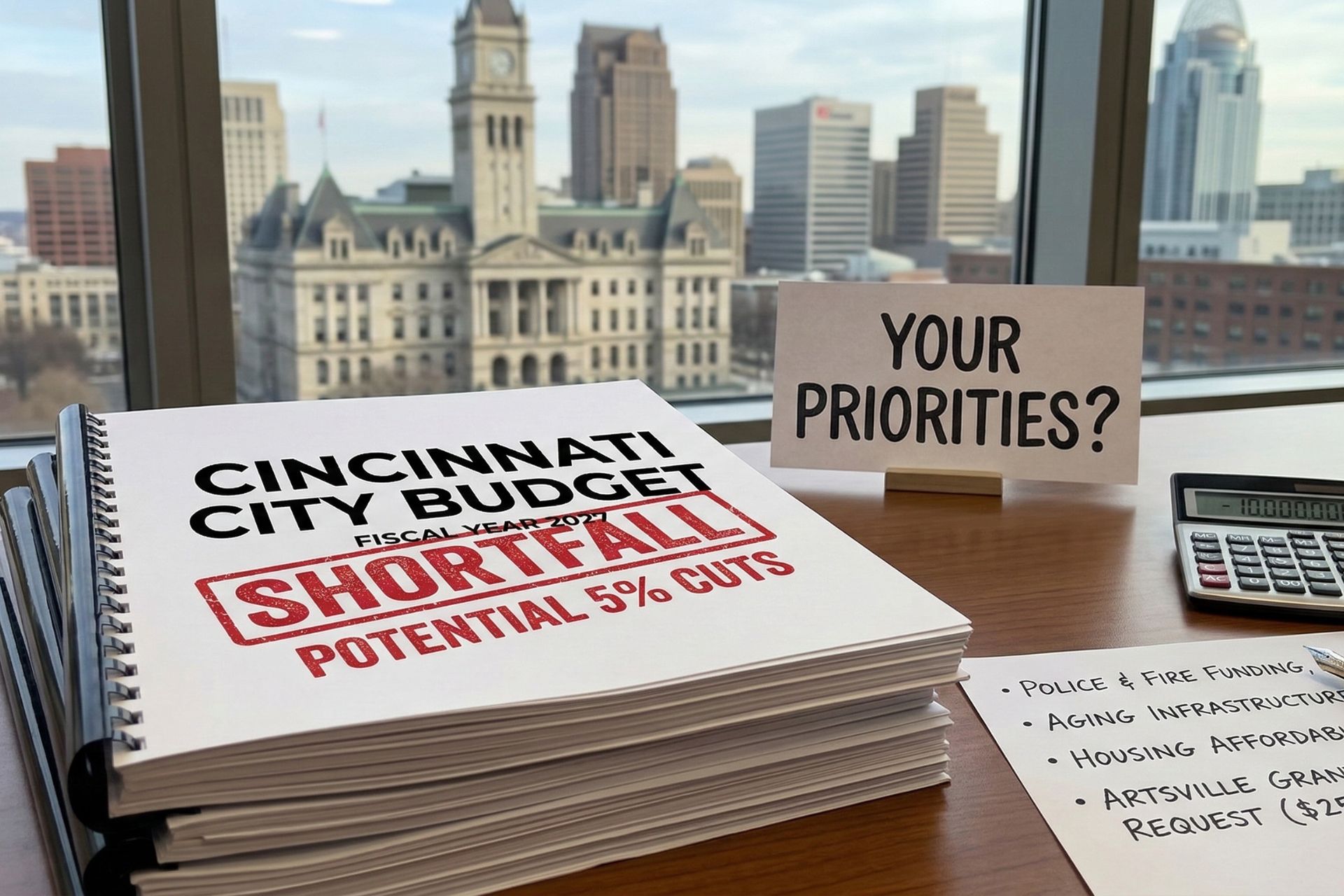
Officials warn of potential cuts as the Cincinnati city budget faces ongoing financial pressures.
Cincinnati officials are currently crafting the city’s next financial plan. They are asking residents and community organizations to weigh in early. Leaders want clear feedback on neighborhood spending priorities. This feedback is critical as the city faces ongoing financial pressures. The Cincinnati City Council’s Budget, Finance, and Governance Committee is leading the charge. They held the first of three public hearingson Wednesday night. This initial meeting gathered feedback ahead of the fiscal year 2027 process.
Dozens of nonprofit leaders addressed the gathered council members. Many local residents also attended the evening public hearing. They directly asked for the necessary funding to support community programs. Organizations rely heavily on these municipal grants to survive. Kathy Garrison represented the Artsville Corporation at the recent meeting. “So tonight, we’re here again to ask you for your support of the $250,000 request,” Garrison said. Her organization hopes to secure vital funding for local arts initiatives.
Nonprofits depend on the Cincinnati city budget
Nonprofits play a crucial role in delivering local services. The city often partners with these organizations to reach vulnerable populations. Organizations like the Artsville Corporation rely heavily on city grants. Without this funding, many essential community programs would cease to exist. Garrison’s financial request represents a lifeline for local artists and creators. Arts and culture generate significant economic activity within the city limits. Funding these community groups often provides a strong return on investment.
However, a shrinking revenue pool makes funding these requests difficult. The committee must weigh all requests against essential city services. Police, fire, and sanitation departments typically take precedence during negotiations. Council members face the difficult task of saying no to worthy causes. The public hearings highlight the sheer volume of pressing community needs. Every dollar spent requires careful consideration and intense debate.
Financial pressures squeeze the Cincinnati city budget
The Cincinnati city budget currently operates under a massive two-billion-dollar plan. This fiscal year 2026 plan covers all daily municipal operations. It also funds long-term capital projects across the entire city. Balancing this complex ledger has proven incredibly difficult for leaders. City officials approved the current plan after confronting a projected shortfall. The general fund faced a severe ten-million-dollar deficit last year. Officials had to make extremely tough choices to balance the ledger.
To balance the books, the city implemented widespread department cuts. Most municipal departments saw budget reductions of about two percent. Council member Jeff Cramerding chairs the important finance committee. He noted that Cincinnati’s financial challenges are not a new development. “The city’s budget has been in a precarious position for decades,” Cramerding said. He emphasized that the city desperately needs a permanent, long-term fix. Cramerding also pointed out that the local economy has slowed down recently.
Officials expect these strict financial pressures to affect the Cincinnati city budget next year. Departments are currently preparing their spending plans for fiscal year 2027. They have received strict instructions from top city leadership. Departments must plan for potential five percent reductions across the board. The city needs these contingencies to maintain a legally balanced financial plan. This legally mandated balance strictly restricts how much the city can spend.
Mayor explores new revenue streams
Other local municipalities face similar post-pandemic financial cliffs right now. According to a report by WCPO, many Ohio cities are struggling. Many municipalities used federal relief funds to plug previous deficits. Those temporary federal funds have now completely dried up. This leaves cities searching desperately for sustainable, long-term revenue sources. The current financial climate forces leaders to explore new tax options.
Mayor Aftab Pureval has suggested one potential legislative solution. He recently floated the idea of raising the city’s earnings tax. The current local earnings tax rate sits at exactly 1.8 percent. Increasing this rate would generate vital additional revenue for the city. This proposal aims to fund specific, high-priority municipal initiatives. Pureval wants to direct these new funds toward public safety programs. He also wants to heavily support various anti-poverty initiatives across Cincinnati.
The mayor readily acknowledged the burden that higher taxes place on residents. “At the same time, we have to do everything we can,” Pureval said. He wants to use those tax dollars to increase local affordability. This affordability applies to every instance of community members’ daily lives. However, a local newspaper reported that tax increases face strong political headwinds. Voters must typically approve any changes to the local earnings tax rate. This requirement makes the mayor’s proposal a challenging political maneuver.
Core priorities for the upcoming fiscal year
The city council must establish clear spending priorities this year. Cramerding outlined several key areas of focus for his committee. The council will likely prioritize essential core services above all else. Upgrading aging infrastructure remains a top concern for local officials. Public safety also commands a significant portion of all municipal resources. Officials must ensure police and fire departments have adequate, sustainable funding.
Housing affordability is another major priority for the city council. Cincinnati faces a severe shortage of quality, affordable housing units. Economic development projects will also receive close attention from city leaders. These commercial projects help grow the local tax base over time. A growing tax base eventually relieves immense pressure on the general fund.
Shaping budget priorities
Early community input remains critical to the Cincinnati city budget process. Council members are just beginning to shape their specific political priorities. They will eventually present these priorities to the appointed city manager.
“This time period is extremely important right before we go into doing our priority budget,” Cramerding told attendees Wednesday.
The committee wants public input before finalizing the priority plan. They use this input to tell the city manager what matters most.
Key dates for the budget process
Residents still have several opportunities to share their opinions. Citizens can attend in person or submit their public comments online. The council established a strict timeline for the coming months:
-
March 11: The council holds its next public budget hearing.
-
April: City leaders plan to pass a formal policy motion.
-
May: The city manager presents a recommended financial plan.
-
June: Council debates and finalizes all spending decisions.
-
July 1: Cincinnati’s next fiscal year officially begins.
Officials hope to pass a balanced, sustainable plan by that final deadline.
FAQs
What is the main focus of the upcoming Cincinnati city budget process?
City leaders are currently gathering public input to shape spending priorities for the fiscal year 2027 budget. They must balance essential community services and infrastructure needs against ongoing municipal financial pressures.
Why are city departments preparing for potential budget cuts?
Officials recently balanced a $10 million general fund deficit and expect strict financial challenges to continue. Consequently, leadership instructed all municipal departments to plan for potential 5% reductions in their upcoming fiscal year 2027 spending plans.
How does Mayor Aftab Pureval plan to generate new city revenue?
The mayor recently proposed raising the local earnings tax from its current rate of 1.8 percent. He wants to use these additional tax dollars to fund vital public safety programs and support anti-poverty initiatives across the city.
What are the city council's primary spending priorities this year?
Council members plan to prioritize essential core services, including police and fire department funding. They will also focus heavily on upgrading aging infrastructure, expanding housing affordability, and supporting local economic development projects.
When will the city finalize the new financial plan?
The appointed city manager will present a recommended financial plan in May, following public hearings and council input. The city council will then debate the proposals and must pass a legally balanced budget before the new fiscal year begins on July 1.