



Share This Article
Article Summary
Cincinnati faces a $29.5 million budget deficit for the next fiscal year, prompting city departments to plan for up to 5% spending cuts. Reduced state funding, reliance on the city’s 1.8% earnings tax, and the end of federal pandemic relief have intensified the shortfall. City leaders are exploring a mix of cost reductions and revenue increases, while public hearings and community input are underway. A proposed budget draft is expected in May, with a final vote in June, ahead of the July 1 fiscal year start.
Cincinnati’s budget deficit is projected at $29.5 million in the next fiscal cycle.
This resulted in city officials weighing cuts, revenue options, and community input as they prepare for a tight budget year.
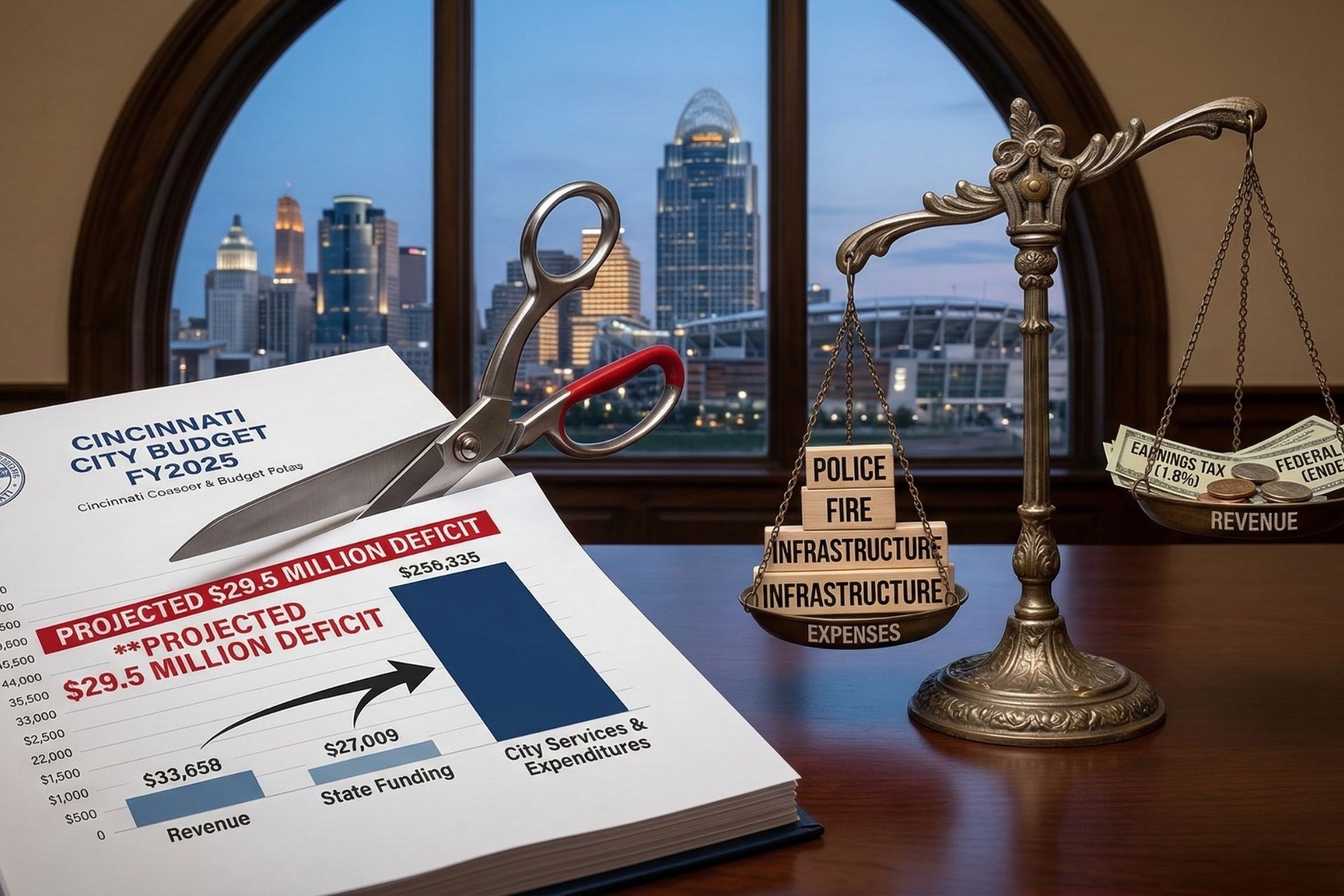
City officials say the next fiscal year’s projected shortfall — roughly $29.5 million — could force department cuts of about 5 percent. This deficit is more than double the shortfall in the current city budget. It underscores ongoing financial pressures in municipal planning.
The city’s budget process officially began earlier this month. Cincinnati City Council launched a months‑long review ahead of the new fiscal year, which starts July 1. Meanwhile, Council is collecting input from residents and departments. Several hearings are planned through March and April.
City Finance Director Andrew Dudas told local media that general fund departments should prepare budget plans assuming cuts of about 5.1 percent. However, he also indicated reductions might not be the only solution. He pointed to the need for a combination of cost reductions and revenue increases to close the gap.
State funding reductions hit city revenue hard
One major driver of the Cincinnati budget deficit is the decline in state shared revenue.
Cincinnati now receives roughly $16.2 million from the state’s Local Government Fund — about 60 percent less than it did in 2011 — after a series of state cuts over the past decade.
The city’s reliance on the local 1.8 percent earnings tax compounds matters. Earnings tax revenue makes up the bulk of Cincinnati’s general fund. As a result, declines in income tax revenues can immediately pressure the operating budget.
With federal pandemic relief funds from the American Rescue Plan Act no longer available — those helped fill funding gaps between 2021 and 2025 — city leaders are now planning for long‑term financial stability. They must now plan without that federal cushion.
Public hearings and proposed timeline
Residents have already begun weighing in on the Cincinnati budget deficit and proposed changes. For instance, a recent public hearing drew about 20 speakers. Some advocates called for increased support for local nonprofits and core city services.
The city’s administration will host a “Budget Basics” virtual session later in March to inform the public about the budget process. Additional hearings at neighborhood recreation centers in North Avondale and Sayler Park are scheduled this month.
Department heads will present budget requests to Council through March and April. City Manager Sheryl Long is expected to release the first formal draft of the updated budget to Mayor Aftab Pureval by mid‑May. The mayor and city manager usually hold a joint press conference to unveil the draft.
A final public hearing and the Council’s budget vote are anticipated in early to mid‑June — just ahead of the July 1 fiscal year start.
Cost pressures and service implications
Rising costs across key city services are another factor in the Cincinnati budget deficit. Departments like police, fire, infrastructure maintenance, and public safety command large shares of general fund spending. Consequently, should cuts be implemented, these services may see budget constraints or restructuring.
City leadership has also discussed the possibility of increased taxes to boost revenue. Mayor Pureval previously proposed raising the city’s income tax rate — a move that would require voter approval — to address structural budget challenges and fund essential services.
Options for balancing the budget
City officials continue to stress that deficit reduction will likely involve more than cuts alone. Revenue enhancements — including potential adjustments to the earnings tax or exploring new revenue streams — remain on the table as possible tools to balance the Cincinnati budget deficit.
- 5 percent spending cuts being drafted by departments
- Potential revenue increases from taxes or fees
- Prioritizing core services such as public safety and infrastructure
- Soliciting community input for budget priorities
As Cincinnati navigates these budget challenges, the coming weeks will be critical. They will shape financial outcomes that affect city services, taxation, and neighborhood priorities.
FAQs
What is the size of Cincinnati’s budget deficit?
Cincinnati faces a projected $29.5 million budget deficit for the next fiscal year. This shortfall is more than double last year’s gap, putting pressure on city finances.
Why is the city facing a deficit?
The deficit results from reduced state funding, heavy reliance on the city’s 1.8% earnings tax, rising service costs, and the end of federal pandemic relief funds. These factors limit the city’s revenue streams.
How will the city address the deficit?
City leaders are planning a combination of department spending cuts of about 5% and potential revenue increases. Community input will also help guide which services are prioritized.
When will the budget be finalized?
A proposed budget draft is expected in May, with the final vote in June, before the new fiscal year begins on July 1.
Which services could be affected by cuts?
Core services like public safety, infrastructure, and housing programs could see budget adjustments. Officials aim to minimize impacts on essential services while balancing finances.


