
Share This Article
The suspected bird flu incident has left nearby residents on edge.
The bird flu suspected discovery occurred near a school where more than 70 vultures were found dead.
Unsettling discovery on school grounds
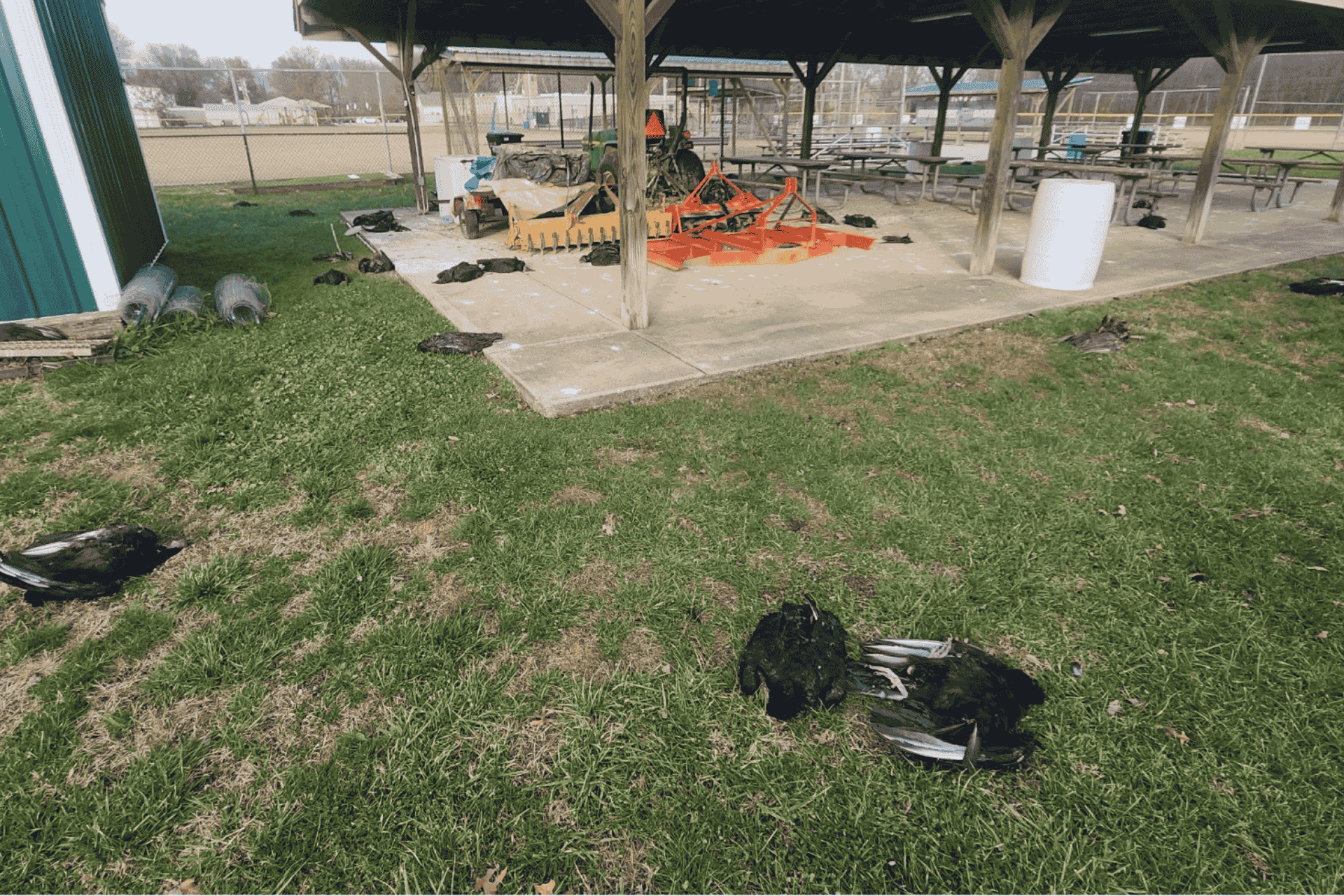
The suspected bird flu scenario unfolded at St. Bernadette School in Pierce Township, Ohio. School staff returned from Thanksgiving break and discovered dozens of lifeless vultures scattered across athletic fields and nearby areas. Wildlife officials estimate the total dead at around 70 to 72 birds, according to WCPO 9 News.
Officials say the bird flu suspected culprit is likely highly pathogenic avian influenza (HPAI), as reported by WLWT 5.
The phenomenon has triggered a coordinated response from state wildlife, agriculture, and public‑health agencies, noted by WCPO 9 News.
What exactly happened and where
On December 1, school staff found dead vultures on the baseball field and in the dugout area at St Bernadette, reported by FOX19 NOW.
By December 5, the Ohio Department of Natural Resources (ODNR) dispatched wildlife crews to collect and remove the bodies, according to WCPO 9 News.
ODNR stated that when six or more wild birds are found dead in one location, they are presumed HPAI and treated accordingly—hence the bird‑flu suspected label.
Local fire and township officials said they initially struggled to get wildlife authorities to respond.
Why are suspected bird flu conditions apply
Wildlife and agriculture officials pointed to several red flags, including the sheer number of vultures found together, the concentrated location, and Ohio’s prior history of wild bird flu cases.
ODNR indicated additional samples from the birds will be sent for lab testing to confirm, according to WCPO 9 News.
Public‑health experts emphasize that while the risk to humans remains very low, the combination of wild birds and a large die‑off warrants caution.
School community and resident concerns
Parents, school staff, and nearby residents expressed alarm at the dead vultures spread across the campus.
The school temporarily restricted access to the fields while cleanup crews operated. Township fire officials assisted in managing the scene and liaising with wildlife agencies.
Residents voiced concerns not only for the children but for nearby animals and possible contamination of the grounds. One trustee noted potential implications for local livestock or poultry operations if suspected wild birds with bird flu transmit the disease .
Response from agencies and next steps
ODNR, together with the Ohio Department of Agriculture (ODA) and the Clermont County Public Health department, is collecting samples for definitive testing.
Authorities recommend residents avoid handling dead birds and report sightings of large bird die‑offs to wildlife agencies.
The school grounds are being monitored for any further signs of bird fatalities or unusual wildlife behavior. Local officials say caution is warranted, but no immediate threat to students or residents has been identified.
Understanding avian influenza and wild‑bird risks
Highly pathogenic avian influenza (HPAI) viruses, such as the H5N1 strain of avian flu, infect both wild and domestic birds. They can spread rapidly among bird populations during migration.
Wild‑bird events like this one raise concerns about spill‑over into domestic flocks, which can have profound economic and public‑health implications.
For humans, transmission from wild birds remains extremely rare. The primary risk is direct, prolonged exposure to infected birds or contaminated environments. The Centers for Disease Control and Prevention (CDC) continues to monitor global and domestic bird flu incidents.
What this means locally in the Cincinnati area
Although the incident occurred in Clermont County, just east of Cincinnati, the ripple effects have raised awareness throughout the region.
The suspected bird flu situation underscores these points for local residents and institutions:
- Schools, parks, and recreation areas may need protocols for wildlife‑death events.
- Pet owners—especially those with outdoor cats—should keep their animals away from dead or sick birds.
- Poultry and livestock operations should review bio‑security measures in light of nearby wild‑bird events.
Local officials say the event is a reminder rather than a cause for alarm. They are urging vigilance without panic.
Looking ahead: monitoring and precautions
As the testing process continues, results are expected in the coming week to confirm whether the birds carried HPAI.
Nearby schools and communities may receive guidance on how to respond to large wild‑bird die‑offs or potential environmental contamination.
Residents are encouraged to report any sightings of dead birds in groups of five or more, particularly near schools or populated areas. Wildlife authorities stress that the bird flu suspected label is a precaution, but one that demands serious attention given the circumstances.
In summary, the suspected bird-flu-related mass death of vultures near St Bernadette School serves as a high‑visibility reminder of the intersections among wildlife, human communities, and disease surveillance. While experts affirm the risk to people remains low, the incident has triggered a timely response and review of protocols at local and regional levels.
(With reports from WCPO 9 News, WLWT 5, FOX19 NOW)
Also read:
Cincinnati Zoo Leads Conservation Efforts to Reintroduce Nearly Extinct Bird Species