
Share This Article
The new food pyramid reshapes federal nutrition guidance for Americans in 2026.
This marks a major policy shift in national dietary advice.
The U.S. Department of Health and Human Services (HHS) and the U.S. Department of Agriculture (USDA) released the 2025–2030 Dietary Guidelines for Americans on January 7. They unveiled a revamped nutrition model centered on whole, nutrient-dense foods and reduced processed food consumption.
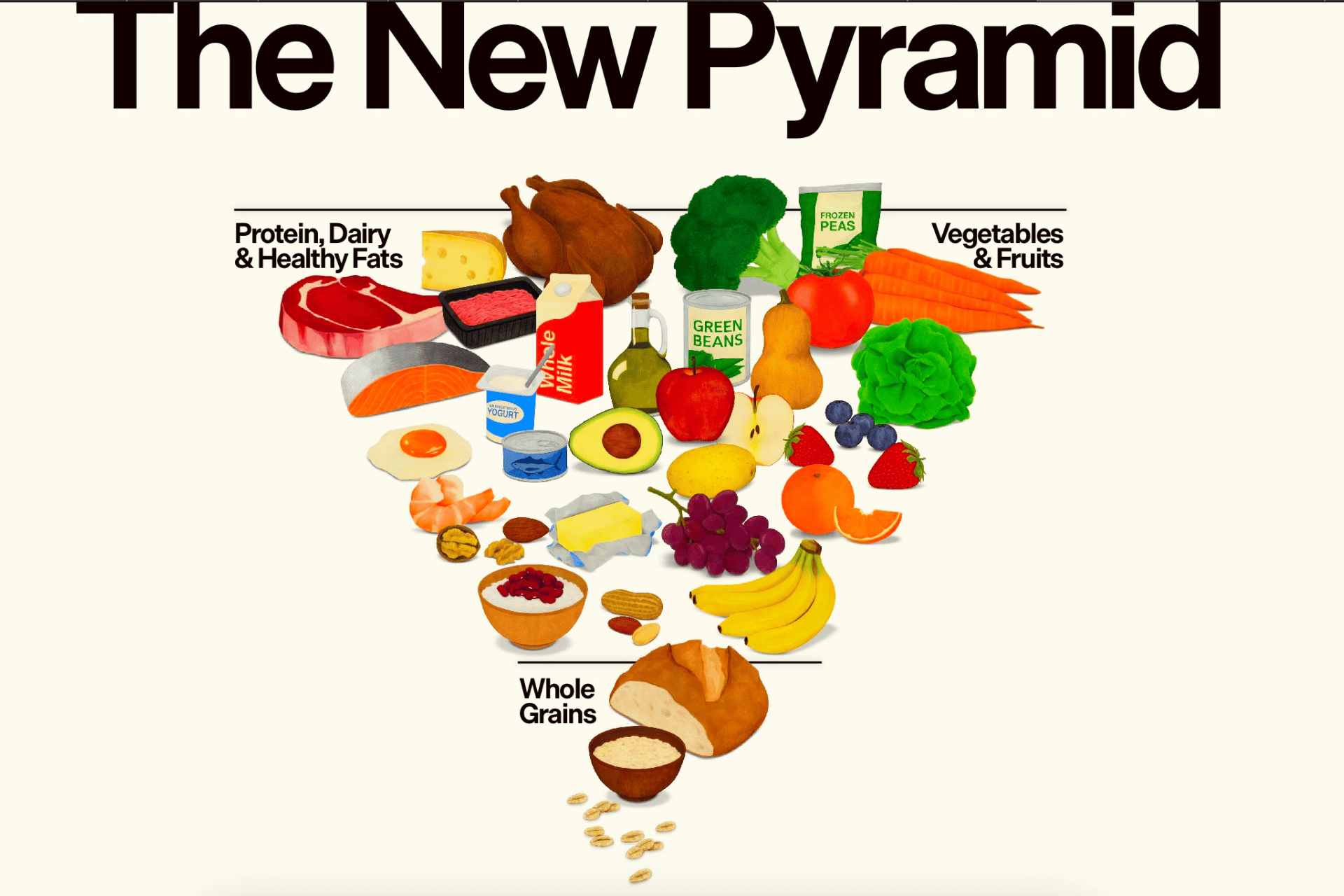
The updated guidance includes a visual graphic commonly dubbed the “new food pyramid”. It alters how Americans conceptualize daily food choices and federal nutrition priorities.
The updated model replaces the MyPlate icon that guided U.S. nutrition for the last 15 years with a reversed pyramid placing proteins, healthy fats, fruits, vegetables and dairy prominently while downplaying refined carbohydrates and added sugars.
Nutrition and health experts say the guidelines will shape school lunches, federal feeding programs, military meals, and public health messaging across the country.
New food pyramid focuses on “real food” guidance
Federal officials say the new framework places “real food” at the center of dietary advice.
Secretary of Health and Human Services Robert F. Kennedy Jr. and USDA Secretary Brooke Rollins described the guidelines as the most significant reset of U.S. nutrition policy in decades.
The new food pyramid emphasizes:
- Eating high-quality proteins at every meal
- Prioritizing vegetables and fruits
- Including healthy fats from whole food sources
- Choosing full-fat dairy products without added sugars
- Greatly reducing highly processed foods and refined carbohydrates
These recommendations mark a notable departure from recent guidelines that emphasized lower fat intake and moderation of red meat. Federal officials said the changes aim to reduce chronic disease rates tied to poor diet and lifestyle.
In addition, the guidelines recommend that added sugars be limited to very low amounts per meal. Alcohol consumption should also be minimized. While previous guidance reported moderate alcohol limits, the 2025–2030 edition softens those caps. It underscores overall healthy eating patterns, according to the Associated Press.
Reactions to the dietary update
Public reaction to the new food pyramid has been mixed, according to reporting from multiple outlets.
Health policy analysts note that the guidelines’ focus on consuming more protein — including red meat — and full-fat dairy represents a significant shift. This shift is from decades of federal advice that favored lower saturated fat intake.
Some nutritionists applaud the emphasis on whole foods and reduced added sugar, calling it long overdue given rising obesity and chronic disease rates in the U.S., according to TIME.
However, critics argue that prioritizing red meat and saturated fats contradicts substantial scientific evidence linking these foods to cardiovascular risks.
A spokesperson for the American Heart Association (AHA), for example, welcomed elements of the guidance such as increased fruit and vegetable intake. However, they cautioned that the inclusion of high-fat animal products may elevate health risks if misinterpreted by consumers.
A statement from the AHA stressed the importance of limiting added sugars, sodium and refined grains, while also noting that high intake of saturated fats — often found in red meat and butter — has been associated with increased risk of heart disease. The association encouraged consumers to prioritize lean proteins, plant-based options and seafood where possible.
“The American Heart Association welcomes the new dietary guidelines and commends the inclusion of several important science-based recommendations, notably the emphasis on increasing intake of vegetables, fruits and whole grains while limiting consumption of added sugars, refined grains, highly processed foods, saturated fats and sugary drinks. These elements align closely with the longstanding dietary guidance of the American Heart Association and other public health authorities.”
Implications for federal programs and public health
The new food pyramid is more than a visual; it serves as the foundation for federal nutrition policy over the next five years. The guidelines inform federal feeding programs such as the National School Lunch Program, the Special Supplemental Nutrition Program for Women, Infants, and Children (WIC), and meals served in military and veteran facilities.
Nutrition educators say the updated guidance will require changes to meal planning and procurement practices. Schools, in particular, must adjust menus to reflect higher servings of nutrient-dense foods. They also need to serve lower amounts of processed options.
Some nutrition directors have expressed concern about cost implications, noting that fresh foods like fruits and vegetables can carry higher price tags than processed alternatives.
In some regions, local food policy advocates are already calling for partnerships with farmers and food producers. This is to help schools and community organizations meet the new food pyramid standards without placing undue financial strain on families and institutions.
Historical context and future outlook
The new food pyramid marks the return of a pyramid-style visual to U.S. federal nutrition guidance. This format dates back to the original USDA food pyramids developed in the early 1990s.
Those earlier models, and later variations such as MyPyramid, provided hierarchical guidance on food groups. They were replaced by MyPlate in 2011 to simplify public messaging.
Nutrition experts emphasize that while the new food pyramid offers a fresh perspective, individuals should consult personalized guidance. This should be based on age, health status, and activity levels. The Dietary Guidelines also include sections tailored to specific needs such as infant nutrition, older adults, and people with chronic disease.
Public health advocates say the new food pyramid could help shift eating patterns. It encourages more wholesome foods and away from highly processed items linked to chronic illnesses like diabetes, heart disease, and obesity. However, the ultimate success of these guidelines will depend on education, affordability, and community support for healthier eating habits nationwide.
As Cincinnatians head to the grocery store this week, they will likely see these conversations playing out in real-time. Whether viewing the new food pyramid as a welcome return to tradition or a controversial departure from science, the nation’s definition of a “healthy meal” has officially changed.
Also read:
Cincinnati food insecurity: Why hunger is increasing and how the city plans to fix it