
Share This Article
Article Summary
Interstate 471 reopened Saturday morning after a tanker explosion and fire shut down the highway overnight in Newport, Kentucky. Emergency crews extinguished the blaze, cleared debris, and inspected the roadway before allowing traffic to resume. The quick reopening prevented what could have become another prolonged disruption along one of the Cincinnati region’s most important commuter corridors.
Interstate 471 Reopens After Overnight Tanker Explosion
Interstate 471 reopened to traffic Saturday morning after a tanker explosion and fire forced the highway to shut down overnight in Newport, Kentucky.
Authorities initially closed both northbound and southbound lanes of I-471 late Friday night following a crash involving a gasoline tanker near the Memorial Parkway and Grand Avenue exits. I-471 reopened after crews cleared the scene and confirmed the roadway was safe for drivers.
Fire crews responded to the scene after reports of an explosion along the interstate. The tanker overturned and ignited, producing a large fire and several secondary explosions that were visible from nearby neighborhoods.
Emergency crews worked through the night to extinguish the fire and secure the area.
After overnight inspections and cleanup, officials determined the roadway could safely reopen.
What Happened in the Crash
Authorities say a passenger vehicle collided with a tanker truck carrying gasoline shortly after 10 p.m. Friday, March 13.
The impact caused the tanker to overturn and ignite. The truck was reportedly transporting about 8,300 gallons of gasoline, which fueled the intense fire.
Witnesses described seeing a large fireball and thick smoke rising above the interstate as emergency vehicles rushed to the scene.
Because of the risk of additional explosions, officials immediately shut down the interstate in both directions.
Minor Injuries Reported
Officials confirmed that three occupants of the passenger vehicle — a woman and two children — were transported to a hospital with minor injuries.
The tanker truck driver was treated at the scene and released.
Authorities reported no fatalities from the crash.
Crews Worked Overnight to Clear and Inspect the Highway
Once firefighters extinguished the blaze, transportation crews began clearing debris and inspecting the roadway.
Engineers reviewed the pavement and nearby infrastructure to determine whether the intense gasoline fire caused structural damage.
Officials determined the interstate could safely reopen after those initial inspections.
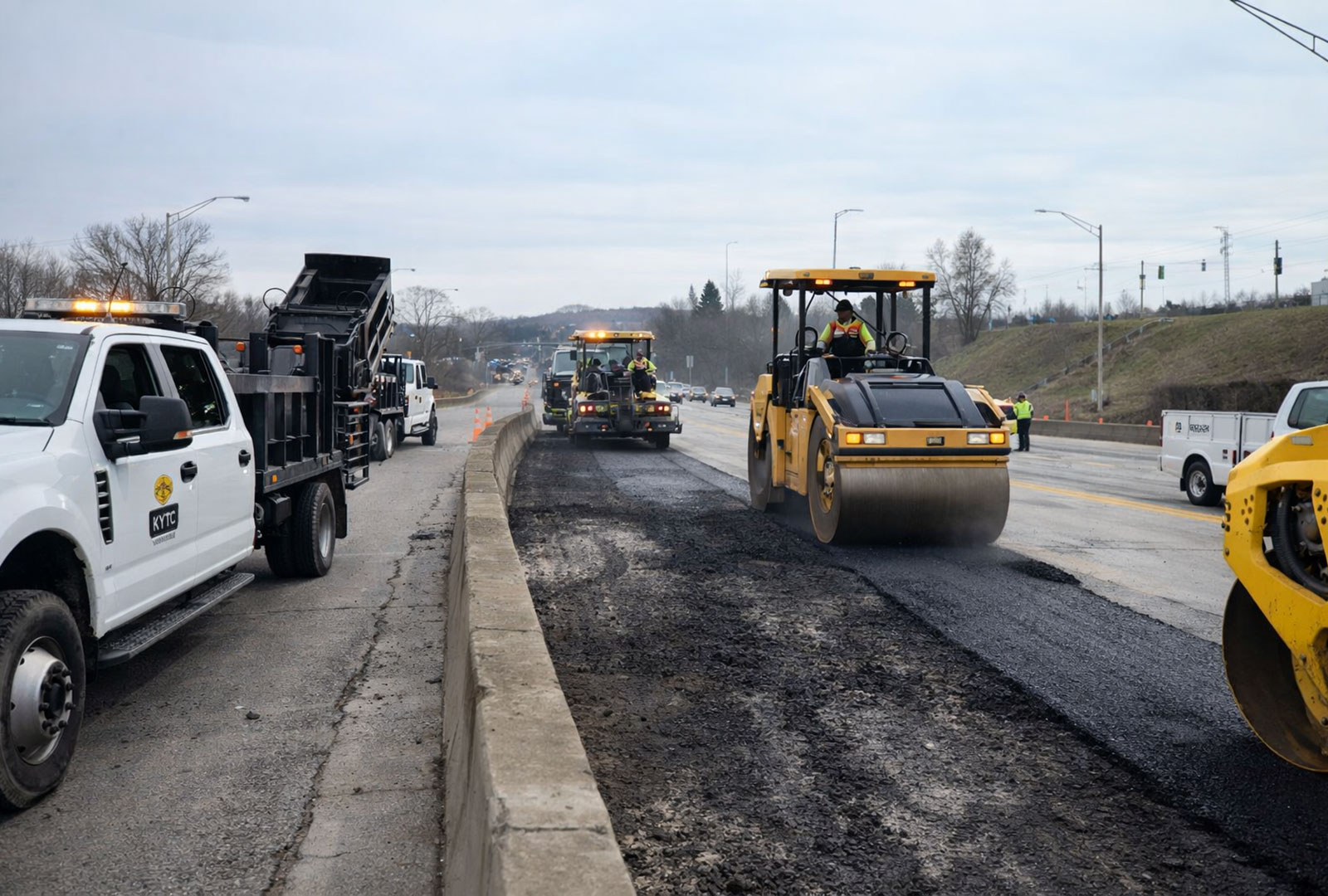
Additional repairs may still be completed in the coming days if crews identify sections of pavement that were damaged by the heat.
Why the Rapid Reopening Matters
The speed of the reopening prevented what could have been a major regional traffic disruption.
Interstate 471 serves as a critical commuter route between downtown Cincinnati and Northern Kentucky suburbs, carrying roughly 100,000 vehicles per day.
When the route closes, traffic typically shifts onto nearby crossings, including:
-
The Brent Spence Bridge (I-71/I-75)
-
The Taylor-Southgate Bridge (U.S. 27)
-
Local Newport surface streets
Even short closures can create congestion across the entire Ohio River bridge network.
Economic Impact of a Longer Closure
If the interstate had remained closed for days or weeks, the economic impact could have been significant.
Transportation economists often estimate commuter delay costs using the value of travel time, typically around $20 per hour for personal travel.
If detours add about 20 minutes per trip, the resulting delays could cost the region $600,000 to $700,000 per day in lost commuter time.
A prolonged closure could have quickly pushed the total economic impact into the tens of millions of dollars.
The early reopening significantly reduced that risk.
Context: The 2024 Big Mac Bridge Fire
The quick reopening also eased fears of another long shutdown along the I-471 corridor.
On November 1, 2024, an arson fire at the Sawyer Point playground beneath the Daniel Carter Beard Bridge — known locally as the Big Mac Bridge — caused major structural damage.
Southbound I-471 remained closed for about 100 days while crews replaced seven steel girders and roughly 7,600 square feet of concrete deck.
The repairs cost approximately $10.5 million, and traffic planners reported about 33,000 vehicles per day shifted to other bridges during the closure.
Saturday’s rapid reopening suggests the tanker explosion caused far less structural damage than the earlier incident.
I-471 tanker explosion update
Investigators are continuing to review the circumstances surrounding the crash.
Transportation officials may conduct additional repairs or resurfacing if crews determine that the fire-damaged sections of pavement.
For now, however, traffic along the I-471 corridor has returned to normal.
Read More
I-471 Fire in Newport Shuts Down Interstate After Tanker Explosion
FAQs
Why did Interstate 471 close in Newport?
Interstate 471 closed late March 13 after a passenger vehicle collided with a tanker truck carrying gasoline. The crash caused the tanker to overturn and ignite, triggering a large fire and multiple explosions on the highway.
When did I-471 reopen after the tanker explosion?
I-471 reopened Saturday morning after emergency crews extinguished the fire, cleared debris, and transportation engineers inspected the roadway to confirm it was safe for traffic.
Did the explosion damage the Daniel Carter Beard Bridge?
Officials inspected nearby infrastructure and determined the fire mainly damaged the roadway surface rather than the bridge structure itself, which allowed the interstate to reopen quickly.
Were there injuries in the I-471 crash?
Three occupants of the passenger vehicle — a woman and two children — were transported to a hospital with minor injuries. The tanker truck driver was treated at the scene and released.