



Share This Article
Article Summary
The Cincinnati Reds have reunited with Eugenio Suárez, bringing back one of the most productive power hitters in franchise history. The move signals a shift toward stabilizing the Reds’ young core with proven veteran production. This article explains why the reunion happened, how Suárez fits into the 2026 roster, and what the projected Reds lineup could look like next season.
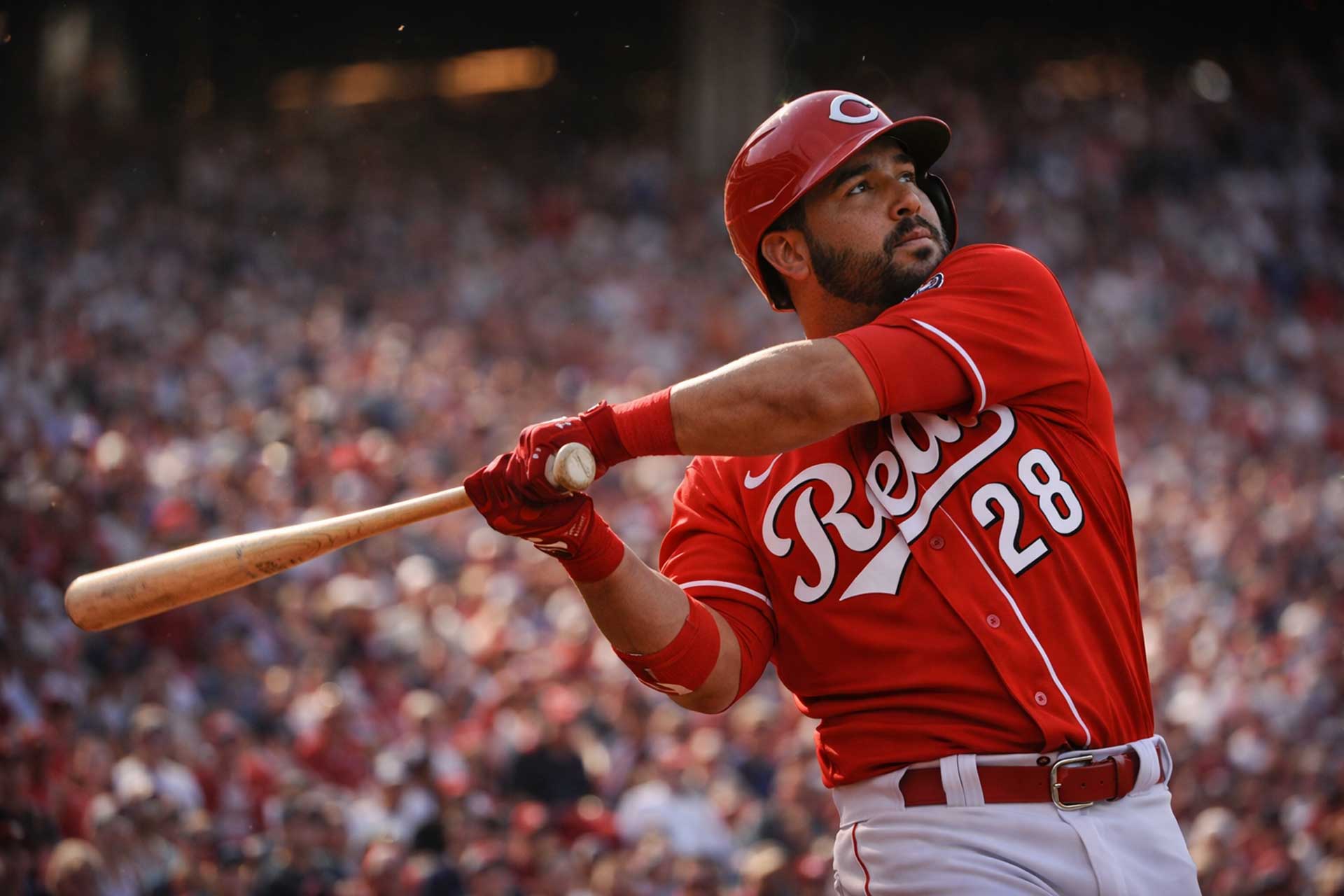
The Eugenio Suárez Cincinnati Reds reunion is official, and it immediately changes how the club looks heading into 2026.
After several seasons of roster churn and development-first priorities, the Reds are betting that a familiar bat can help accelerate their next competitive window.
This is not a nostalgia signing. It’s a calculated baseball move.
Context: Why the Reds Brought Eugenio Suárez Back
Eugenio Suárez spent seven seasons with the Reds and remains one of the most impactful third basemen in team history. Since leaving Cincinnati, he has continued to supply above-average power, durability, and clubhouse leadership—three things the current roster needs.
In introducing himself back in Cincinnati, Suárez didn’t sound like a mercenary signing — he sounded like someone who genuinely wanted to come back.
It’s perfect, that’s why I’m here,” he said. “Everything right now is perfect, beautiful, happy. I’m very excited to be back home.
Key factors behind the move:
-
Power consistency: Suárez remains a 25–40 HR threat.
-
Defensive flexibility: DH or 3B if needed.
-
Leadership: A veteran presence for a young team.
-
Short-term risk: No long rebuild timeline attached.
From a front-office perspective, this is a low-drama, high-clarity addition.
What Other Reports Are Saying
Around the league, the consensus has been steady:
-
Cincinnati wanted run production without blocking top prospects.
-
Suárez was open to a return where expectations and environment were familiar.
-
The contract structure reportedly preserves flexibility beyond 2026.
In short: both sides knew exactly what they were getting.
How Eugenio Suárez Fits the 2026 Reds Roster
The Reds’ core remains young, fast, and controllable. What it has lacked is a reliable middle-of-the-order bat who doesn’t need developmental patience.
Suárez fills that gap.
He likely slots into:
-
Everyday designated hitter for the team
-
Middle-order hitter, protecting younger bats
-
Situational run producer against left-handed pitching
This also allows Cincinnati to be more selective with prospect promotions instead of forcing them.
Projected Cincinnati Reds 2026 Lineup
Cincinnati Reds Projected Starting Lineup:
- TJ Friedl – CF
- Noelvi Marte – LF
- Elly De La Cruz – SS
- Eugenio Suárez – DH
- Spencer Steer – 1B
- Tyler Stephenson – C
- JJ Bleday – RF
- Matt McLain – 2B
- Ke’Bryan Hayes – 3B
Key takeaway: This lineup finally balances speed, on-base ability, and power—without overexposing young hitters.
Strategic Impact for the Reds
The Eugenio Suárez Cincinnati Reds move signals something important: the organization is no longer content to “see what happens.”
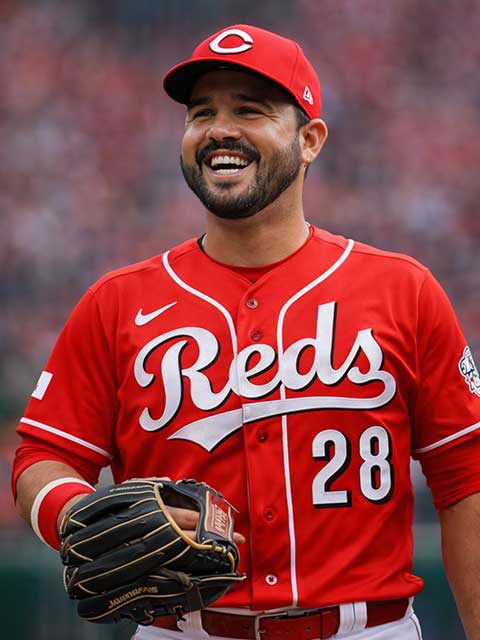
This is a bridge signing:
-
It raises the offensive floor immediately
-
It protects young hitters from pressure
-
It keeps payroll manageable
-
It preserves optionality at the trade deadline
That’s not flashy—but it’s how competitive teams are built.
2026 Reds Record & Playoff Projection
Sportsbooks and projection models largely agree on where the Cincinnati Reds sit heading into 2026: competitive, improved, but still on the edge of the postseason picture.
Projected Win Total and Record
Most major betting markets currently list the Reds’ 2026 regular-season win total in the 81.5 to 82.5 win range. That implies a projected finish of roughly 81–82 wins, placing Cincinnati right around .500.
This projection reflects modest optimism. Oddsmakers see improvement from recent seasons but stop short of treating the Reds as a clear playoff team. Analytical projection systems, including ZiPS-style models used across MLB front offices, also cluster Cincinnati near the same range, reinforcing the idea of a stable but not dominant roster.
Playoff Odds
Betting markets price the Reds as a fringe playoff contender rather than a longshot or a favorite. Across major sportsbooks, Cincinnati’s implied odds to make the postseason generally fall between 40 and 45 percent, with most scenarios pointing toward a Wild Card path rather than a division title.
World Series futures remain long, typically in the +3000 to +4000 range, which is standard for teams projected to finish in the middle tier of the National League.
NL Central Outlook
Within the NL Central, sportsbooks consistently slot the Reds behind Milwaukee and Chicago, but not far off. Division title odds suggest Cincinnati would need either a meaningful step forward from its young core or regression from rivals to realistically win the division.
That positioning reinforces the broader theme: the Reds are viewed as competitive within the division, but not the most complete roster on paper.
Bottom Line Projection
Based on betting markets and public projection systems, the consensus outlook for the 2026 Reds looks like this:
-
Projected record: approximately 81–82 wins
-
Playoff chances: roughly 40–45 percent
-
Most likely path: NL Wild Card contention
The return of Eugenio Suárez raises the team’s offensive floor, but sportsbooks still see Cincinnati as a team that must execute well, stay healthy, and capitalize on internal development to turn contention into a postseason berth.
Bringing back Eugenio Suárez isn’t about the past. It’s about structure.
The Reds needed power, leadership, and lineup stability. Suárez provides all three, while still fitting the club’s timeline and financial reality. If the young core takes even a modest step forward, this move could be remembered as the one that quietly unlocked the next phase of Reds baseball.
In short, the Reds’ betting-market projection reflects a cautious baseline, not a ceiling. A few things breaking right could push Cincinnati from fringe contender to legitimate playoff team.
Go Reds!
FAQs
Why did the Reds bring Eugenio Suárez back?
Because he provides reliable power, veteran leadership, and positional stability without blocking top prospects.
Will Eugenio Suárez start every day in 2026?
Suarez will most likely serve as the team’s designated hitter.
Does this mean the Reds are trying to contend now?
It suggests the Reds are transitioning from development-only mode to selective contention.
How does this affect Reds prospects?
It reduces pressure and allows more deliberate development timelines.


