
Share This Article
Article Summary
Cincinnati’s rail fund has grown from $1.6B to nearly $2B, but rising infrastructure costs mean it buys about 35% less than when the sale was proposed. The issue isn’t growth — it’s that the fund is restricted to a category where costs are increasing faster than returns. The result is a larger fund on paper, but reduced real-world impact.
Cincinnati began seriously pursuing the sale of the Cincinnati Southern Railway in late 2022.
The deal closed on March 15, 2024, for $1.6 billion. Today, more than two years later, the trust fund created from that sale, known as the Cincinnati rail fund, is approaching $2 billion.
On the surface, that looks like a success. When it comes to public infrastructure, the Cincinnati rail fund has been a key factor in shaping outcomes like these.
But the real question was never whether the fund would grow. It was whether the structure created by the sale would keep up with the reality it was designed to fund.
That answer is becoming more complicated.
The Number vs. What It Actually Buys
Since the sale was first proposed, the cost of rebuilding Cincinnati’s streets has risen sharply. Lane-mile rehabilitation costs have increased from roughly $330,000 to about $600,000, based on the City of Cincinnati’s capital budget data.
That is an increase of more than 80 percent in just a few years.
Over that same period, the trust fund has grown from $1.6 billion to roughly $1.9 billion.
Those numbers are not moving in the same direction.
Adjusted for what the money actually buys, today’s $1.9 billion has purchasing power closer to about $1.05 billion compared to when the sale was first being discussed.
The fund is larger in dollars. It is smaller in function.
Even when viewed another way, the gap is clear. When the sale was first being discussed, $1.6 billion could have funded roughly 4,800 lane miles of road at then-current costs. Today, even with the fund approaching $1.9 billion, it covers only about 3,200 lane miles at current prices.
That is roughly a 35 percent drop in buying power — the equivalent of losing a full lane of highway from Cincinnati to Miami and back.
A Structural Mismatch
The issue is not that the trust is underperforming. It is doing what it was designed to do.
The problem is alignment.
The trust is structured to generate roughly 5 to 6 percent annually. The city is allowed to spend about 3.5 percent of that each year on infrastructure, with the remainder reinvested.
But the money can only be used for infrastructure.
That creates a structural mismatch:
-
Returns are tied to financial markets
-
Spending is tied to construction costs
And construction costs have been rising significantly faster.
The trust also incorporates standard institutional investment constraints, including “responsible investing” considerations, which can limit exposure to certain sectors. While that may have some marginal impact on returns, it does not change the underlying issue.
The result is a system where even strong market performance can still fall behind real-world costs.
The fund can grow on paper while losing ground in what it can actually build.
Nominal Growth vs. Real Position
Measured purely in nominal terms, Cincinnati looks roughly flat compared to what it might have had by simply holding the railroad.
What we do know is this: the market kept repricing the asset higher.
In 2009, there was an offer around $500 million. By 2021–2022, that jumped to between roughly $865 million and $1.62 billion. That’s not a model or a guess. That’s what real buyers were willing to pay.
That kind of increase implies an annualized growth rate somewhere in the range of roughly 4 to 10 percent, depending on which valuation points you use.
That growth wasn’t coming from one place. It reflects a combination of factors — including rising freight demand, increasing strategic importance of north-south corridors, and the underlying land value along the route, particularly through Kentucky and Tennessee, which have seen steady population growth and development.
On top of that, the city would have continued collecting lease income of $37.3 million per year or more.
Add those together, and you’re in the same general range as where the trust sits today.
But this comparison misses the most important distinction.
The trust is restricted. The railroad was not.
The Loss of Optionality
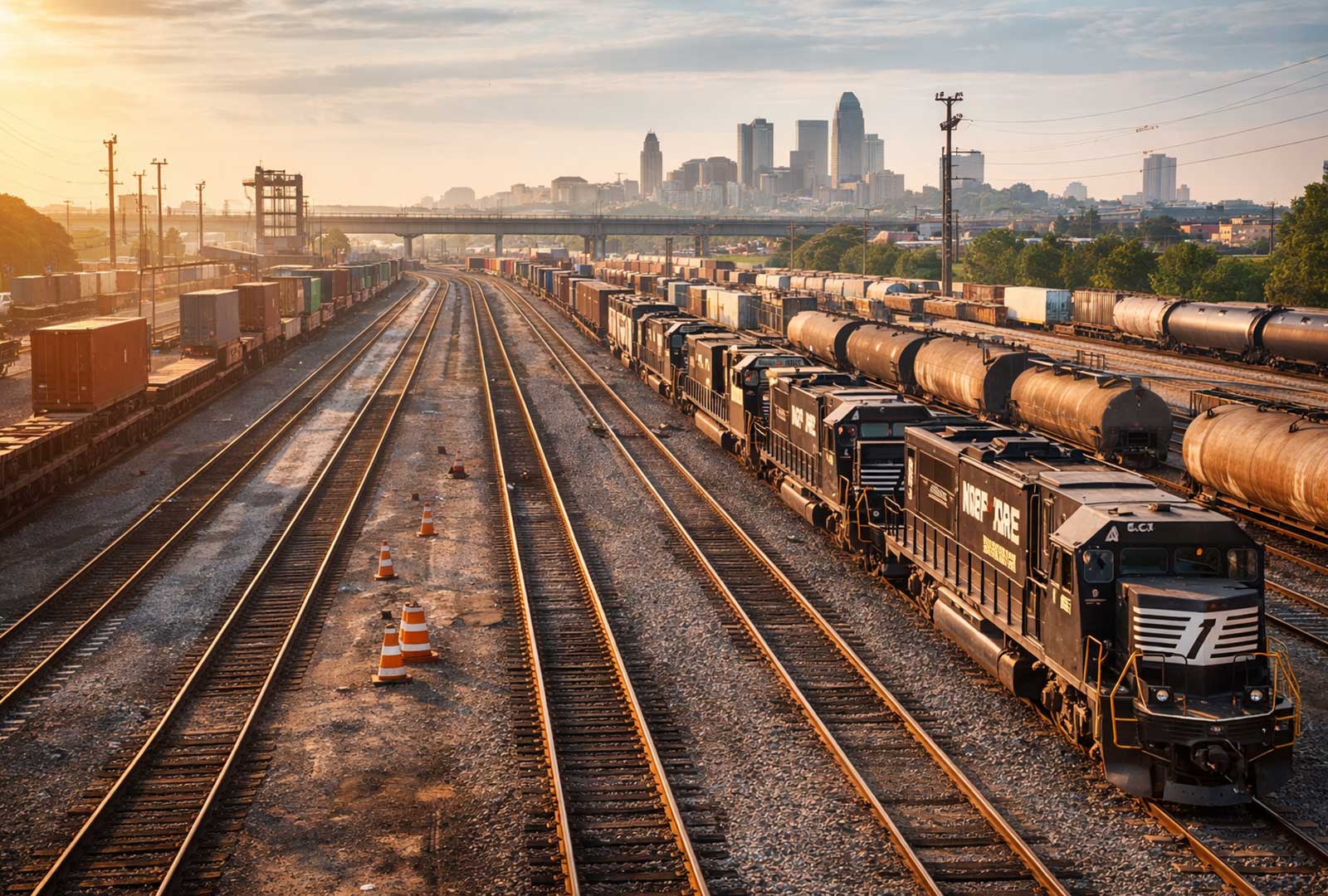
Before the sale, Cincinnati owned a 337-mile rail corridor connecting the Midwest to the Southeast — a route Norfolk Southern described as a critical part of its network.
That ownership came with options:
- Renegotiate lease terms
- Add escalation tied to inflation or usage
- Explore revenue-sharing structures
- Issue bonds against the lease or underlying asset
- Hold the asset longer and capture future appreciation
After the sale, those options no longer exist.
The city now holds a financial portfolio with legally restricted uses. It cannot be leveraged in the same way. It cannot participate in future growth. It cannot adapt if conditions change.
This is not just a financial shift.
It is a structural one.
The Part That Doesn’t Show Up on Paper
There is another dimension to the sale that does not appear in headline numbers.
The value of the railroad was not just what it could be sold for. It was also what it allowed the city to do while it was held.
As the asset appreciated over time, that value could have been used as collateral. The city could have issued bonds against the lease income or the underlying corridor itself, accessing capital without selling the asset.
This is how infrastructure is often financed. Assets are not always liquidated. They are leveraged.
If the railroad had continued to appreciate at historical rates, the corridor would have been increasing in value by well over $100 million per year, in addition to ongoing lease payments.
Instead, the sale converted that asset into a fund with restricted uses and limited flexibility.
The result is not just a loss of upside.
It is a loss of access to capital.
The Cincinnati Rail Deal Lease Negotiation Question
During negotiations, Cincinnati sought a lease payment closer to $65 million annually. Norfolk Southern’s highest documented offer was $37.3 million.
At the same time, Norfolk Southern was raising capital in the bond market at interest rates in the mid-5 percent range, according to its SEC filings.
On a $1.6 billion purchase price, that implies financing costs in the range of roughly $90 million per year.
That does not prove Norfolk Southern would have agreed to a higher lease.
But it raises a reasonable question: if the corridor was valuable enough to support that level of financing, was $37.3 million truly the ceiling?
A High-Density, Strategic Corridor
The Cincinnati Southern line connects the Midwest to the Southeast, a region that continues to lead the country in population growth.
According to the U.S. Census Bureau, the South has been the fastest-growing region in the country, driving increased housing construction, logistics demand, and freight movement.
More people means more homes. More homes mean more materials. And those materials move by rail.
The long-term demand trend is not static. It is moving toward the corridor Cincinnati sold.
A Different Structure Was Possible
Cincinnati did not have to choose between selling the railroad and doing nothing.
Other models exist.
In Mexico, for example, rail corridors are operated under concession agreements where the government retains control and collects a share of revenue. Kansas City Southern disclosed in its filings that its Mexican operations are subject to a concession structure tied to revenue.
Cincinnati was in a similar position, owning the corridor without operating the trains.
Alternative structures were possible:
- Lease agreements with escalation
- Revenue participation tied to usage
- Hybrid models combining fixed income and upside
Instead, the city chose a full asset sale.
Market Risk vs. Asset Ownership
Before the sale, Cincinnati held a hard infrastructure asset:
- Scarce
- Difficult to replicate
- Physically constrained
- Aligned with long-term economic trends
After the sale, the city holds a financial portfolio:
- Exposed to market fluctuations
- Dependent on external management
- Subject to volatility
These are fundamentally different risk profiles.
The Real Test Going Forward on the Cincinnati Railway Fund
The success of the rail sale will not be determined by whether the fund reaches $2 billion or more.
It will be determined by whether it can keep up with the cost of maintaining and rebuilding the city.
If infrastructure costs continue to outpace investment returns, the gap will widen.
And that gap — not the size of the fund — is what ultimately matters.
The Municipal Asset Sale
Cincinnati did not simply sell a railroad. It executed a municipal asset sale that traded a long-term, flexible, income-producing asset for the Cincinnati rail fund, a structured financial system with defined outputs and real-world constraints.
The railroad could be renegotiated, leveraged, and allowed to grow with demand, pricing power, and land value over time. It gave the city optionality. The fund does not. The rail trust fund in Cincinnati is governed, allocated, and restricted to one category of spending, and that category happens to be one of the fastest-inflating cost centers in the economy.
That is the trade that was made.
The fund is growing, but growth on paper is not the same as progress in reality. As road construction costs in Cincinnati and broader infrastructure spending continue to rise, the gap becomes more visible. If the cost of what you are buying increases faster than the money you are using to buy it, you are not gaining ground, you are losing it, just more slowly. That is the position Cincinnati now finds itself in.
This was not just a financial transaction. It was a structural shift in how the city creates and uses value, and more than a year later, the early signs are already visible. The fund is getting bigger, but the city’s buying power is not.
FAQs
What is the Cincinnati rail fund?
The Cincinnati rail fund is a trust created after the city sold the Cincinnati Southern Railway for $1.6 billion in 2024. The fund is used to support infrastructure spending.
How much is the Cincinnati rail fund worth today?
As of early 2026, the fund is approaching $1.9 to $2.0 billion depending on market performance.
Why does buying power matter more than fund growth?
Because the fund is restricted to infrastructure spending, rising construction costs reduce how much can actually be built, even if the fund grows.
What was the alternative to selling the railroad?
The city could have retained ownership, continued collecting lease income, renegotiated terms, or leveraged the asset through bonds.
This article is based on publicly available data, city budget documents, and reasonable financial estimates where exact figures are not disclosed. The analysis is intended to evaluate the structure and long-term implications of the rail sale, not to provide precise valuations.