

Share This Article
If you’ve walked around downtown Cincinnati recently, you’ve probably heard some version of the same question:
“Where are all the police?”
A summer of viral fight videos, high-profile incidents on Fountain Square, mixed crime data, shifting youth curfews, and the sudden removal of the police chief have left many residents confused about what Cincinnati’s actual public-safety strategy is heading into 2026. This growing concern highlights the urgent need for clarity in Cincinnati public safety measures.
The truth is more complicated than a simple rise or fall in crime. Cincinnati is trying to police a growing downtown with fewer sworn officers than it’s budgeted for, while relying on a patchwork of curfews, drones, targeted patrols, social-service partnerships and outside assistance from state agencies.
Here’s where things actually stand.
Crime: Down Citywide, Up in the Urban Core
Citywide crime data shows a picture that’s far more nuanced than social media suggests.
Overall reported crime across Cincinnati is lower than the three-year average, and the city is experiencing fewer shooting victims than in the previous few years. Violent crime is not driving most of the concern.
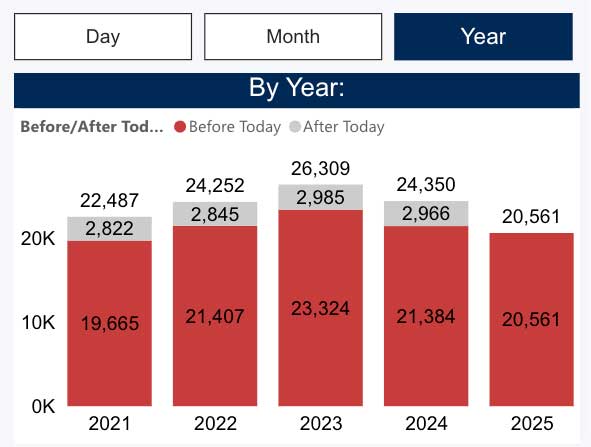
But downtown is different when it comes to Cincinnati public safety.
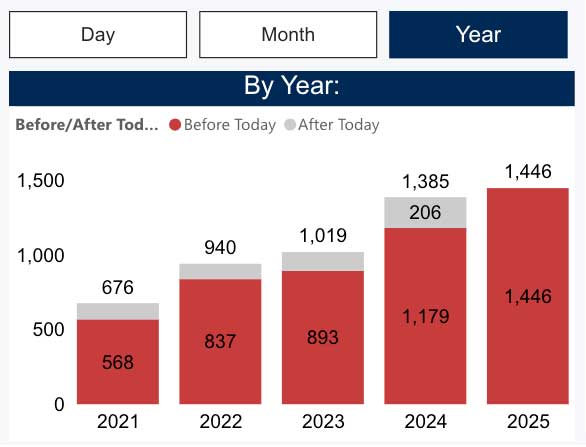
Through mid-2025, the Central Business District saw nearly double the total number of reported crimes compared with 2023. The overwhelming majority of those incidents involve theft, car break-ins and disorderly behavior — not shootings — but the volume makes people feel unsafe.
Mayor Pureval has repeatedly acknowledged that “perception and reality don’t match downtown,” even as citywide numbers improve.
This mismatch — safety improving on paper while downtown feels more chaotic — is driving much of the public frustration.
Officer Shortages Are Real and Impact Cincinnati Public Safety
A major factor is staffing.
The Cincinnati Police Department is currently about 15% below its authorized strength, part of a nationwide struggle to recruit and retain officers. Departments across the country are still employing fewer officers than they did before 2020, and Cincinnati is no exception.
City Council approved a $2 million initiative to rapidly hire 30 experienced officers through lateral transfers. This approach shortens training time dramatically, but it doesn’t erase the fact that overall staffing remains low.
Union leadership has warned that without aggressive hiring, CPD could be short by well over 150 officers — a gap that affects everything from traffic enforcement to foot patrols to investigative capacity.
This is one of the city’s greatest public safety challenges: you can’t put officers everywhere when you don’t have enough officers.
Leadership Shake-Up at the Worst Possible Time for Cincinnati Public safety
This year also brought a high-profile leadership change.
In October, Police Chief Teresa Theetge was placed on paid administrative leave by City Manager Sheryl Long, who asked her to resign following a series of disagreements and concerns about departmental leadership. Theetge refused, calling the move political and arguing that she was being made a scapegoat.
The timing was extraordinary: a department already stretched thin is now navigating a leadership transition in the middle of a major safety push.
Interim Chief Adam Hennie has stepped in to run the department.
While he has not announced dramatic new policies, Hennie has positioned himself as a stabilizing force — meeting with district commanders, focusing on internal morale, and assuring the public that CPD’s core safety strategies will continue uninterrupted.
The leadership change does raise questions about continuity, coordination and long-term direction, but for now, the overall strategy remains intact.
What Theetge Put in Motion Before Her Removal
Even though Theetge is no longer leading the department, many of the programs shaping Cincinnati’s current public-safety strategy began under her watch.
1. Drone as First Responder (DFR)
Theetge championed a major expansion of the drone program, aiming for:
-
40% citywide coverage by late 2025
-
90% coverage by mid-2026
-
Drones responding to certain 911 calls before officers arrive
-
A mix of rooftop launch sites and remote deployment locations
This program is still moving forward under Hennie because it is funded and supported directly by the mayor and City Manager.
2. Hot-Spot Patrols in Downtown and OTR
Theetge reorganized deployment to focus police presence in:
-
The Banks
-
Fountain Square and Fourth Street
-
Court Street Plaza
-
Washington Park and Ziegler Park
-
Main, Vine and Race streets
These high-visibility walking patrols are still the backbone of the downtown plan.
3. New Youth Curfew Framework
Working with the mayor, Theetge helped establish:
-
An 11 p.m. citywide curfew
-
A 9 p.m. “special curfew district” downtown and in parts of OTR
-
A dedicated curfew center at Seven Hills Neighborhood Houses
-
A proposed 9 p.m. curfew for Short Vine near UC
This system is still in place and remains one of the city’s primary tools for managing large youth crowds.
4. State Highway Patrol Support
CPD under Theetge coordinated with the Ohio State Highway Patrol to handle highway enforcement and street-racing interventions, allowing city officers to focus on violent crime and downtown coverage.
5. Accelerated Officer Recruitment
The lateral-transfer hiring strategy was developed during her tenure to help stabilize staffing more quickly.
What Interim Chief Adam Hennie Is Doing Now
Hennie has not tried to overhaul CPD’s strategy — at least not publicly. Instead, he’s focusing on continuity and internal stabilization.
1. Continuing All Major Deployments
Everything Theetge put in motion to address Cincinnati public safety — drones, hot-spot patrols, Sheriff’s Office walking teams, curfews, 3CDC camera coordination — remains intact.
2. Rebuilding Morale
Recent reports note Hennie has:
-
Been visiting roll calls
-
Holding district-level listening sessions
-
Reaffirming support for rank-and-file officers
-
Working to settle internal unrest caused by the leadership conflict
With staffing already low, morale is one of the most fragile variables in the department.
3. Prioritizing Downtown and Over-the-Rhine
Hennie has made it clear that the urban core remains the focus for Cincinnati public safety. Even with fewer officers, downtown will continue receiving disproportionate resources because of:
-
Tourism
-
Convention traffic
-
Bengals and Reds games
-
Rising residential population
-
National attention
The city’s message is simple: downtown has to feel safe for Cincinnati to thrive.
So… Where Are All the Police?
When you step back, you see three truths at the same time:
1. There really are fewer officers on duty.
The department is understaffed and trying to hire quickly, but it takes time.
2. The officers Cincinnati does have are being concentrated in specific areas.
You’ll see them in The Banks, Fountain Square, Main Street, Vine Street, Liberty Street and Short Vine — not evenly across every neighborhood.
3. Technology is replacing some traditional policing visibility.
Drones, expanded camera networks, and state-agency surveillance mean that part of the “presence” isn’t physical anymore.
For residents outside the priority zones, it can absolutely feel like there are fewer cops — because in many places, that’s true.
The Big Questions Going Into 2026
Cincinnati’s public safety strategy is clearer now than it was six months ago, but big questions remain:
-
Will staffing continue to fall, or can the city recruit fast enough?
-
Will drones reduce response times or create backlash over privacy?
-
Can a curfew system actually reduce youth violence long-term?
-
Will the leadership shake-up slow or accelerate reform?
-
And most importantly: will residents feel safer downtown?
Mayor Pureval has said repeatedly that perception and reality must align for the city to succeed. Data may be improving, but downtown sentiment is still mixed.
As Cincinnati public safety heads into 2026 — a year filled with major construction, a booming convention calendar and massive crowds for sports — the pressure on CPD to deliver visible safety will be enormous.
This next year will likely determine whether the city stays the course with its current strategy, or shifts to something more aggressive.
More to Read
Congress Moves to Reopen Government After Record Shutdown – But the Fight Isn’t Over