
Share This Article
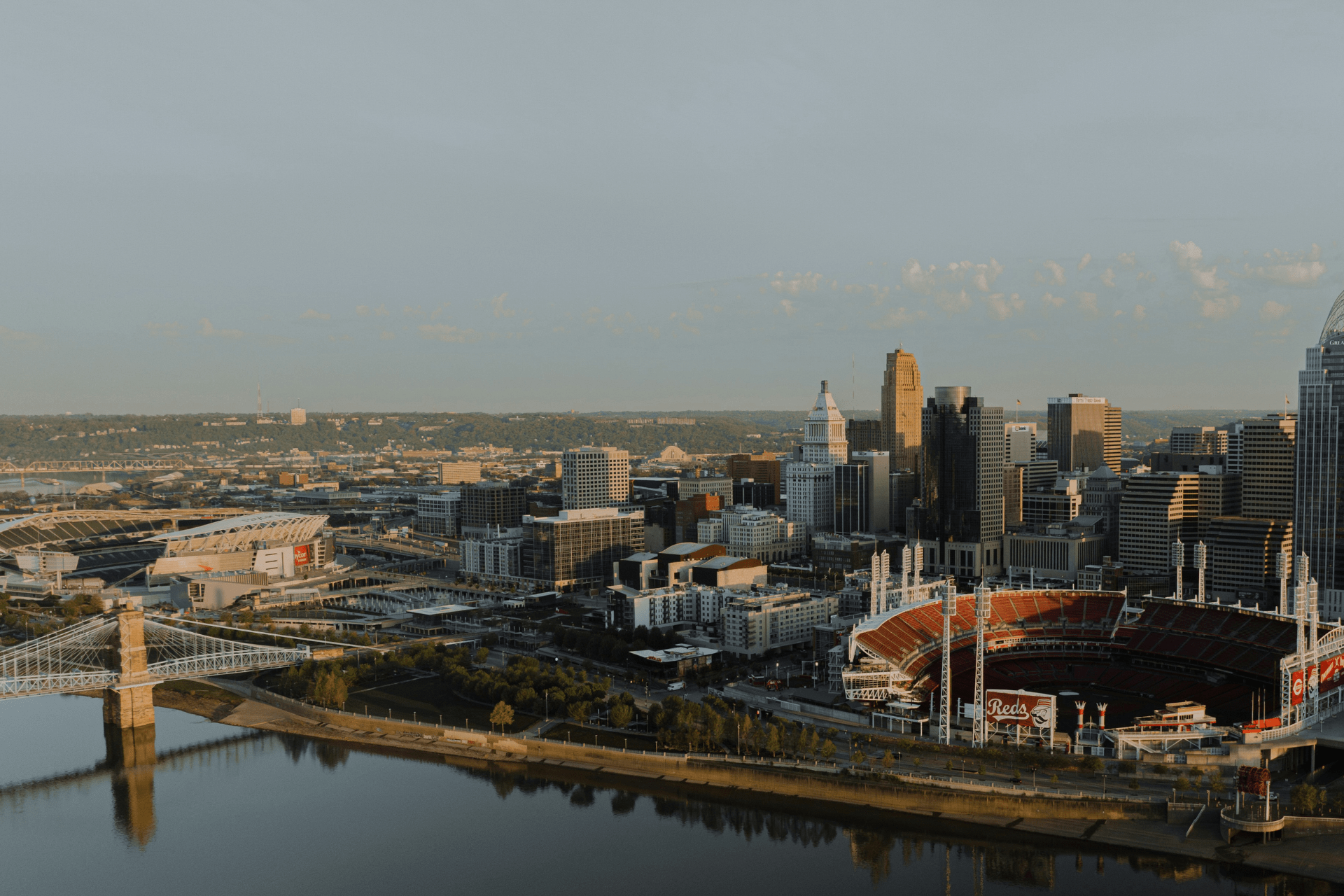
City and county officials are presenting a draft plan for The Banks redevelopment centered on five underused parcels.
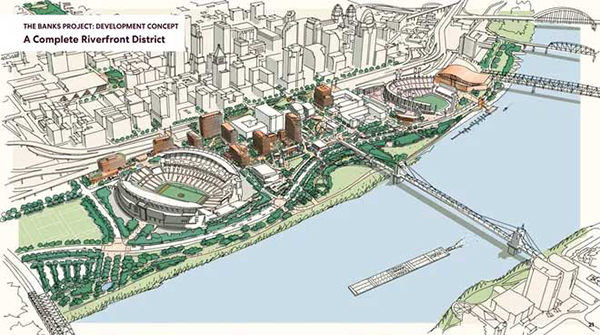
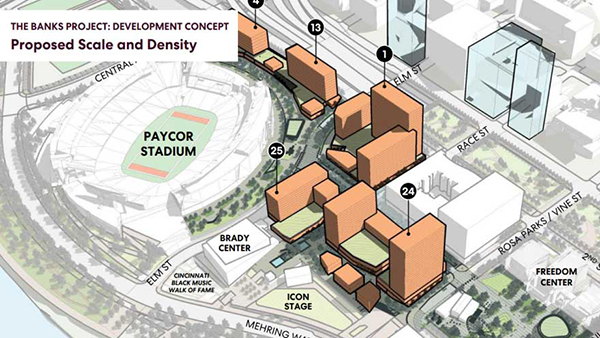
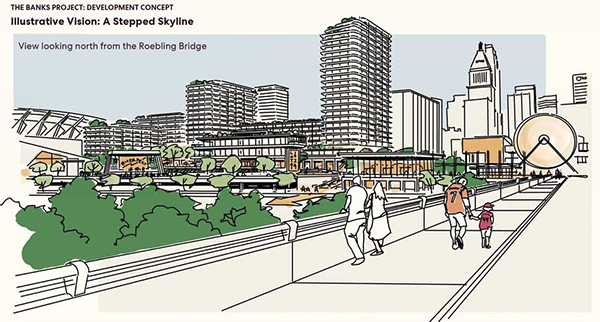
The updated vision for the Banks redevelopment aims to complete the riverfront district through coordinated, mixed‑use infill.
Perkins & Will and MKSK are the lead design firms selected to reimagine the remaining Banks parcels. They aim to give fresh shape to Cincinnati’s riverfront. The Banks redevelopment plan update seeks to improve public spaces, strengthen connections to downtown and the river, and guide private development for future density.
According to the Banks Public Partnership, the process is in “Phase 1,” with a draft expected by the end of 2025.
What’s Driving the Banks’ Redevelopment?
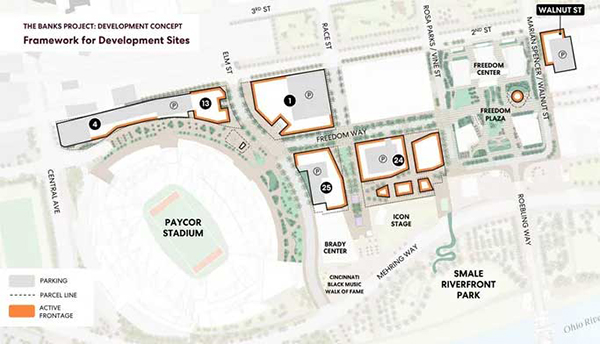
Moreover, officials emphasize that The Banks is no longer just a blank slate. There remain five developable parcels. These lots are now being considered in a coordinated way, rather than as separate, independent developments.
The update responds to substantial changes since the last major zoning amendment in 2019. These include the construction of the Andrew J. Brady Music Center and shifts in market demand.
A core goal of the plan is to “center public benefit and flexibility.” This ensures any future development offers value to residents and visitors, not just on game days or event nights.
What a County Leader Has to Say
In a report of WLWT5, Denise Driehaus, president of the Hamilton County Board of Commissioners, shares their enthusiasm about the potential projects. These projects will complete the final phase of Cincinnati’s riverfront development.
“I mean, we’ve got these lots that are left. There are four in the main section and then one kind of exterior, and we need to figure out what the plan is,” Driehaus said.
Given the urgent need for housing, Driehaus anticipates discussions on residential and mixed-use development opportunities along the riverfront.
What a local developer sees in the proposal
Beyond elected officials, some in Cincinnati’s development community say the vision for The Banks is impressive — but the extended construction timeline raises real concerns.
Fernando Cruz Jr., President of Cruz Development LLC, said the overall concept is strong and would elevate the entire riverfront if the plan is fully executed. But he believes the decade-plus timeline introduces risks that Cincinnati can’t ignore.
“The vision is strong, but the timeline is tough,” Cruz said. A decade of phased construction means years of disruption and a long wait before people experience the full impact. Momentum is everything with a district this important.”
Cruz noted that long timelines often invite shifting priorities, leadership turnover, and changes in market conditions.
“Cities that move faster tend to capture more consistent investment,” he said. “If this drags on, Cincinnati risks losing some of the energy The Banks needs to build on right now.”
Developers say the opportunity is real — but so are the challenges of delivering such an ambitious build-out without losing momentum along the way.
Key Players & Community Engagement
The Public Parties behind the plan are the City of Cincinnati and Hamilton County, operating through the Banks Public Partnership. The design team includes:
- Perkins & Will (urban planning + design)
- MKSK (landscape architecture + public realm)
- HR&A Advisors (market strategy)
- Nelson\Nygaard (mobility, transit)
- Kolar Design (placemaking & branding)
Stakeholder groups shaping the vision include: the Bengals, Reds, the National Underground Railroad Freedom Center, the Downtown Residents Council, and community planning bodies.
Public engagement will play a major role. Officials plan to solicit feedback through surveys and public meetings during the planning effort.
Lot 24 Spotlight & RFP Status
One of the most prominent parcels is Lot 24. It is a 2.5-acre site near Paycor Stadium and the Andrew Brady Music Center. In February 2025, the city and county issued a Request for Proposals (RFP) seeking developers for mixed-use plans. However, progress is on pause. Officials decided to hold off on evaluating proposals until the updated master plan is completed.
The delay signals that city and county leaders want development to align with the long-term vision, not just immediate market opportunity.
Planning Phases & Timeline
According to the Banks Public Partnership:
- Phase 1 (current) involves drafting the updated plan and identifying development paths, expected to wrap by the end of 2025.
- Phase 2 will formalize the plan through a zoning amendment. Once adopted, that zoning will guide future private development.
- The zoning amendment is expected to go before the City Planning Commission and Hamilton County Board of Commissioners for approval in early 2026.
Development Vision & Public Benefit
Furthermore, the draft plan emphasizes several priorities for The Banks. It aims to enhance the district’s identity, transforming the area into a cohesive, 24/7 neighborhood rather than a collection of isolated, stadium-adjacent parcels.
Improving pedestrian and transit connectivity is another focus, with better access planned between downtown and the riverfront.
The plan also calls for flexible public gathering spaces that can host civic events, community markets, and festivals, not just sports or concerts.
Additionally, it incorporates sustainable design and resilient infrastructure strategies to address both climate considerations and future development pressures.
Challenges & Risks Ahead
While the vision for The Banks is ambitious, city and county leaders face significant constraints.
Some earlier proposals for Lot 24 did not meet the public parties’ expectations. This led to a pause and review of development plans.
The planning team must also balance competing interests, including those of sports franchises like the Bengals and Reds, community groups, and private landowners.
Funding the necessary infrastructure and public space improvements will require coordinated investment. This might involve potentially new financing tools.
Additionally, proposed zoning changes may necessitate political negotiation, as private developers seek clarity before committing to future projects.
Why The Banks Redevelopment Matters for Cincinnati
If successfully implemented, the updated Banks development plan could:
- Unlock long-dormant parcels, bringing in new housing, retail, and civic uses.
- Enhance economic activity year-round, not just on event days.
- Reconnect Cincinnati’s downtown with the Ohio River, improving access and walkability.
- Elevate public spaces along the riverfront, making them more usable and inclusive for residents.
Many see this as a once-in-a-generation opportunity. It is a chance to finish the original Banks vision and make the riverfront a truly integrated, vibrant part of the city fabric.
Also read:
Pitch & Empower Hamilton County: A Launchpad for Small Business Success
As Cincinnati Pushes for 40,000 New Homes, Short-Term Rental Rules Remain Largely Untouched